Feeds:
Posts
Comments

Archive for the ‘Reflection’ Category

Wouldn’t it be nice to entertain friends with music after a meal, jam with others when we feel like it, or just express ourselves through music anytime?

I started learning piano at the age of 37. After about 2 years, I have learned and recorded some music I like (here‘s a link to the recordings). I wish I could play these pieces whenever and wherever I want. But in reality, after finishing a piece, I tend to forget it quickly once I stop practicing. Something that I could play from memory one day, would feel like a new piece after a few week’s gap.

Perhaps this is because I don’t have music training when I was young, or don’t have enough hours of practice. A friend told me he doesn’t forget the music he learned while he was a teenager and can still play them after decades.

Space repetition (refreshing my memories by practicing a piece periodically) is probably the best way to keep them in my long term memory. But given time limit and the infinite number of music I want to learn, I haven’t been revisiting the songs I’ve learned so far.

So for now, every recording is a fleeting moment. Something I can experience but can’t hold onto, a bit like trying to hang onto our peak physical or mental ability as we age. While sad, it’s not as bad as some other aspects of life. Unlike parenting a kid at a certain age, once that period is gone, it’s gone forever. The hope is that as my piano skill gets better, the moment might last longer. Or at the minimum, I can relearn a piece faster and perhaps better.

Read Full Post »

Occasionally I would feel that life is meaningless. What’s the point of exercising, making more money, or getting better at my hobbies if we are all going to deteriorate, pass away, and be forgotten at some point?

Luckily this nihilistic feeling doesn’t appear often, and mostly when I don’t feel well. So good night sleep, exercise, and nutritious food would usually solve the problem.

Learning and improving, tackling small challenges, building good relationship, and experiencing something new all give me satisfactions. There are no end to these pursuits, so I should be able to find activities that keep me engaged at any time.

Overall I’m happy to be alive and be able to find or create meanings, including in many simple and little things in life.

Read Full Post »

I like the idea of living a minimalistic lifestyle free of clutter.

One finding from the myriad happiness research is that we adapt to changes, so whatever lifestyle we are used to become the norm.

This suggests that if we live a somewhat ascetic life on a daily basis, the occasional pleasures would become more enjoyable.

Even better, if we can handle inconvenience and other discomfort with equanimity, that might increase our confidence and ability to face other adverse situations.

Although living a minimalistic lifestyle sounds nice in theory, reality tends to be messier. We buy things for a reason. And often they bring us pleasure and make our life easier. We also strive to improve and experience more things in life that might not be fully compatible with a ‘simple’ lifestyle.

Knowing what we value and then striving a balance seem to be key.

Read Full Post »

We know relationship is ultimately what matters. So why do we get impatient so easily? No tolerance for incompetence or laziness? Helping others to develop better habits or to improve? All these might be legitimate reasons, but often they are self-serving. And usually they don’t facilitate long term behavior change and just worsen relationship. So less shaming and punishment, and more love and kindness.

Read Full Post »

I agree with all of Bryan’s advice/strategies.

I like to think of myself as a non-conformist. But my guess is that most people also like to think of themselves as non-conformists, at least in some ways. Like other personality traits, there is probably a conformist vs. non-conformist scale where each of us lies, and it could vary for different issues (i.e. we conform to some norms/conventions and not others). Guess one message from Bryan’s post is that we should be smart in choosing which battle we want to fight. Life is all about balance and trade-offs.

PS: Good time to re-read Emerson’s Self Reliance:

What I must do is all that concerns me, not what the people think. This rule, equally arduous in actual and in intellectual life, may serve for the whole distinction between greatness and meanness. It is the harder, because you will always find those who think they know what is your duty better than you know it. It is easy in the world to live after the world’s opinion; it is easy in solitude to live after our own; but the great man is he who in the midst of the crowd keeps with perfect sweetness the independence of solitude.

Read Full Post »

Interesting article arguing against sending kids to top schools. I’m sympathetic to some of the author’s views and think it’s better for kids to 1) focus less on grades and career prospects and more on learning and personal development, 2) take more risks and worry less about failing,  and 3) mix with people from different background and social class, including those from lower incomes. At the same time, I don’t think we can deny that there are many benefits from studying in top institutions. As I noted previously, today’s education system is like an arms race. I don’t like it but nevertheless need to find a path that I think will be best for my children.

Some excerpts below. The whole article is interesting.

A young woman from another school wrote me this about her boyfriend at Yale:

Before he started college, he spent most of his time reading and writing short stories. Three years later, he’s painfully insecure, worrying about things my public-educated friends don’t give a second thought to, like the stigma of eating lunch alone and whether he’s “networking” enough. No one but me knows he fakes being well-read by thumbing through the first and last chapters of any book he hears about and obsessively devouring reviews in lieu of the real thing. He does this not because he’s incurious, but because there’s a bigger social reward for being able to talk about books than for actually reading them.

……

So extreme are the admission standards now that kids who manage to get into elite colleges have, by definition, never experienced anything but success. The prospect of not being successful terrifies them, disorients them. The cost of falling short, even temporarily, becomes not merely practical, but existential. The result is a violent aversion to risk. You have no margin for error, so you avoid the possibility that you will ever make an error. Once, a student at Pomona told me that she’d love to have a chance to think about the things she’s studying, only she doesn’t have the time. I asked her if she had ever considered not trying to get an A in every class. She looked at me as if I had made an indecent suggestion.

There are exceptions, kids who insist, against all odds, on trying to get a real education. But their experience tends to make them feel like freaks. One student told me that a friend of hers had left Yale because she found the school “stifling to the parts of yourself that you’d call a soul.”

……

Let’s not kid ourselves: The college admissions game is not primarily about the lower and middle classes seeking to rise, or even about the upper-middle class attempting to maintain its position. It is about determining the exact hierarchy of status within the upper-middle class itself. In the affluent suburbs and well-heeled urban enclaves where this game is principally played, it is not about whether you go to an elite school. It’s about which one you go to…

……

The major reason for the trend is clear. Not increasing tuition, though that is a factor, but the ever-growing cost of manufacturing children who are fit to compete in the college admissions game. The more hurdles there are, the more expensive it is to catapult your kid across them. Wealthy families start buying their children’s way into elite colleges almost from the moment they are born: music lessons, sports equipment, foreign travel (“enrichment” programs, to use the all-too-perfect term)most important, of course, private-school tuition or the costs of living in a place with top-tier public schools. The SAT is supposed to measure aptitude, but what it actually measures is parental income, which it tracks quite closely. Today, fewer than half of high-scoring students from low-income families evenenroll at four-year schools.

Read Full Post »

IMG_4568

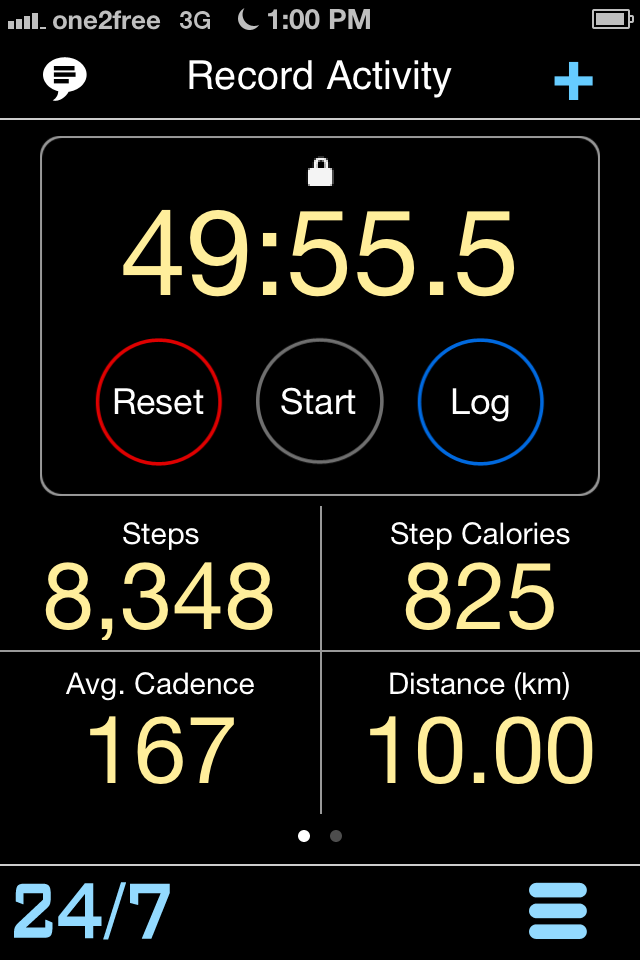
I will be doing my first marathon in New York City later this year. I still remember how much I struggled mentally in my past 10K races, thinking thoughts like “why did I sign up for this”, “when will this ends”, and “is there a way to quit in the middle without embarrassing myself”. I think I felt that way because I didn’t train for them.

As I started training for the marathon and running 10K or more regularly, running the same distance seems to have become a much easier task. I struggle less and don’t think running 10K is a big deal anymore. During my training process, I’m becoming a slightly different person, physically and mentally becoming a person who can finish a marathon. And this is probably similar in many other endeavors, like becoming a professional musician, athlete, or CEO. We hone our skills and mental capacity to achieve things that wouldn’t be possible without those training and experience. Things that seem incredibly difficult at first become ordinary (and something else becomes the new challenge).

Goal seems to be a useful tool to change ourselves. When we strive for goals that stretch us, we need to become different from what we used to be to achieve those goals. Ideally we should also learn to enjoy the process when striving for those goals. For marathon it might mean enjoy eating healthy, staying active, and running regularly. When these activities turn into a lifestyle, it likely means we already become different selves. Dan Gilbert noted that we are always changing but tend to underestimate those changes (he called it “the end of history” illusion). Perhaps we could use goals to change ourselves more consciously.

I think training for a marathon is a great way to experience the power of training and discipline. It is a good challenge because most people can finish a marathon if they train for it, but at the same time it’s not an easy task. It’s also a good way to understand the importance of genes, as there are likely people who can run much faster than you no matter how hard you train.

Read Full Post »

Debbie Millman talks about her life with Jonathan Fields in this interview. It’s nice to find people who seem to have experienced the same feelings as we do. Even though Debbie is in her fifties, she felt like she was the same person when she was 14. But when she read through her diary, she realized she’s definitely not the same person. There are also parts of her that didn’t change. She is still insecure, still afraid of change, and still worried that it might be her last chance for happiness, for love, and for success, the same feelings that she had when she was young.

There are many takeaways from the interview, but one thing I think we all should do is to write a dream list of things we want to do, achieve, or experience.  The key to a well-lived life seems to be to know what we want and do our best to make it happen, but the problem for most of us is that we don’t know what we want.

Some excerpts from Maria @ brain pickings. There are more on her site:

The one common denominator [that great thinkers and creators] have shared with me over the years is that they all feel like they have to get up every day and do it again. They all feel like they may very well be discovered as phonies, they very well may never, ever achieve what they had hoped.

……

This is where we run into trouble in terms of being fulfilled… You have to make your own happiness, wherever you are. Your job isn’t going to make you happy, your spouse isn’t going to make you happy, the weather isn’t going to make you happy… You have to decide what you want, and you have to find that way of doing it, whether or not the outside circumstances are going to participate in your success… You have to be able to create your own happiness, period. And if you can’t, then you need to find a good shrink who can help you figure out what it’s going to take.

……

I’m a big proponent of “busy is a decision.” You decide what you want to do and the things that are important to you. And you don’t find the time to do things — you make the time to do things. And if you aren’t doing them because you’re “too busy,” it’s likely not as much of a priority as what you’re actually doing


Read Full Post »

I was in Tokyo for a short trip and had some free time to wander around this highly walkable city during the cherry blossom season. Beautiful yet transient, Sakura reminds people of the ephemeral nature of life and impermanence of things. Mono no aware is a beautiful concept. And Tokyo remains one of my favorite cities.

PS: here‘s someone walking backward in Tokyo.

1001930_10100140001298441_284052021_n 1511059_10100140001198641_277826858_n 10171038_10100140001248541_2096094249_n IMG_4302 IMG_4308

Read Full Post »

KANO & Dreams

KANO portrays a group of people who pursue their dreams to play baseball at Koshien. It’s the kind of movie that supposed to motivate me to roll up my sleeves and do things. Instead I felt slightly sad after watching it.

Maybe it’s just our tendency to feel nostalgic and to beautify the past, it seems easier to have dreams and ambitions in my 20s than it is now. During school days, future possibilities seem unlimited, and I also seem to have more intense feelings towards things.

Possible paths shrink as we get older. Some might shift their ambition towards their career. My guess is that at some point our drive for that will fade as well, when we realize the transient nature of ourselves.

We would probably adapt to this realization, perhaps by learning to derive pleasure and satisfaction from less ambitious goals, like running a marathon, or from seeing our children pursuing their dreams.

In another 20 years, would I look back and feel the same way like I’m feeling today. If that’s the case does it means I should be doing things differently now.

Read Full Post »

« Newer Posts - Older Posts »