Morgan Housel put together some interesting quotes that are worth reflecting on in his post. Below are a few of them:
“I’m at the stage in life where I stay out of arguments. Even if you say 1+1=5, you’re right. Have fun.” – Keanu Reeves
“Jokes of the proper kind, properly told, can do more to enlighten questions of politics, philosophy, and literature than any number of dull arguments.” – Isaac Asimov
“Injuries done to us by others tend to be acute; the self-inflicted ones tend to be chronic.” – Nassim Taleb
“Your capacity for gratitude is inversely proportional to your sense of entitlement.” – Mark Brooks
“Nobody gives a shit about anything except how they feel.” – Will Smith
“The purpose of life is to experience things for which you will later experience nostalgia.” – FedSpeak
During my high school years, our condo’s gym had a pull-up bar. I remember not being able to do even a single pull-up, while my best friend effortlessly completed up to ten.
Around the same time, I became inflexible. Tasks like touching my toes while bending forward or performing a squat without falling backward seemed unattainable.
But by setting a conscious plan, things have changed in the past few years. I can now do pull-ups, a basic squat, and touch my feet. Although my flexibility and range of motion are still limited, I can see a path toward gradually becoming stronger and more flexible.
These modest accomplishments have bought me as much satisfaction as some seemingly more significant achievements. They shifted my mindset about what’s possible. What once seemed impossible during my prime years (and I thought forever) has become achievable.
I know many people who can dive headfirst into a pool or the sea, but I’ve never been able to do so. While this is not an essential skill, I think if I can conquer my fear and gain control over my body to achieve it, I’d feel a similar sense of accomplishment.
Small accomplishments are steps towards bigger dreams.
An interview from my previous job several years ago.
Where did you grow up? I grew up in Hong Kong, moved to Bangkok when I was around 10 years old, went to Oita, Japan for my undergraduate study and then the UK for postgraduate degrees in Economics at University of Cambridge and London School of Economics.
What is your work like? I worked in a small, collegial and dynamic company, with smart and driven people to make sense of important macro issues happening in the world.
What do you like best about your role? I like the autonomy and broad scope of the role. One never runs out of things to learn. To do well in the job requires not just good understanding of economics, but also history, politics, and technology. It’s also exciting to follow fast growing economies like China and witness changes in real time.
What is your team like? It is a small and friendly team, with plenty of informal chats on a regular basis. Popular topics include parenting, politics, and the insane property market!
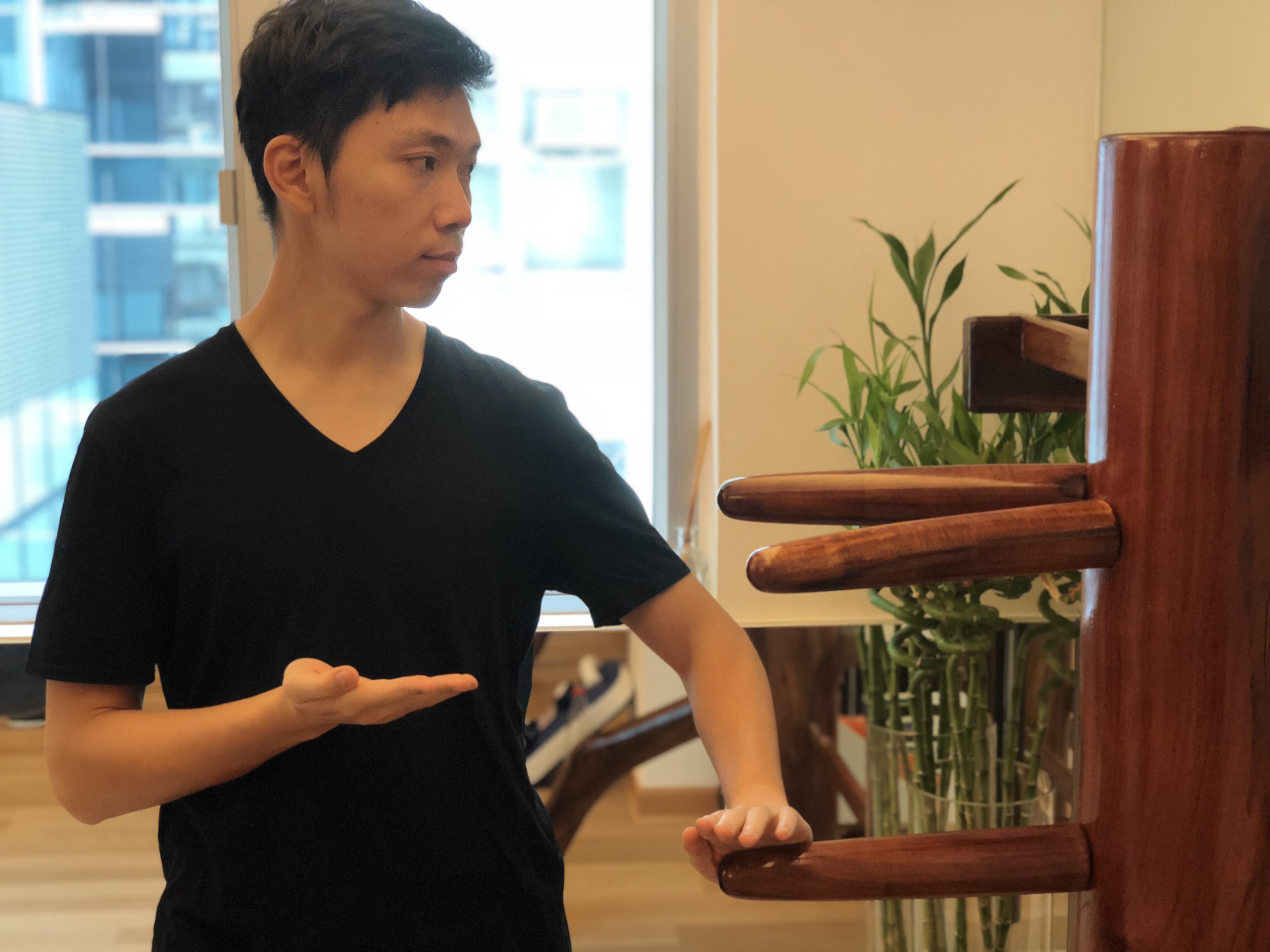
What do you do in your spare time? Besides spending time with my family, I run 4 to 5 times a week and practice Wing Chun, a Chinese martial art made famous by Ip Man and Bruce Lee (According to Wikipedia, it’s the world’s most popular form of Southern Kung Fu).
So you’re a lean, mean, fighting machine? I’ve practiced for 4 years and learned the wooden dummy. I don’t have a saffron robe…yet!
How did you find time to do all this? Discipline. I wake up at 6am, go for a run or do a workout in the gym, get back to have breakfast with my family before going to work. I listen to podcasts while commuting and read books at night after my kids go to bed – that’s my routine.
What are you reading at the moment? The Master Algorithm: How the quest for the Ultimate Learning Machine Will Remake Our World – by Pedro Domingos. The Art of Learning: An Inner Journey to Optimal Performance – by Josh Watkins
What is your favourite place in the world? My favourite place in Japan used to be Kyoto. Back then it was more quiet. Now I feel like there are too many tourists so would pick Naoshima and Okinawa as my favourite. I like the food, architect, nature and just walking around.
Who would be your ideal dinner guests? David Hume, Bruce Lee, Lee Kuan Yew and Richard Feynman.
What is your favourite food? Japanese Kaiseki Ryori, or just an ekiben (e.g. bento you eat for a Shinkansen train ride). Rather than one dish, I like the balance of various small dishes.
Do you have any secret talent that we don’t know? I bought a skateboard for my son but secretly I’ve been enjoying learning it myself. So far, I have mastered the art of going and stopping!
What is on your bucket list? Too many. Learn sports like snowboarding, surfing, and diving. Learn architecture and build a house. Compose a song, draw manga, make an anime, and perform music with friends.
What is your advice for a young person? Work hard, learn, and stay humble.
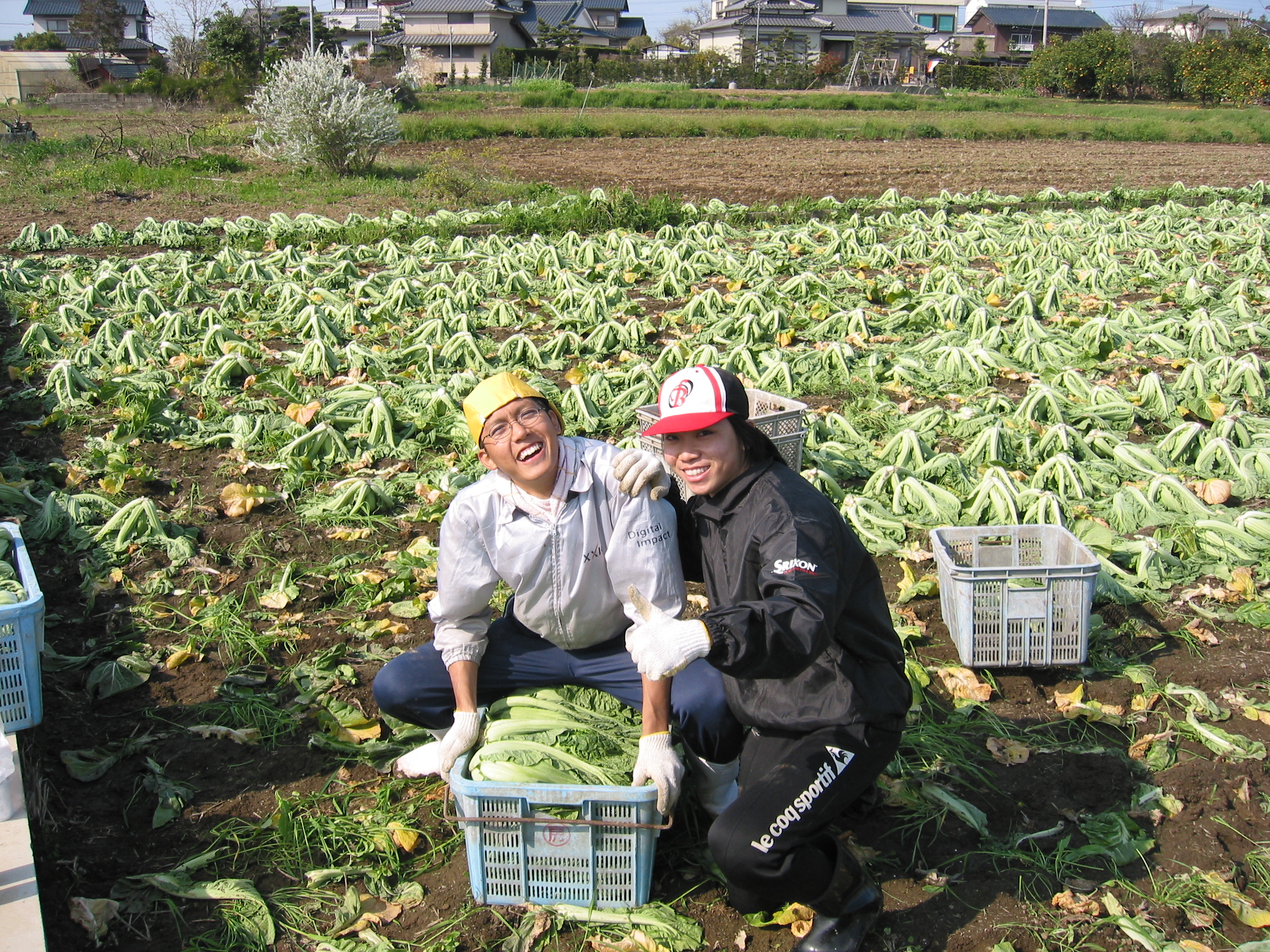
Have you had any strange jobs in the past? During my University era, I worked in a farm making fermented pickles (Tsukemono in Japanese). I’d gather cabbage from the farm, put them into a pickle press (with lots of salt), and place the processed products in packages for sale.
We are all unique, with different values, interests, personalities, temperaments, and communication styles. This explains why we have good chemistry with certain friends but not others, and often these people aren’t similar to us. A friend once said that the ideal kind of companionship is one where two people complement and complete each other, and both can grow and become better people along the way.
If we are all unique, then the cliché that we should be the best at being ourselves is true. No one has the exact taste we have or does things the exact same way we do.
But when it comes to creating art, we often feel like all the good ideas have been taken, and we have nothing new to contribute. With the vast number of people, and AI generating contents, it seems like most things we try to do would have already been done by someone else.
Being original doesn’t mean our art would be good, or others would like them. But what we create would represent a part of ourselves, thanks to each of our own quirkiness. And they would evolve as we change. Even if we can’t be original, why does it matter? The process of creating art is a joy in itself.
Perhaps we just want to be right. But this might also harm relationships:
Being right is appealing. It seems to confirm your superior intelligence and knowledge. But needing to show that you’re absolute right can alienate others and damage your relationships.
I’m approaching midlife. Many people have midlife crises as the life they are living turns out to be different from the life they want. And unlike their younger self, their options become more limited.
As Kieran Setiya put it nicely in his book: “I look back with envy at my younger self, options open, choices not yet made. He could be anything. But I am condemned: course set, path fixed, doors closed…Aging is a corporeal symbol of the progressive diminution of prospects”
While we can’t turn back the clock, Setiya provides some advice: care about something other than yourself and focus on atelic activities (things we do for their own sake and not as a means to achieve a particular end).
How about losses and regrets? Setiya believes they are essential parts of life: “To wish for a life without loss is to wish for a profound impoverishment in the world or in your capacity to engage with it, a drastic limiting of horizons…There is consolation in the fact that missing out is an inexorable side effect of the richness of human life…”
As we get older, we might have a different problem. According to Schopenhauer:
Disillusion is the chief characteristic of old age; for by that time the fictions are gone which gave life its charm and spurred on the mind to activity; the splendors of the world have been proved null and vain; its pomp, grandeur and magnificence are faded. A man has then found out that behind most of the things he wants, and most of the pleasures he longs for, there is very little after all; and so he comes by degrees to see that our existence is all empty and void.
In midlife we want a different life that couldn’t be, while in old age we discover that everything is meaningless.
But we are not doomed. Research suggests older people tend to be happier and more content with their life.
I think if we keep the end in mind and focus on what’s important, we can be content with life at any age. Perhaps because I already had a quarter life crisis, midlife hasn’t been a game changer for me. I’m grateful that there are still things to forward to, people I care about, and things I enjoy doing for their own sake.
An old friend reminds me that it doesn’t take a lot to make another person’s life more meaningful: a bit of humor, thoughtfulness, and kindness are all it takes.
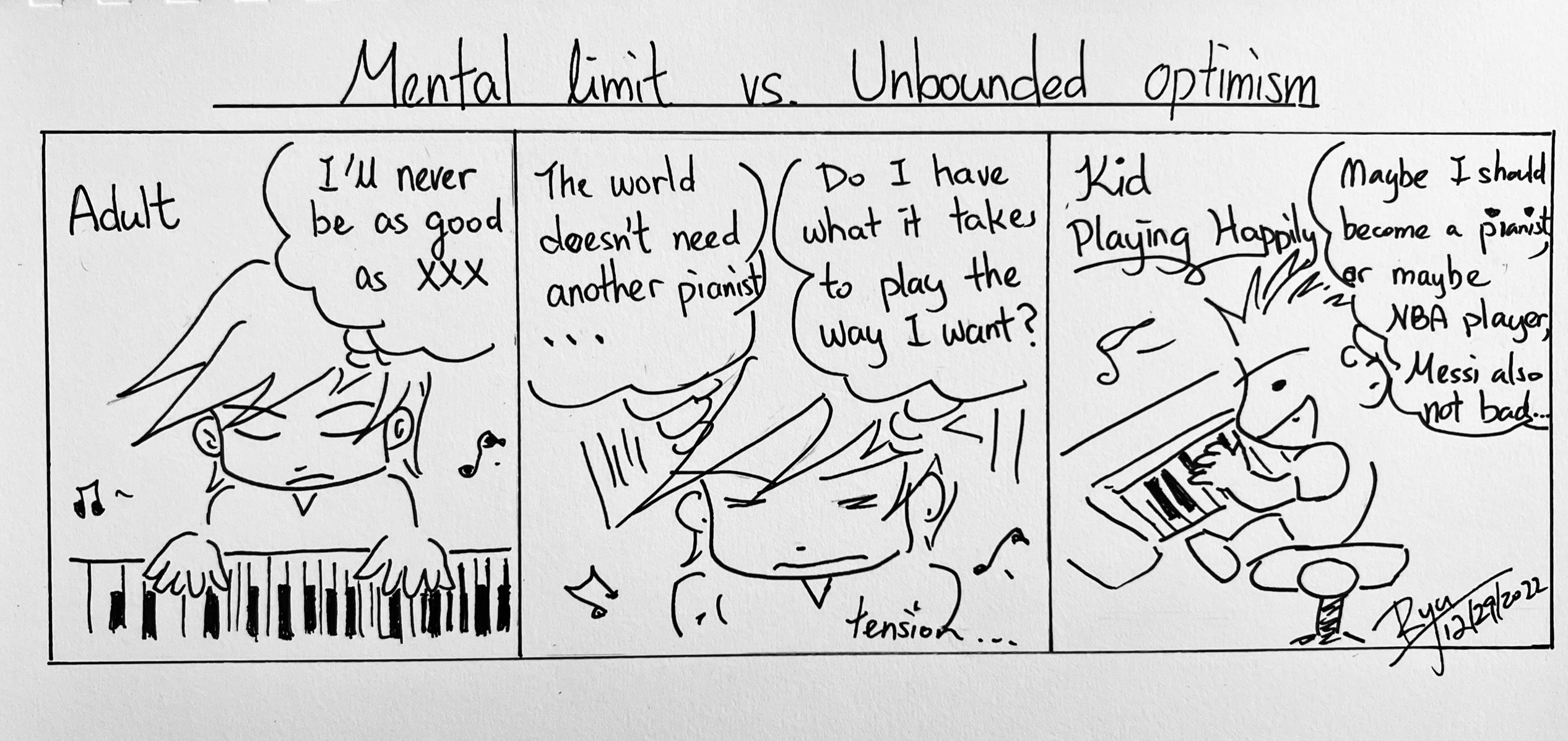
I started learning piano around the same time as my kids. It seems like they have different mindsets and perceptions of time. My boys don’t seem to have the same urgency to get results, nor do they get affected much by other good performers. In contrast, adult beginners tend to want results more quickly and have high expectations from the beginning.
Comfort, ease, and joy can be cultivated through practice. To do this, we must give up excessive ambition and the desperate struggle for results, and let ourselves feel the pain of our longing, of having to wait to make music the way we want to. We can learn to relax with this longing and to enjoy its soft, warm presence in the heart.
Presence is the state of being fully present, of body, mind, heart, and sense perceptions being completely engaged with the activity of the present moment. For a performer, this means not only being engaged with the music but letting the energy of the audience affect you. In practicing, it means being at ease in your surroundings and being aware of each movement and each sound that you make.
It’s a good reminder to be more present during daily practice, patient with results, and to cultivate a sense of relaxed longing.
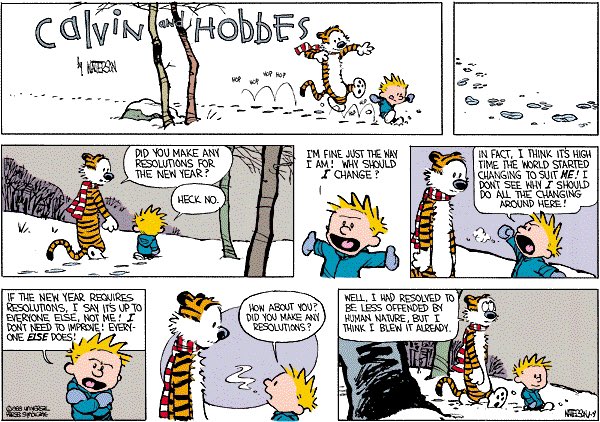
My resolutions, if they exist, generally revolve around 1) getting better at certain activities, such as piano, Wing Chun, and basketball, or 2) developing certain habits, like meditating and journaling daily.
On getting better, the challenge is to 1) set up a routine for regular practice, and 2) be conscientious enough to focus on areas that’d help me improve. The latter is more difficult, as activities that’d likely help me improve most tend to be the less exciting drills, self tests, and evaluations that are not well-defined and require mental efforts.
I would also like to set a regular time to review things. Without reviews, I forget many things, including experience, books I read, or movies I saw. I hope this blog can help me to be more reflective of life events and media consumed, and be more organized with my photos, videos, and drawings. This in turn might help me remember the more important things in life.
Matthew Mcconaughey kept a diary for 35 years, and this is what he said when he reviewed them to write his memoir: “I enjoyed myself more than I thought I would. I laughed, I cried, I realized I had remembered more than I expected, and forgot less.” I’m not sure my memory would be as good as his, but I think my future self would love to read my real time feelings and thoughts.
Most people don’t stick to their resolutions beyond February, and I’ve failed many times (e.g. regular review has been a challenge). But life is a journey. If I fail, I can be more like Calvin and be content with myself.
There’s a fine line between success and failure. Often there’s only one chance in a situation. You either make it or lose it all.
David Goggins called it the one second decision, whether an MMA fighter taps out or bet his health and future to have a chance to win.
Great athletes often have that mental toughness. Ex-NBA player Chris Bosh wrote in his book, Letters to a Young Athlete:
Pain is temporary; glory is forever. If you want to excel, you have to get used to the pain. You have to get used to exhaustion. I can’t promise you that it will ever be a comfortable feeling, but I can guarantee you that you can become familiar enough with it that you can visit that mental and physical space on your path to getting better and not have to worry that you’ll crumple under the pressure.
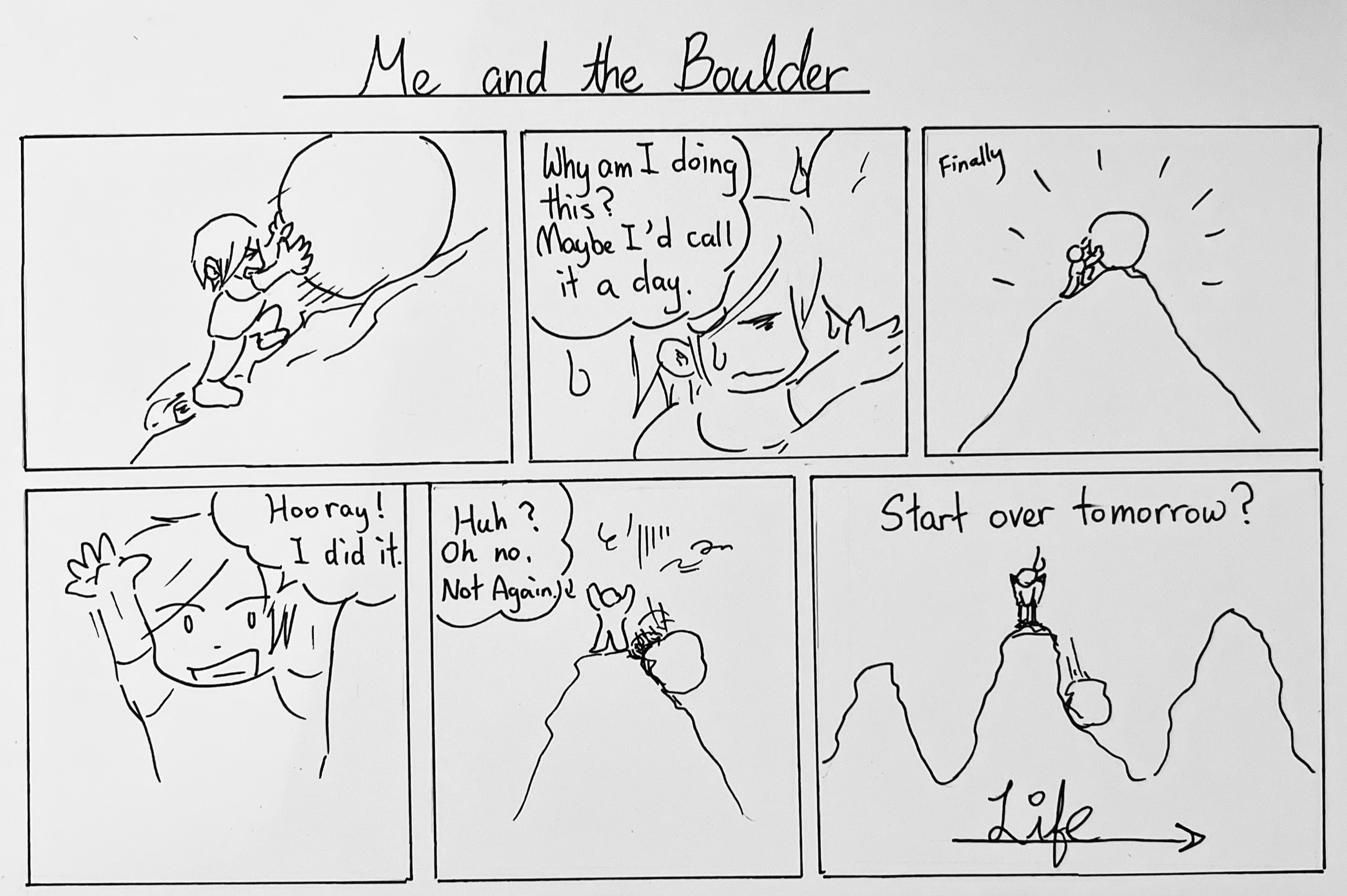
There were times when I didn’t train enough and struggled in the middle of a long distance run, I’d find myself with thoughts like ‘why am I doing this’, or ‘this is silly and meaningless.’ Luckily I was too ashamed to quit in those official runs. On a smaller scale this is something I face in my daily exercises. If I quit frequently, it’d no longer be a habit.
Quitting once gives us a precedent to quit again, while persisting despite discomfort trains our mental toughness. Chris Bosh put it well: “You become capable of the grind by surviving the grind.
So is quitting bad? Not necessarily.
Annie Duke argues that we are often too reluctant and slow to quit (we don’t ignore sunk costs and value opportunity costs properly). If we persist in something that doesn’t fit us, we might waste a lot of time. Ralph Waldo Emersion said: “All life is an experiment. The more experiments you make the better.” Quitting gives us opportunities to try more things.
But does quitting also make us a jack of all trades? Some call those who die on their quests to climb Mount Everest reckless. But often it’s also those who don’t know when to quit make history.
There is no correct answer. I think it’s best to experiment enough to know what we like, and then put in effort to be as best as we can in the area we want to pursue. Quitting shouldn’t happen when we are in the middle of a tough situation, but when we calmly reflect on our priorities in life.
We have to enjoy the whole process, the struggles as well as the accomplishments. What would I be willing to do day in and day out to master or achieve something?
Again from Chris Bosh:
You have to figure out how to love it – all the sprints, all the miles, all the weights, all the preparation. Pretend you love it, trick yourself into loving it, whatever it takes…
Your blessing in life is when you find the torture you’re comfortable with…it’s work, it’s exercise. Find the torture you’re comfortable with and you’ll do well.
It seems like we all feel nostalgic towards certain period. For me it’s the late 80s-90s. The music, shows, and anime/manga during that period still invoke emotions and memories.
The ‘First Love’ Japanese drama series on Netflix revisits some popular themes from that period (e.g. Titanic, Utada’s songs). Watching the new Slam Dunk movie also reminds me of the times when basketball was a much bigger part of my life, while walking around Tokyo, where there are still Tower Records store, remains me of the time I spent sampling music after school.
Recently Netflix added lots of old anime I watched when I was young (e.g. Slam Dunk, Rama 1/2, Yuyuhakusho). With so many options out there and limited time, I probably won’t be watching most of them. But it feels nice to introduce some of the things I used to like to my boys as a kind of shared interests/experience. So if my kids are interested in any of them, I’d try to find time to watch with them.
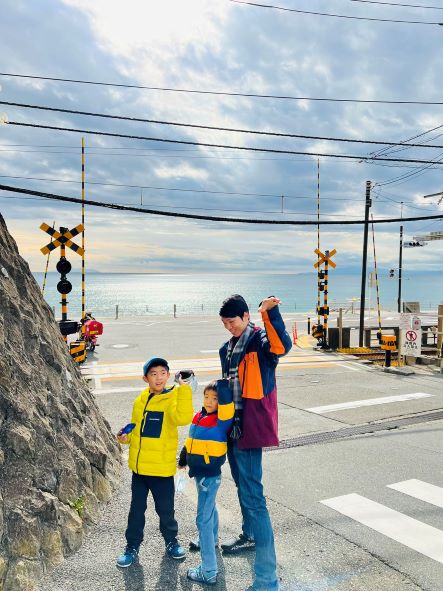
For now, I’m grateful that we already share some common interests in basketball, piano, and games. And I look forward to more activities that we’d enjoy together.

 Ryu's Blog