Feeds:
Posts
Comments

Archive for the ‘Happiness’ Category

Feeling empty or stagnant? Try something new or different. Don’t be afraid of the unknown and uncertainty. New beginnings often offer hope and possibilities.

That’s my takeaway from this beautiful post by Maria Popova.

Perhaps the art of harvesting the secret riches of our lives is best achieved when we place profound trust in the act of beginning. Risk might be our greatest ally. To live a truly creative life, we always need to cast a critical look at where we presently are, attempting always to discern where we have become stagnant and where new beginning might be ripening. There can be no growth if we do not remain open and vulnerable to what is new and different. I have never seen anyone take a risk for growth that was not rewarded a thousand times over…

Sometimes the greatest challenge is to actually begin; there is something deep in us that conspires with what wants to remain within safe boundaries and stay the same… Sometimes a period of preparation is necessary, where the idea of the beginning can gestate and refine itself; yet quite often we unnecessarily postpone and equivocate when we should simply take the risk and leap into a new beginning.

And in a sense, this is exactly what a beginning does. It is an opening for surprises. Surrounding the intention and the act of beginning, there are always exciting possibilities…

Part of the art of living wisely is to learn to recognize and attend to such profound openings in one’s life.

John O’Donohue

FOR A NEW BEGINNING

In out-of-the-way places of the heart,
Where your thoughts never think to wander,
This beginning has been quietly forming,
Waiting until you were ready to emerge. 

For a long time it has watched your desire,
Feeling the emptiness growing inside you,
Noticing how you willed yourself on,
Still unable to leave what you had outgrown. 

It watched you play with the seduction of safety
And the gray promises that sameness whispered,
Heard the waves of turmoil rise and relent,
Wondered would you always live like this. 

Then the delight, when your courage kindled,
And out you stepped onto new ground,
Your eyes young again with energy and dream,
A path of plenitude opening before you. 

Though your destination is not yet clear
You can trust the promise of this opening;
Unfurl yourself into the grace of beginning
That is at one with your life’s desire. 

Awaken your spirit to adventure;
Hold nothing back, learn to find ease in risk;
Soon you will be home in a new rhythm,
For your soul senses the world that awaits you.

John O’Donohue

Read Full Post »

What defines our identity? If we change, are we still the same person? Most would say yes. But what about incidents that change our brains, affecting our memories, personality, or behavior? This reminds me of Theseus’ paradox, a thought experiment that asks whether an object that has had all of its components replaced over time is still the same object.

Maria Popova thinks soul is the best shorthand to describe that continuous center within us, and excepted this beautiful quote by Virginia Woolf:

The man* who is aware of himself is henceforward independent; and he is never bored, and life is only too short, and he is steeped through and through with a profound yet temperate happiness. He alone lives, while other people, slaves of ceremony, let life slip past them in a kind of dream. Once conform, once do what other people do because they do it, and a lethargy steals over all the finer nerves and faculties of the soul. She becomes all outer show and inward emptiness; dull, callous, and indifferent.

Let us simmer over our incalculable cauldron, our enthralling confusion, our hotch-potch of impulses, our perpetual miracle — for the soul throws up wonders every second. Movement and change are the essence of our being; rigidity is death; conformity is death: let us say what comes into our heads, repeat ourselves, contradict ourselves, fling out the wildest nonsense, and follow the most fantastic fancies without caring what the world does or thinks or says.

I’m not sure if we should always follow our hearts. But it seems like many of us don’t pay enough attention to our inner selves. Embracing change, listening to our soul, and having the courage to be ourselves seem like good advice for many of us.

Read Full Post »

Some great advice from Bryan Caplan on finding a partner. I like the way he thinks about things, perhaps because our brains are wired in a similar way or we share similar interests in social science. We don’t need to come to the same conclusions nor have the same convictions in our beliefs. But it’s a good approach to based our thinking on supported findings with a healthy dose of common sense.

One of his recommendations is to ask to hold hands on the first date. I remember back in high school, I lacked the courage to even ask until many dates later.

Excerpts:

Humans are good at hedonically adapting to most material conditions. You get used to your house, your car, your clothes, your granite countertop, and your money. What humans are bad at hedonically adapting to is… other people. If you spend a lot of time around humans whose company you enjoy, you will probably be happy. If you spend a lot of time around human whose company you detest, you will probably be unhappy.* Over your lifetime, you will probably spend more time around your spouse than any other human. So while finding good friends and good co-workers is crucial for happiness, finding a good spouse is even more so…

The greatest mistake young people make, especially young males, is giving looks a high priority and personality a low priority. This is beyond foolish. If the most beautiful woman in the world has an ugly personality, you will be soon be miserable….If this sounds hard, I bring good news: If someone has tolerable looks and clearly likes you, you can often become physically attracted to them…

A good personality is your top priority, but what personalities are “good”?…look for partners who are: happy, rational, loyal, and self-disciplined – and avoid partners who are sad, emotional, fickle, and impulsive…

If you prefer the framework of the canonical Five Factor Model of personality:

First and foremost, strongly prefer partners with low Neuroticism (also known as high “Emotional Stability”)….

Secondly, strongly prefer partners with high Conscientiousness. Low Conscientiousness folks can be fun friends, but chiefly because you aren’t responsible for bailing them out of the messes they habitually get themselves into. And if you’re getting married in the first place, you should be with someone who takes the strictures of marriage seriously…

“High Agreeableness” people are “nice,” but they’re also unreasonable and emotional. You don’t really want a partner who is “nice to everyone”; you want a partner who singles you out as supremely deserving of nice treatment.

For the remaining two traits, Extraversion and Openness, your best bet is to find someone similar to yourself. Especially because these are the main traits that predict what activities you will enjoy: People who like big parties (typically high in Extraversion) should pair with other people who like big parties; people who like action movies (typically low in Openness) should pair with others who like action movies…

If you want kids, remember that virtually all traits are heritable. Always ask yourself, “Does this person have the traits I want my kids to have”? While you may joke, “I don’t want ugly kids,” there’s nothing funny about having kids with bad personalities.

Intelligence is not technically a “personality trait,” but it functions much the same. High intelligence is our best predictor of material success and many other desirable outcomes, but if the intelligence gap between partners is too high they won’t be compatible. Communication across a 20 IQ-point gap is too hard, and so is finding common interests.

While common interests are good, common values are better. The difference is hard to define, but easy to illustrate. Backpacking is an interest; desired family size is a value. I am always amazed by couples who have been together for years without discussing how many kids they hope to have…

It’s the marriage market. Don’t just think of yourself as a consumer, asking “How can I get what I want?” Simultaneously think of yourself as a producer, asking, “How can I be what she wants?” Thoughtful search and energetic self-improvement are two great things that go great together. Start by avoiding the standard human flaws of impulsivity, self-absorption, laziness, and self-pity, as well as the standard male flaws of faithlessness, insensitivity, machismo, and drunkenness. And yes, figure out what you want to do with your life…

My 11-year-old daughter vocally opposes changing yourself to better please the marriage market. “You’ve got to be true to yourself,” she declares, with poetic wisdom beyond her years. My reply: Sure, you should think twice – nay, thrice – about violating your conscience for romantic rewards. But what if the marriage market rewards changes that you yourself classify as self-improvement? When the marriage market rewards you for working hard, and you agree that you ought to adopt a better work ethic, hard work is “true to yourself.” We’re all flawed human beings, so you have plenty of room to self-improve with pride. And if women like you better as a result, that speaks well of them, not badly of you.

Read Full Post »

Most of us would like to have great relationships with our kids. We are familiar with the basic advice: love our kids unconditionally, put relationship first, spend time with them, empathize and be kind, believe in them and help them fulfill their potential. But putting this advice into practice can be challenging.

One reason is that some of these principles may conflict with each other. For example, balancing unconditional love with helping them reach their potential, or finding a balance between having fun and maintaining order. Should parents allow their kids to experiment with different projects, even if they create a mess at home (or just create a mess for fun)? This could foster creativity and provide an opportunity for everyone to have fun. But for parents who prefer order and cleanliness in their daily routine, and have limited time to supervise or assist with cleanup, this can affect their well-being.

Loving someone unconditionally is hard. Sometime it feels like we are having the same conversations a thousand times, and they continue with the same bad habits. Or what if they refuse to listen to feedback, even when deliver in a well-intentioned, calm manner? Can we love unconditionally when someone consistently behaves in ways we don’t like? For adults, we can choose to spend more time with people we like and avoid others. But with our kids, we don’t have that option. We want our kids to be people we like. Hence even if we know it’s often futile to try to change someone, we still try to shape our kids’ behavior.

Parents can get annoyed or angry by different triggers, such as slamming doors, poor hygiene, mistreating belongings, rudeness, complaining, lying, or engaging in bullying or physical aggression. Some of these character issues require serious attention. But often what we really care about is obedience and respect from our kids.

If having a good relationship is most important, the ideal approach seems to remind them calmly and kindly each time. Punishment usually doesn’t work. Sometime we punish our kids for trivial things, regret it later (as punishments usually benefit no one), but feel obligated to carry them out to maintain consistency and credibility. If our aim really is to help them improve, we should come up with punishments that aid their development.

An ideal parent can strike a balance, to be both loving and accepting, while guiding their kids to become their best selves. Fortunately, being a good enough parent is often good enough. Despite my weaknesses, my kids still seem to enjoy spending time with me. And I like the ideas that there’s room for me to improve and become a better dad.

Read Full Post »

I haven’t closely followed sports since my high school days. But with my boys getting more into basketball, we are starting to follow NBA games and attend local sporting events. Playing basketball with them has become one of my favorite activities, and I also enjoy watching and discussing games with them.

It’s interesting to see which teams and players they support. It seems our level of tribalism is, to a large extent, determined by our genes. My elder son doesn’t have a strong preference which team he likes (he tends to like everyone), while my younger son has a strong “us vs. them” mentality, hating teams that beat the ones he likes, and even treating enemies of his enemies as friends.

I’m probably somewhere in between. I remember feeling more tribal during my high school years when I wanted to establish an identity and be loyal to certain people. As I’ve grown older, I’ve found many of these distinctions to be artificial.

However, my experience with my boys has changed my thinking. Instead of wasting time, I now see sports as a way to bond and connect with people, to learn about culture, and to be inspired by great performers. The more knowledgeable I become, the more interesting it is to follow a sport’s development. Being tribal isn’t necessary, but like a bit of alcohol, it can make the experience with others more fun.

I used to care mainly about my own improvement and less interested in following other famous stars. I still think it’s more satisfying to gradually improve my skills than passively watching others. But it’s also exciting to watch young people with dreams and potential still ahead of them work hard and strive towards their goals.

Read Full Post »

Keep Dreaming

Excerpts from Enuma Okoro’s article on dreams and related painting:

Every one of us has had dreams of something we wish to happen — or to make happen — in our lives, and I’m sure every one of us has had moments when we question the validity of our dreams, or the reasonableness of them. What keeps some of us inspired enough to keep on dreaming anew, or hopeful enough to hold on to unrealised dreams?

……

Whatever it is we dream of, it takes courage to stand firm and hopeful for those dreams to come to pass, especially when nothing about our circumstances seems to encourage a dream’s fulfilment.

……

Though our dreams are our own, we often need a community to keep them alive, and to help us to see them through to reality, even when we are tempted to give up.

……

Allowing ourselves to keep dreaming is ultimately dependent on our ability to sustain hope, to believe in the possibility of a different reality regardless of what things look like. What we believe is possible relies on what we are able to conjure in our imagination, even in dire times. So much of our power and agency begins there.

……

It is the dream of all involved to win the race, but there will be only one winning team. Understandably, we are often so focused on a particular end result that any other outcome is regarded as failure. But I wonder if we cheat ourselves when we limit our definitions of what constitutes an actualised dream. To be one of the people in this painting who does not leave with the dreamt-for prize does not necessarily mean the race was run in vain, even with the disappointment or despair that might follow.

Anyone who has worked hard towards something knows that we are never the same person at the end as we were when we began, regardless of the outcome. But who we end up being is also determined by our own perspectives and the story we choose to live. The art of dreaming should be unending, as circular as this relay track. No matter what we achieve or when, the goal is to never lose the ability to dream.

……

We might think dreaming is a luxurious use of time that only certain people can afford. But dreaming is for everyone, and it is often the thing that keeps us motivated enough to take the next step forward. The other thought I had was how much courage it takes to dream of something beyond our present circumstances, and to maintain that dream in the face of challenge and hardship. Far from dreaming being a luxury, it can be painful and courageous work.

Read Full Post »

Experience fully first before capture:

It didn’t come up in our conversation, but there was a great section in The Myth of Experience about the “remembering self” versus the “experiencing self,” and how “when it comes to happiness, moderation is key. Excessively striving to capture every moment of a given experience can have adverse effects on our experiencing selves. We may reduce the immediate joy those moments provide. We may also start doing things not because they make us genuinely happy but primarily because they produce moments that we can easily capture and share with others.” This reminded me of a talk I recently watched by The Marginalian writer Maria Popova. Popova has a huge Instagram following and posts beautiful nature photos, but in the talk she said: “I made a pact with myself…to not take a picture of anything ever until I’ve actually taken it in first, which means some of the most beautiful things I see I don’t document, because they’re fleeting.” Recent research has found that taking pictures can “undermine enjoyment” of an experience, particularly when the photos are taken “with intention to share.”

David Epstein (link to full post)

Read Full Post »

I’m approaching midlife. Many people have midlife crises as the life they are living turns out to be different from the life they want. And unlike their younger self, their options become more limited.

As Kieran Setiya put it nicely in his book: “I look back with envy at my younger self, options open, choices not yet made. He could be anything. But I am condemned: course set, path fixed, doors closed…Aging is a corporeal symbol of the progressive diminution of prospects”

While we can’t turn back the clock, Setiya provides some advice: care about something other than yourself and focus on atelic activities (things we do for their own sake and not as a means to achieve a particular end).

How about losses and regrets? Setiya believes they are essential parts of life: “To wish for a life without loss is to wish for a profound impoverishment in the world or in your capacity to engage with it, a drastic limiting of horizons…There is consolation in the fact that missing out is an inexorable side effect of the richness of human life…”

As we get older, we might have a different problem. According to Schopenhauer:

Disillusion is the chief characteristic of old age; for by that time the fictions are gone which gave life its charm and spurred on the mind to activity; the splendors of the world have been proved null and vain; its pomp, grandeur and magnificence are faded. A man has then found out that behind most of the things he wants, and most of the pleasures he longs for, there is very little after all; and so he comes by degrees to see that our existence is all empty and void.

In midlife we want a different life that couldn’t be, while in old age we discover that everything is meaningless.

But we are not doomed. Research suggests older people tend to be happier and more content with their life.

I think if we keep the end in mind and focus on what’s important, we can be content with life at any age. Perhaps because I already had a quarter life crisis, midlife hasn’t been a game changer for me. I’m grateful that there are still things to forward to, people I care about, and things I enjoy doing for their own sake.

An old friend reminds me that it doesn’t take a lot to make another person’s life more meaningful: a bit of humor, thoughtfulness, and kindness are all it takes.

Read Full Post »

From Berkeman’s book:

An alternative, Shinzen Young explains, is to pay more attention to every moment, however mundane: to find novelty not by doing radically different things but by plunging more deeply into the life you already have. Experience life with twice the usual intensity, and “your experience of life would be twice as full as it currently is”–and any period of life would be remembered as having lasted twice as long.

We might seek to incorporate into our daily lives more things we do for their own sake along–to spend some of our time, that is, on activities in which the only thing we’re trying to get from them is the doing itself.

…when presented with a challenging or boring moment, try deliberately adopting an attitude of curiosity, in which your goal isn’t to achieve any particular outcome, or successfully explain your position, but, as Hobson puts it, “to figure our who this human being is that we’re with.” Curiosity is a stance well suited to the inherent unpredictability of life with others, because it can be satisfied by their behaving in ways you like or dislike.

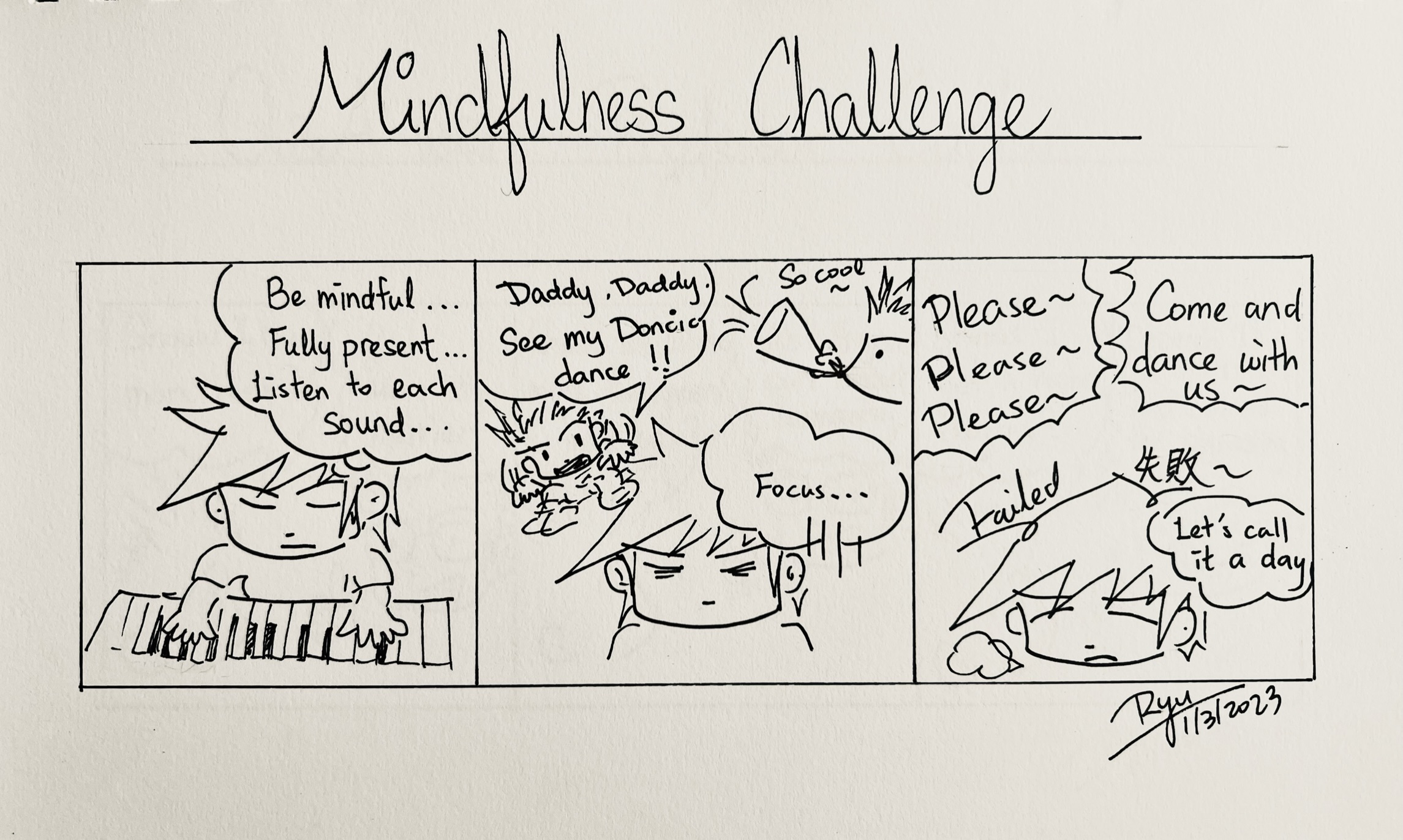
One of my aims this year is to be more mindful in my daily activities. More attention; less multitasking.

Read Full Post »

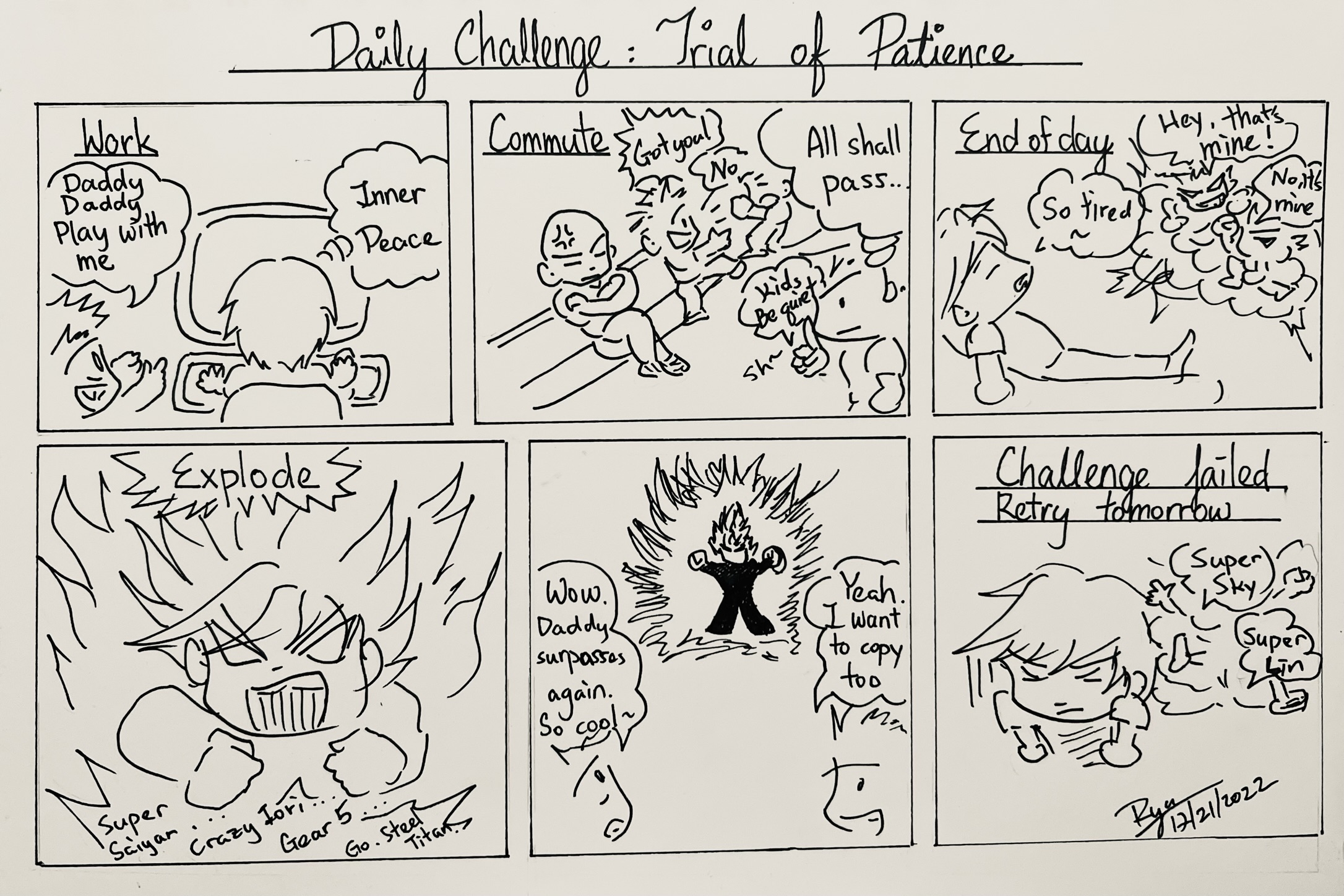
Kids are a source of wonders, but also frustrations.

Traveling with young kids can be extremely taxing, but they also create great memories.

Luckily, in most cases we tend to remember the good times, and forget the daily frustrations.

Or in Kahneman’s terms, our experienced self might feel stressed, but our remembering self will thank us for creating those special memories.

I often remind myself to take a long view, focusing on building good relationships while downplaying the daily, short term stuff that annoys me. But it’s easier said than done.

It’s a constant challenge.

Read Full Post »

« Newer Posts - Older Posts »