I feel blue from time to time. It usually happens when I’m feeling fatigued or ruminating over something that I can’t do much about. Sometimes it happens without reasons. Exercise tends to be a good way to help me feel better, whether it’s going for a walk, a swim, to the gym, or playing basketball.
Sometimes I embrace this feeling. It feels like a good time to browse a bookstore, waste time in a café, or just listen to music. Perhaps it’s telling me to listen to my deeper feelings, embark on something new, or reconnect with people I care about. Time seems to slow down when I’m in this mood, with more calmness, reflections, and sentimentality.
Feeling empty or stagnant? Try something new or different. Don’t be afraid of the unknown and uncertainty. New beginnings often offer hope and possibilities.
That’s my takeaway from this beautiful post by Maria Popova.
Perhaps the art of harvesting the secret riches of our lives is best achieved when we place profound trust in the act of beginning. Risk might be our greatest ally. To live a truly creative life, we always need to cast a critical look at where we presently are, attempting always to discern where we have become stagnant and where new beginning might be ripening. There can be no growth if we do not remain open and vulnerable to what is new and different. I have never seen anyone take a risk for growth that was not rewarded a thousand times over…
Sometimes the greatest challenge is to actually begin; there is something deep in us that conspires with what wants to remain within safe boundaries and stay the same… Sometimes a period of preparation is necessary, where the idea of the beginning can gestate and refine itself; yet quite often we unnecessarily postpone and equivocate when we should simply take the risk and leap into a new beginning.
And in a sense, this is exactly what a beginning does. It is an opening for surprises. Surrounding the intention and the act of beginning, there are always exciting possibilities…
Part of the art of living wisely is to learn to recognize and attend to such profound openings in one’s life.
John O’Donohue
FOR A NEW BEGINNING
In out-of-the-way places of the heart, Where your thoughts never think to wander, This beginning has been quietly forming, Waiting until you were ready to emerge.
For a long time it has watched your desire, Feeling the emptiness growing inside you, Noticing how you willed yourself on, Still unable to leave what you had outgrown.
It watched you play with the seduction of safety And the gray promises that sameness whispered, Heard the waves of turmoil rise and relent, Wondered would you always live like this.
Then the delight, when your courage kindled, And out you stepped onto new ground, Your eyes young again with energy and dream, A path of plenitude opening before you.
Though your destination is not yet clear You can trust the promise of this opening; Unfurl yourself into the grace of beginning That is at one with your life’s desire.
Awaken your spirit to adventure; Hold nothing back, learn to find ease in risk; Soon you will be home in a new rhythm, For your soul senses the world that awaits you.
During my student years, basketball was my primary sport. After I started working, running became my go-to exercise. Strength training wasn’t a focus for me until recently. One of my goals this year was to start incorporating strength trainings into my routine. Having enough strength is a key component to living a healthy life, as Peter Attia writes extensively (here’s another summary), and we tend to lose muscle as we age.
A friend recommended a local gym, and I’ve been going there twice a week for about six months. It turned out to be a good experience. My aim is not to become a bodybuilder. After gaining some muscle, I’m focusing on maintaining my muscle mass and enhancing functional strength and mobility. This way, I hope I can continue to enjoy sports and stay active as I age.
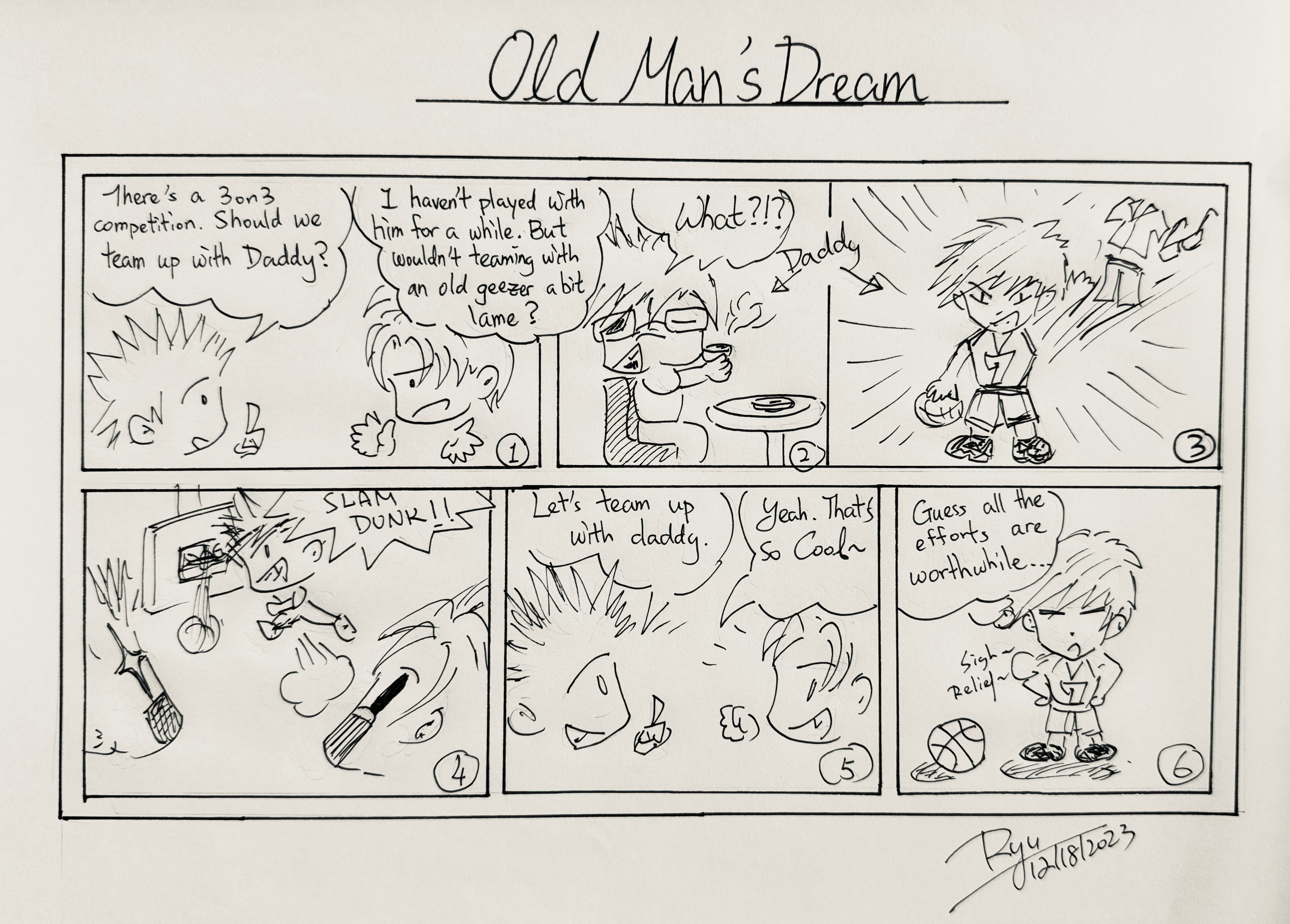
One of my aspirations is to play basketball with my sons when they reach their teenage years. If they’re willing to team up with their ‘old man’ on the court, I’d love for us to play in 3-on-3 basketball games. To make this dream a reality and keep up with them, maintaining a strong and healthy physique is essential.
Here is a promotional video for the gym I visit if you are interested in seeing my progress.
Brett summarizes Hemery’s book Sporting Excellence. The attributes mentioned seem reasonable, but it’s hard to know how applicable they are to the general public.
Athletic excellence has thus been linked to the capacity to tolerate discomfort — to feel the pinch and the pain and keep going anyway…Another gold medal winner, Herb Elliott, who’s considered the greatest middle-distance runner of his era, put it this way, “In retrospect, my training wasn’t to improve my physical strength or stamina; those came along as a secondary result, but the primary purpose of every training session was to toughen up mentally. A training session was totally useless until it started to hurt. That was the point when it started to be worthwhile.”
I like the concept of having a high tolerance for discomfort. While we want to avoid overtraining and getting injured, I think in today’s society many people tend to shy away from discomfort. Consistent efforts contribute to progress, which makes the chosen pursuits more enjoyable and sustainable.
During my high school years, our condo’s gym had a pull-up bar. I remember not being able to do even a single pull-up, while my best friend effortlessly completed up to ten.
Around the same time, I became inflexible. Tasks like touching my toes while bending forward or performing a squat without falling backward seemed unattainable.
But by setting a conscious plan, things have changed in the past few years. I can now do pull-ups, a basic squat, and touch my feet. Although my flexibility and range of motion are still limited, I can see a path toward gradually becoming stronger and more flexible.
These modest accomplishments have bought me as much satisfaction as some seemingly more significant achievements. They shifted my mindset about what’s possible. What once seemed impossible during my prime years (and I thought forever) has become achievable.
I know many people who can dive headfirst into a pool or the sea, but I’ve never been able to do so. While this is not an essential skill, I think if I can conquer my fear and gain control over my body to achieve it, I’d feel a similar sense of accomplishment.
Small accomplishments are steps towards bigger dreams.
An alternative, Shinzen Young explains, is to pay more attention to every moment, however mundane: to find novelty not by doing radically different things but by plunging more deeply into the life you already have. Experience life with twice the usual intensity, and “your experience of life would be twice as full as it currently is”–and any period of life would be remembered as having lasted twice as long.
We might seek to incorporate into our daily lives more things we do for their own sake along–to spend some of our time, that is, on activities in which the only thing we’re trying to get from them is the doing itself.
…when presented with a challenging or boring moment, try deliberately adopting an attitude of curiosity, in which your goal isn’t to achieve any particular outcome, or successfully explain your position, but, as Hobson puts it, “to figure our who this human being is that we’re with.” Curiosity is a stance well suited to the inherent unpredictability of life with others, because it can be satisfied by their behaving in ways you like or dislike.
One of my aims this year is to be more mindful in my daily activities. More attention; less multitasking.
As I grow older, I care less about what others think of me. Perhaps this is because I’m more self sufficient and can decide with whom I want to spend my time. As long as people I care understand me, what others think matters less. Real friends should be more forgiving of my little mishaps and less likely to be jealous of my fortunes.
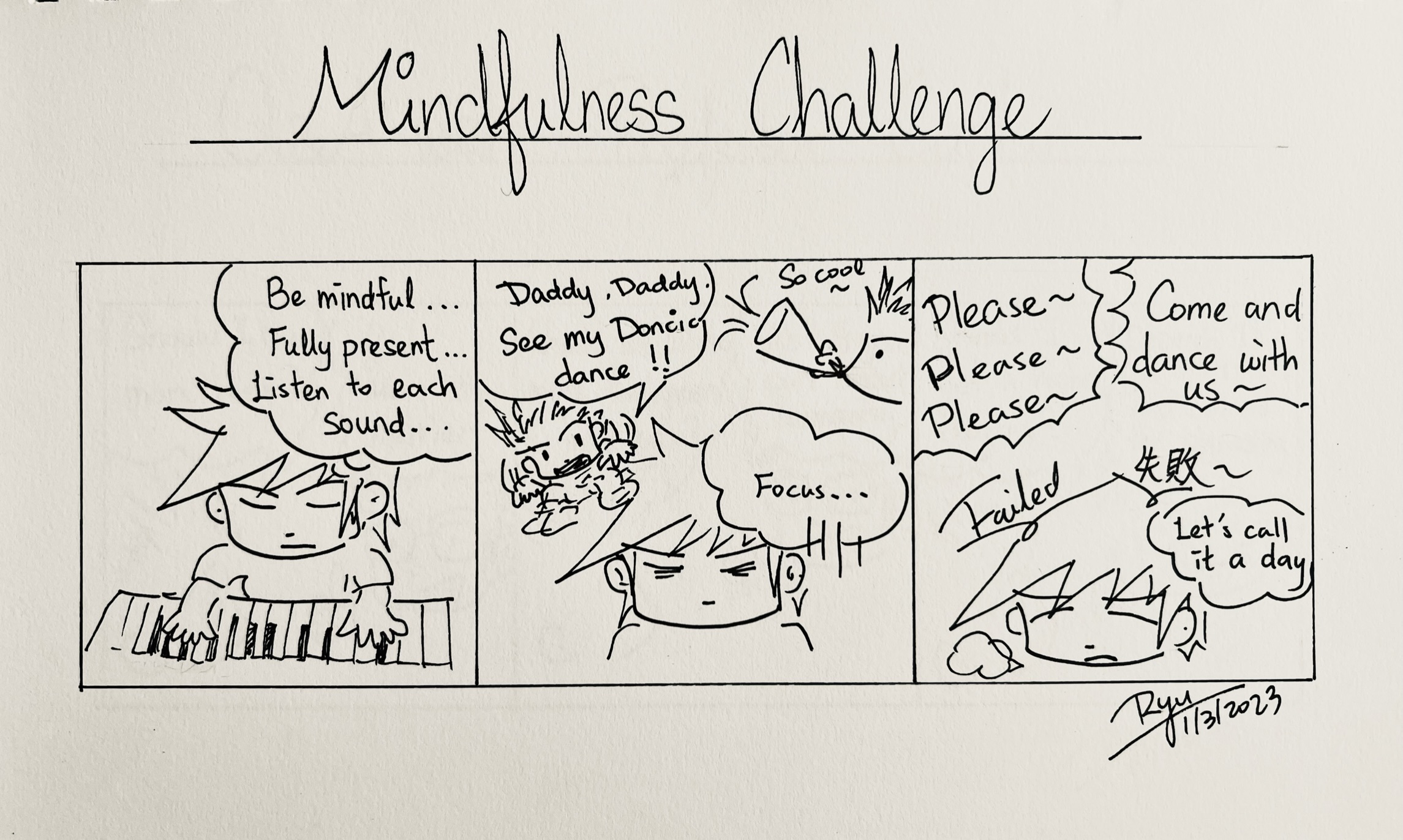
But why do I play worse piano in front of an audience, feel awkward in a big party, or unwilling to do things (e.g. dance) that might make me look stupid in public? Intellectually I understand that we are all going to die someday, and others generally care much less about me than I do. So I should be less afraid to try more things or look stupid. But in reality it’s not easy to break this tendency, and being overly self-conscious could act like a self-imposed constraint.
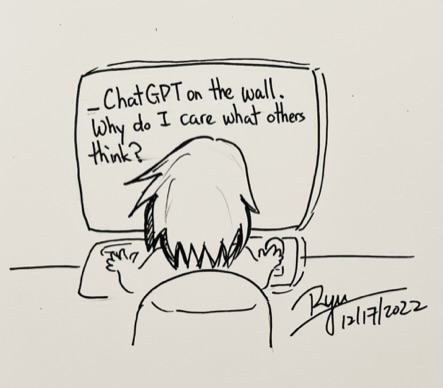
I was wondering what Chat GPT has to say about this and below is its response:
Why do humans feel self-conscious?
Self-consciousness is a feeling of being aware of one’s own thoughts, feelings, and actions, as well as how these may be perceived by others. It is a normal and natural part of human psychology and can serve as a way for people to reflect on themselves and their behavior.
There are several reasons why humans may feel self-conscious. One reason is social comparison, or the tendency to evaluate oneself by comparing oneself to others. This can lead to feelings of self-consciousness when we perceive that we are not measuring up to the standards or expectations of others.
Another reason is self-awareness, or the ability to introspect and think about one’s own thoughts and feelings. This can lead to self-consciousness when we become aware of our own thoughts and feelings and how they may be perceived by others.
Self-consciousness can also be a result of social anxiety, or the fear of being judged or evaluated negatively by others. This can lead to feelings of self-consciousness in social situations where there is a fear of being judged or evaluated.
Overall, self-consciousness is a complex and multifaceted feeling that can arise for a variety of reasons and can be influenced by both internal and external factors.
Social comparison is not healthy. Self-awareness shouldn’t affect my performance. It seems like social anxiety is what I care about most. With practice I probably can mitigate the negative effect of being overly self-conscious, and channel it to come up with higher quality work.
There’s a fine line between success and failure. Often there’s only one chance in a situation. You either make it or lose it all.
David Goggins called it the one second decision, whether an MMA fighter taps out or bet his health and future to have a chance to win.
Great athletes often have that mental toughness. Ex-NBA player Chris Bosh wrote in his book, Letters to a Young Athlete:
Pain is temporary; glory is forever. If you want to excel, you have to get used to the pain. You have to get used to exhaustion. I can’t promise you that it will ever be a comfortable feeling, but I can guarantee you that you can become familiar enough with it that you can visit that mental and physical space on your path to getting better and not have to worry that you’ll crumple under the pressure.
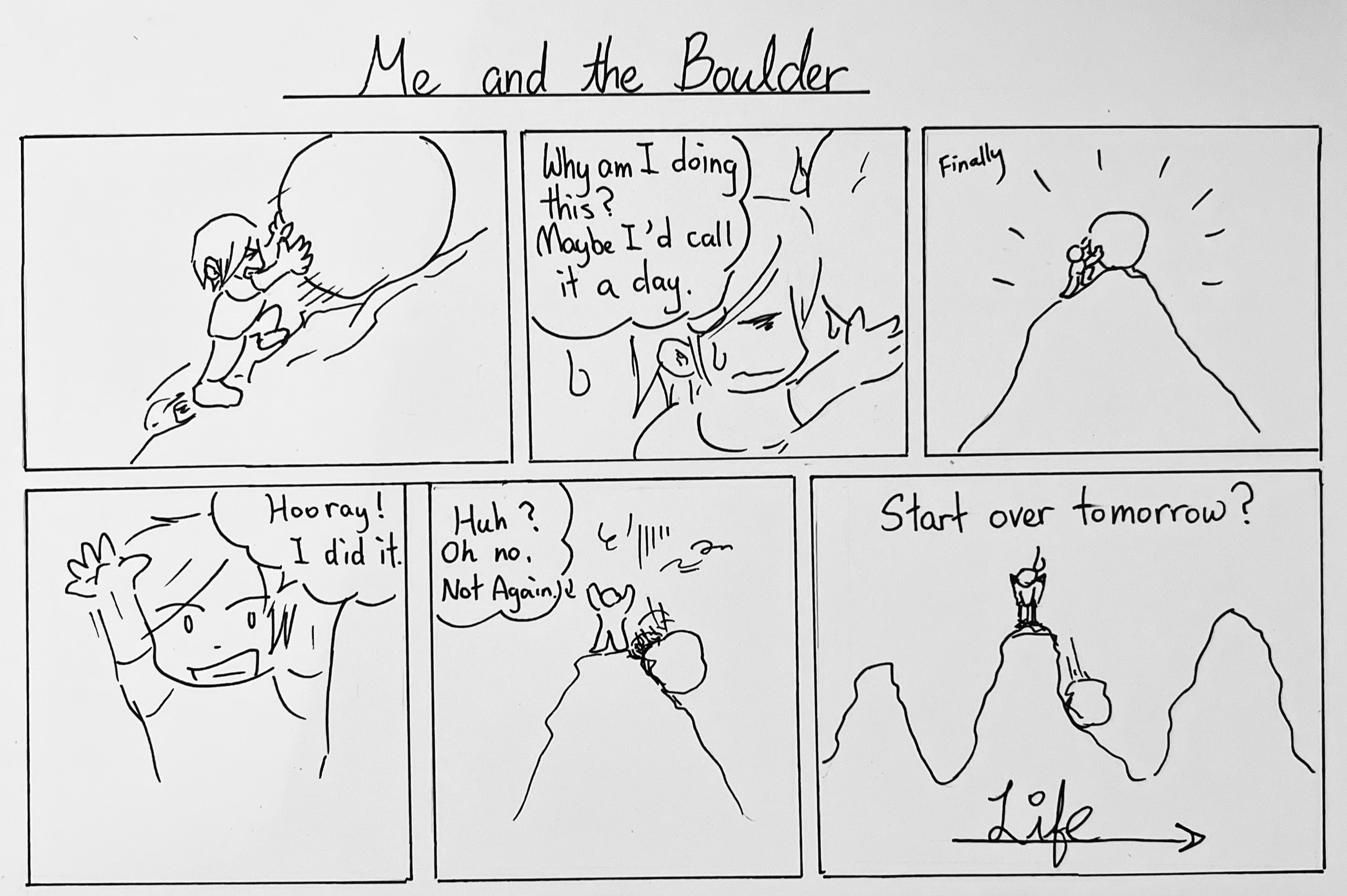
There were times when I didn’t train enough and struggled in the middle of a long distance run, I’d find myself with thoughts like ‘why am I doing this’, or ‘this is silly and meaningless.’ Luckily I was too ashamed to quit in those official runs. On a smaller scale this is something I face in my daily exercises. If I quit frequently, it’d no longer be a habit.
Quitting once gives us a precedent to quit again, while persisting despite discomfort trains our mental toughness. Chris Bosh put it well: “You become capable of the grind by surviving the grind.
So is quitting bad? Not necessarily.
Annie Duke argues that we are often too reluctant and slow to quit (we don’t ignore sunk costs and value opportunity costs properly). If we persist in something that doesn’t fit us, we might waste a lot of time. Ralph Waldo Emersion said: “All life is an experiment. The more experiments you make the better.” Quitting gives us opportunities to try more things.
But does quitting also make us a jack of all trades? Some call those who die on their quests to climb Mount Everest reckless. But often it’s also those who don’t know when to quit make history.
There is no correct answer. I think it’s best to experiment enough to know what we like, and then put in effort to be as best as we can in the area we want to pursue. Quitting shouldn’t happen when we are in the middle of a tough situation, but when we calmly reflect on our priorities in life.
We have to enjoy the whole process, the struggles as well as the accomplishments. What would I be willing to do day in and day out to master or achieve something?
Again from Chris Bosh:
You have to figure out how to love it – all the sprints, all the miles, all the weights, all the preparation. Pretend you love it, trick yourself into loving it, whatever it takes…
Your blessing in life is when you find the torture you’re comfortable with…it’s work, it’s exercise. Find the torture you’re comfortable with and you’ll do well.
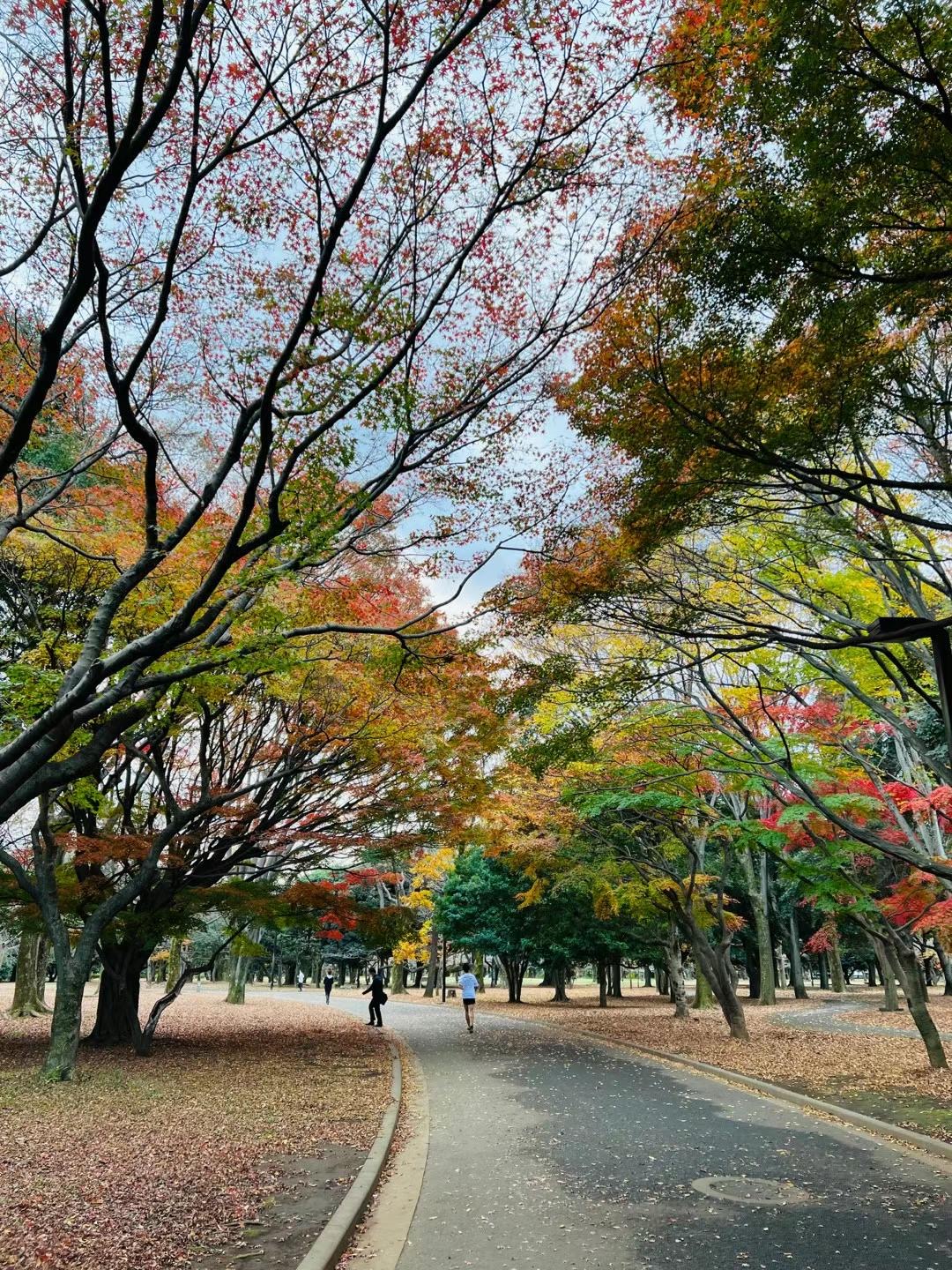
I’ve been running 5-8K daily for years, following Murakami’s footstep. It’s a routine that helps me stay fit and sane. As it’s a daily habit, I mostly run similar routes, so it’s not particularly exciting. Even though it might not feel fun at the moment, it’s essential for me, as it helps calm my mind and feel better about myself.
Running in new cities, whether during work or tourist trips, are different. They are novel and fun. I find it much easier to do longer runs in new cities, and think it’s a great way to experience the cities’ layout, sights, and people.
Being able to run outdoor in a new place has become one of my favorite things to do during travel.
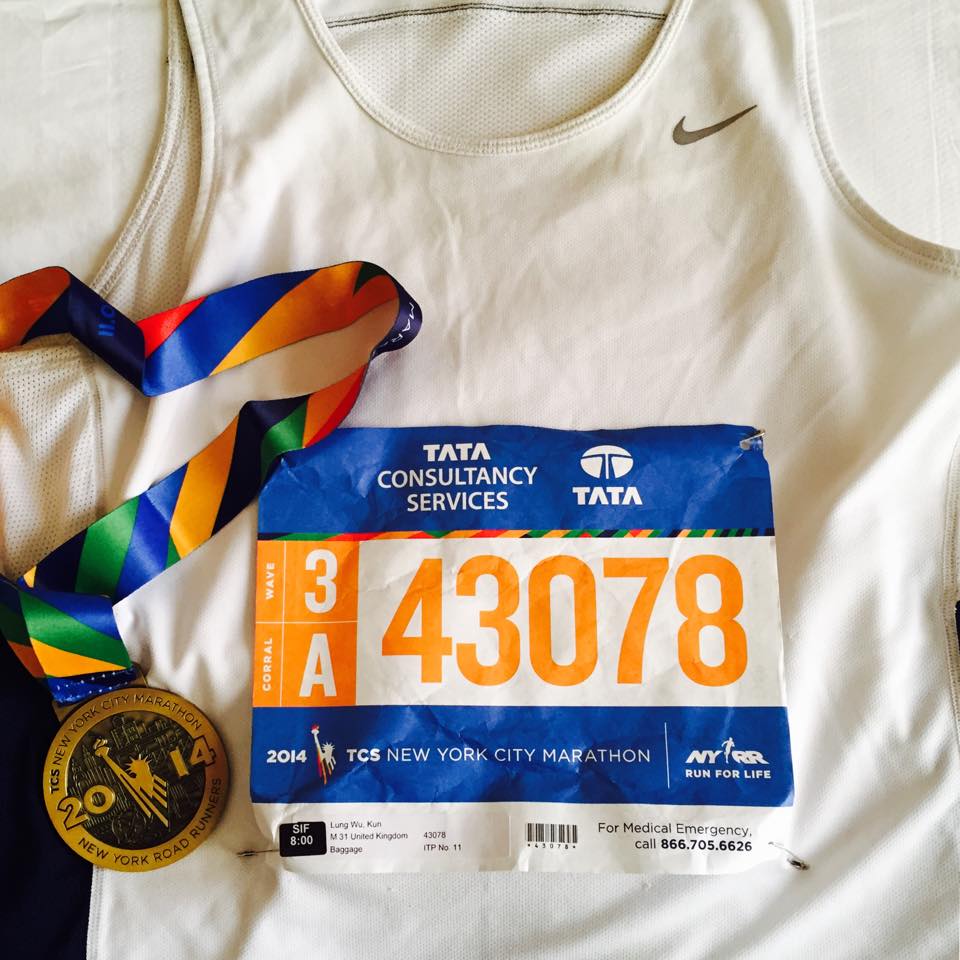
Despite the strong wind and cold weather, my first marathon was overall a great experience. I was surprised by the number of people cheering throughout the five boroughs. The city is beautiful. If timing’s not a concern, it’d be nice to stop and take photos along the way (like what some participants did).
I didn’t come across any celebrities during the run, but managed to beat economist Justin Wolfers.
Training matters. I suffered much less from this marathon than any of my previous 10K runs.
 Ryu's Blog