Feeds:
Posts
Comments

Archive for the ‘Health and wellness’ Category

The author argues in this article why he hopes to die at age 75:

I am sure of my position. Doubtless, death is a loss. It deprives us of experiences and milestones, of time spent with our spouse and children. In short, it deprives us of all the things we value.

But here is a simple truth that many of us seem to resist: living too long is also a loss. It renders many of us, if not disabled, then faltering and declining, a state that may not be worse than death but is nonetheless deprived. It robs us of our creativity and ability to contribute to work, society, the world. It transforms how people experience us, relate to us, and, most important, remember us. We are no longer remembered as vibrant and engaged but as feeble, ineffectual, even pathetic.

I feel less strongly about death or the timing of it. And while I think I’ll get use to it, the thoughts of ageing still dishearten me.

But it also illuminates a key issue with aging: the constricting of our ambitions and expectations.

We accommodate our physical and mental limitations. Our expectations shrink. Aware of our diminishing capacities, we choose ever more restricted activities and projects, to ensure we can fulfill them. Indeed, this constriction happens almost imperceptibly. Over time, and without our conscious choice, we transform our lives. We don’t notice that we are aspiring to and doing less and less. And so we remain content, but the canvas is now tiny. The American immortal, once a vital figure in his or her profession and community, is happy to cultivate avocational interests, to take up bird watching, bicycle riding, pottery, and the like. And then, as walking becomes harder and the pain of arthritis limits the fingers’ mobility, life comes to center around sitting in the den reading or listening to books on tape and doing crossword puzzles. And then …


Read Full Post »

WSJ has an article asking how much sleep do we need. Some experts argue that seven hours might be optimal, while others think we should sleep longer. As usual we should be skeptical about these findings. My guess is that it differs by person, and the quality of sleep is as important as the amount of sleep.

This might be a way to find out your optimal amount of sleep:

Experts say people should be able to figure out their optimal amount of sleep in a trial of three days to a week, ideally while on vacation. Don’t use an alarm clock. Go to sleep when you get tired. Avoid too much caffeine or alcohol. And stay off electronic devices a couple of hours before going to bed. During the trial, track your sleep with a diary or a device that records your actual sleep time. If you feel refreshed and awake during the day, you’ve probably discovered your optimal sleep time.


Read Full Post »

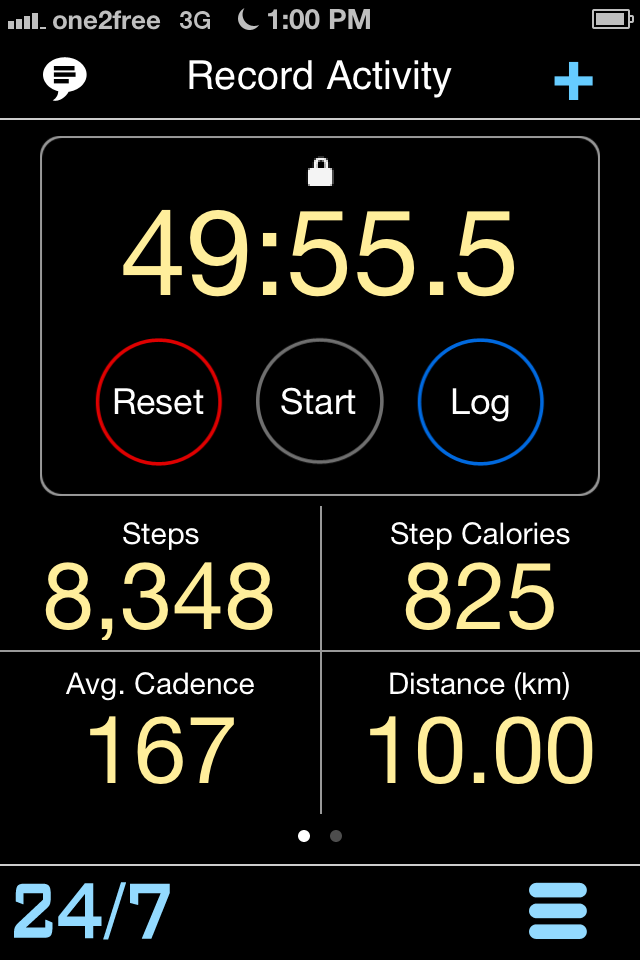
IMG_4568

I will be doing my first marathon in New York City later this year. I still remember how much I struggled mentally in my past 10K races, thinking thoughts like “why did I sign up for this”, “when will this ends”, and “is there a way to quit in the middle without embarrassing myself”. I think I felt that way because I didn’t train for them.

As I started training for the marathon and running 10K or more regularly, running the same distance seems to have become a much easier task. I struggle less and don’t think running 10K is a big deal anymore. During my training process, I’m becoming a slightly different person, physically and mentally becoming a person who can finish a marathon. And this is probably similar in many other endeavors, like becoming a professional musician, athlete, or CEO. We hone our skills and mental capacity to achieve things that wouldn’t be possible without those training and experience. Things that seem incredibly difficult at first become ordinary (and something else becomes the new challenge).

Goal seems to be a useful tool to change ourselves. When we strive for goals that stretch us, we need to become different from what we used to be to achieve those goals. Ideally we should also learn to enjoy the process when striving for those goals. For marathon it might mean enjoy eating healthy, staying active, and running regularly. When these activities turn into a lifestyle, it likely means we already become different selves. Dan Gilbert noted that we are always changing but tend to underestimate those changes (he called it “the end of history” illusion). Perhaps we could use goals to change ourselves more consciously.

I think training for a marathon is a great way to experience the power of training and discipline. It is a good challenge because most people can finish a marathon if they train for it, but at the same time it’s not an easy task. It’s also a good way to understand the importance of genes, as there are likely people who can run much faster than you no matter how hard you train.

Read Full Post »

The Cult of Overwork – “Overwork has become a credential of prosperity” even though we know “long hours diminish both productivity and quality”. The puzzle is why we (at least for those living in relatively high income places) still work so much, and don’t enjoy more leisure as Keynes wrote back in the 1930, or as Bertrand Russell recommended in In Praise of Idleness (excerpts below).

What Chinese officials learn from the Party training school – Some officials are impressive indeed, though not sure how much can be attributed to the training. 

How I made sure all 12 of my kids  could pay for college themselves – Sensible parenting principles that seem to strive a balance between the extreme generalizations of the free-range Western style and the Asian tiger parenting style. Remind me of the highly recommended book How to Talk So Kids Will Listen & Listen So Kids Will Talk

Memoirs of a Would-be Macroeconomist by Arnold Kling- Good coverage of the recent debates and development in macroeconomics from various schools of thought. I especially enjoy the description of his experience working at CBO and the Fed.

Excerpts from Russell’s In Praise of Idleness:

I think that there is far too much work done in the world, that immense harm is caused by the belief that work is virtuous, and that what needs to be preached in modern industrial countries is quite different from what always has been preached.

……

It will be said that, while a little leisure is pleasant, men would not know how to fill their days if they had only four hours of work out of the twenty-four. In so far as this is true in the modern world, it is a condemnation of our civilization; it would not have been true at any earlier period. There was formerly a capacity for light-heartedness and play which has been to some extent inhibited by the cult of efficiency. The modern man thinks that everything ought to be done for the sake of something else, and never for its own sake.

……

When I suggest that working hours should be reduced to four, I am not meaning to imply that all the remaining time should necessarily be spent in pure frivolity. I mean that four hours’ work a day should entitle a man to the necessities and elementary comforts of life, and that the rest of his time should be his to use as he might see fit. It is an essential part of any such social system that education should be carried further than it usually is at present, and should aim, in part, at providing tastes which would enable a man to use leisure intelligently. I am not thinking mainly of the sort of things that would be considered ‘highbrow’. Peasant dances have died out except in remote rural areas, but the impulses which caused them to be cultivated must still exist in human nature. The pleasures of urban populations have become mainly passive: seeing cinemas, watching football matches, listening to the radio, and so on. This results from the fact that their active energies are fully taken up with work; if they had more leisure, they would again enjoy pleasures in which they took an active part.

Excerpts from Keynes’s Economic Possibilities for our Grandchildren:

Thus for the first time since his creation man will be faced with his real, his permanent problem-how to use his freedom from pressing economic cares, how to occupy the leisure, which science and compound interest will have won for him, to live wisely and agreeably and well.

The strenuous purposeful money-makers may carry all of us along with them into the lap of economic abundance. But it will be those peoples, who can keep alive, and cultivate into a fuller perfection, the art of life itself and do not sell themselves for the means of life, who will be able to enjoy the abundance when it comes.

Yet there is no country and no people, I think, who can look forward to the age  of leisure and of abundance without a dread. For we have been trained too long to strive and not to enjoy. It is a fearful problem for the ordinary person, with no special talents, to occupy himself, especially if he no longer has roots in the soil or in custom or in the beloved conventions of a traditional society.

……

Of course there will still be many people with intense, unsatisfied purposiveness who will blindly pursue wealth-unless they can find some plausible substitute. But the rest of us will no longer be under any obligation to applaud and encourage them. For we shall inquire more curiously than is safe to-day into the true character of this “purposiveness” with which in varying degrees Nature has endowed almost all of us. For purposiveness means that we are more concerned with the remote future results of our actions than with their own quality or their immediate effects on our own environment. The “purposive” man is always trying to secure a spurious and delusive immortality for his acts by pushing his interest in them forward into time.

Read Full Post »

I know many people who are feeling tired most of the time. They sleep enough hours but still feel tired and can’t concentrate well during the day. According to this article (gated), lack of sleep is not the main problem. It’s the quality of sleep and the state of mind that matter.

It’s not the kind of tiredness caused by a simple lack of sleep — more a feeling of near-permanent exhaustion that makes the brain feel as if it is constantly misfiring. Yet we also feel wired and hyper alert because of the swirl of stress hormones, so we may not even realise how deeply tired we are.

“This sense of fatigue is a pretty universal epidemic, and I see it all the time in my clinical work,” says psychologist Dr Cecilia d’Felice. “But there is nothing physically wrong, and it’s not really about sleep — it’s about a state of mind.”

What specialists think is happening is that we are bombarding our brains with too much information for too long during the day — whether it’s answering emails at 10pm or thinking up a new witticism to Tweet — and not allowing our brains sufficient recovery time. “We’re afraid to stop and do nothing because we feel this constant need to be in ‘doing mode’,” says physiologist Dr Nerina Ramlakhan, who runs a clinic for the chronically tired at a London hospital. “But we underestimate just how much mental effort is involved for the brain in processing all this information.”

And this sense of fatigue is bad for innovative and productive work:

The wired state that many of us live in during the day is a “hyper-arousal” caused by tiredness, stress hormones and caffeine and it has terrible effects on our ability to concentrate properly, focus and remember things. This hyper-aroused state is fine for simple, repetitive tasks, explains sleep expert Professor Jim Horne at Loughborough University. But as the task gets more complicated, we are less able to cope. “Anything involving innovation, problem-solving and higher thinking is impaired, and if it carries on for months and months it can end in burnout.”

What to do? The article recommends giving your brain a break:

The most vital thing is to give your brain a break from the onslaught of information. “We should ask ourselves, is it really important to check our emails at 10pm? Many of us are developing unhealthy relationships with our phones…

“The trouble is, checking your phone is quite addictive. We produce dopamine every time we respond to an alert on our phones, which is a chemical that wakes us up and makes us feel energised…

“There’s no hard and fast research on how long you can spend on your phone, tablet or laptop in the evenings before you start causing damage,” says Ramlakhan, author of Tired But Wired (Souvenir Press, £12.99). “But from my 20 years of work in this area, I recommend my patients go for an ‘electronic sundown’ 60-90 minutes before bed…

True information-overload junkies may require something stronger to rest their minds, and research shows meditation and the current buzzword “mindfulness” — learning to live in the moment to quiet the mind — can help…

What’s happening in the brain when we switch off – either by meditation or just letting our minds wander – is that the beta waves produced when we are alert are replaced by slower alpha waves (signifying a relaxed state) and then by much slower theta waves. “In a theta state – that daydreamy, glazed over state – your working memory begins to shut down,” says Ramlakhan. “You are essentially going ‘offline’ and consolidating, and your creativity increases. It’s a very important state to get into several times a day. Meditation is a conscious way of achieving it, but you could also get to it by walking or just ‘tuning out’. Walking has natural rhythm and is a meditation in itself.”

That’s probably why I find my solitary time walking back from my Muay Thai lesson and weekend hiking so relaxing. Daydreaming, doodling, playing guitar or just listening to music (without multitasking) are other ways that help relax my mind.

Read Full Post »

Here’s the result for my diet challenge:
Week 0: 70.5
End of Week 1: 69
End of Week 2: 68
End of Week 3: 68
End of Week 4: 66.5
End of Week 5: 66.3
April 1st: 64.1
There is not much change from my original strategies except some slight adjustments. My final daily checklist looks something like this:
1. No junk food, dessert (16) 2. No alcohol (3) 3. Drink lots of water before 9 pm 4. Eat enough protein 5. Eat small meals 6. Always use stairs (2) 7. Minimize sodium and canned food
The numbers in parentheses are the number of violations I had during the period. Those without parentheses are hard to quantify and act more like a remainder. Dessert appears to be my major problem, but most of the time I chose to have them and didn’t regret my choice.  I guess as long as I’m conscious about the amount I consume it’d be fine. Another notable change in my habit’s the use of stairs at all times. It adds substantially to my daily calories burning as I live on the 7th floor and the economic department at LSE’s located on the 6th floor.
Here’s menu of foods I typically choose from:
-Cereal (Muesli, Wheat Bran, Wholegrain Biscuit) with soymilk
-Green bean
-Fruit Yogurt
-Apple/Orange
-Homemade sandwich (Soya bread/Wholemeal bread, lettuce, tomatoes, egg, turkey/beef slices)
-Fish (salmon/tuna/sardine/mackerel/cod/kipper/haddock)
-Various types of beans/Lentil
-Vegetables (Homemade salad/broccoli/cauliflower/spinach)
Other supplements (coffee, green tea, flaxseed, multivitamin, fish oil tablet)
Conclusion:
From this experience, I believe that with enough discipline and some knowledge about metabolism, nutrition, and calories, losing weight is not too difficult (for me at least). But targeting a particular body part is much harder (my face only slim down a little toward the end). I’m probably not going to try harder to lose my facial fat, and I think 64kg’s too slim for my height (179cm) and I’d prefer increase it back to around 67kg (muscle of course). Since I achieved my goal, my plan from now on is to eat healthy and increase body weight gradually till I’m satisfied. Overall this is a fun experience and nice challenge. Now it’s time to go get a class of wine, enjoy the chocolate and healthy snacks Ivy and my sister brought me from US, and get myself ready for the next challenge.
PS: My friend/competitor’s progress didn’t go as smoothly as mine due to a various factors, a big one was she had a trip with her family and enjoyed lots of foods. I guess I’d do the same if I were in her position as one great pleasure from travel’s to try and enjoy new and delicious goods. Though I didn’t get to travel, I’m going to enjoy my meal.

Read Full Post »

As I mentioned in the previous entry, I’m on a diet now (actually more a challenge/self-experiment). And just in case some friends might worry, it’s meant to be a healthy, sustainable diet. I’ve started the challenge for a week now, got some positive results (see below), and surprisingly find myself enjoying the process.

How it started

A friend told me if I could help her lose weight she’d treat me a meal. Since I also gained some weight over Valentine and Chinese New Year and feel like I’ve been eating excessive snacks/sweets lately, I came up with the competition plan to see who can successfully lose a certain amount of weight within a timeframe, and the loser have to treat the winner a meal.

The Goal

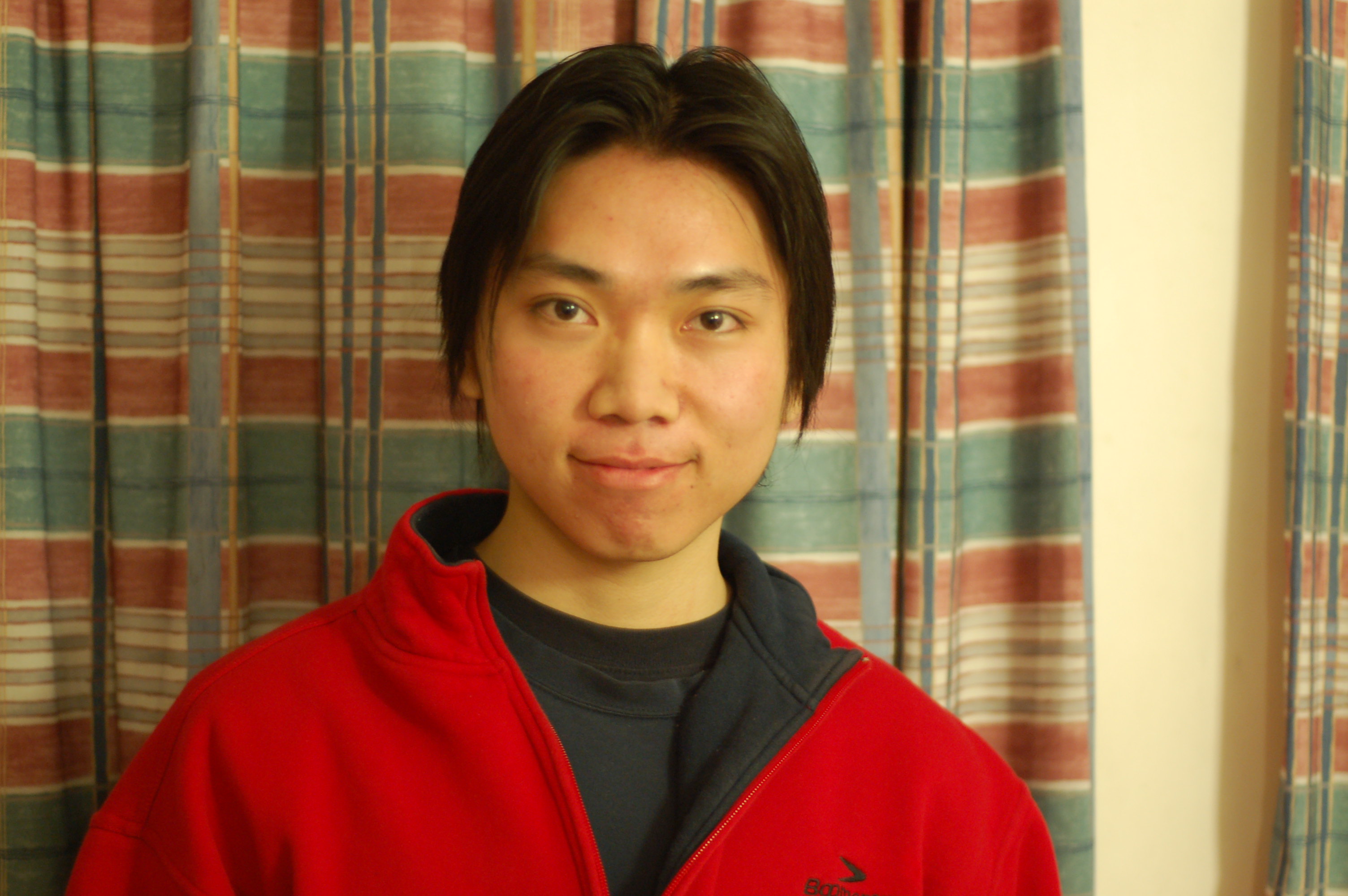
To lose 5 kg by the end of March (six weeks interval). Why 5kg? Because it’ll get me back to the weight I maintained at EIS (or first year at APU). I’d be interested to see if I could get rid of the facial fat (see EIS photo below)

Duration: Feb. 20 – March 31

Initial weight: 70.5 kg

Goal: 65 kg

Motivation

Where does my motivation come from if I’m just helping a friend? I’m no altruist, so what would keep me on the goal? Anyone would know that a meal’s not enough to sustain a person on diet. So here are few more reasons. 1) Being hungry might make you smarter (see here) 2) It is a challenge. If I could achieve this goal, I’d have more confidence in my ability to achieve anything I set my mind on, which would also act as a boost to my next upcoming goal of getting a distinction. 3) It’s fun. I’m enjoying the process of keeping detailed record on my dietary life and body condition, and it’d be interesting to see what’ll happen (See Seth’s blog for more on self-experimentation. There are useful dietary findings as well). Various bloggers have mentioned the simplicity of losing weight (here’s one). But most people seem to struggle with diet goal. Since I’ve never tried to diet seriously, it’d be interesting to see whether I can achieve it.

Strategy

Basically lower calorie-intake and continue doing exercise. Here’re the specifics:

1) Plan what I want to eat and keep record of what I eat.

2) No junk food and dessert (the term might be a bit vague here, but people who’re honest to themselves should have no problem in distinguishing food with high nutritional content from the junks). Since I do not want to miss out everything, I allow myself to ‘taste’ food if I want, which means I could try a dessert I’ve not eaten before but only limit to one piece (or a bite depending on the portion). Generally I won’t buy any and won’t eat them even if freely available.

3) No alcohol (wine, beer, etc.)

4) 5 liter of water per day. I started with 5L as that’s the amount that worked for Seth.

5) Not adding sauces and spices in cooking.

6) Eat smaller meal and spread them out.

7) Monitor progress, which include checking my action against these strategies and keeping track of weight weekly.

8) Adjust strategy if necessary. Since this is the first week, I haven’t changed anything yet. Other strategies to consider include using olive oil or fructose water to suppress hunger and Sushi! (see Seth’s paper for details).

Result 1st week:

Weight: 69. The weight tends to flutuate a bit depending on when and where I measure it. And because I don’t own a scale, I can’t consistently measure it. But since my goal’s to lose 5kg, there’d have no problem seeing substantial differences in the end.

It seems like my body has been getting use to eating less. I’m much less prone to feeling hungry and get full more easily. Not sure if this is due to my slowing metabolism, change in dietary habit, or just body adaptation. I suspect after this initial phase it’d be harder to lose more weight (since I gained some weight in the past weeks, so it’s likely now I’m just shifting back to my usual weight: roughly 67). But so far the result’s encouraging, and my mind does feel sharper.

I’m taking photo every week as well. Unfortunately I forgot to take one at the beginning. So I’ll post the most recent photo I took before the diet and one taken a bit earlier (near Christmas) as an approximation of my initial look. I won’t post my progress photo as I think it’d be more interesting to see them all at once in the end.
Read Full Post »

Without Limits

After the Christmas Eve night out to the Cathedral I hadn’t leaved my room (except to the kitchen) till yesterday, when I found it hard to concentrate and study effectively, I went out for a run. I ran along the embankment to the Big Ben and return via the millennium bridge. The whole trip took around 1 hour and made me feel great. I can understand why so many people are obsessed with running: bankers who wake up 7 am Saturday to run a 50 miles marathon after only four hours sleep before heading back to work, or runners who just want to challenge their limits. Here’s the trailer of a movie about Steve Prefontaine that I’d love to watch (friends, download it and send it to me please), and here’s an article on Karnazes, who could run 350 miles in three days without sleeping.


Although running is never my main sport, I found it rewarding: the freedom and confidence it brings, not to mention the benefits it has on health. Perhaps I should add running to my regular schedule and use it as an opportunity to see more places in London (people around me will know that I’ve only been to very few places in London, basically just from my dorm to school; most tourists would have seen more places in London than I do). And maybe one day I’d be strong enough physically and mentally to challenge and break my limits.


Read Full Post »

« Newer Posts