Feeds:
Posts
Comments

Archive for October, 2013

Reflections on old age

A long reflection on old age by Penelope Lively. It’s something most of us will need to confront at some point. Some excerpts I like:

But perhaps I have arrived at the state of death-consciousness that he identifies – we cannot truly savour life without a regular awareness of extinction. Yes, I recognise that, along with the natural human taste for a conclusion: there has been a beginning, which proposes an end. I am afraid of the run-up to death, because I have had to watch it. But I think that many of us who are on the last lap are too busy with the baggage of old age to waste much time anticipating the finishing line. We have to get used to being the person we are, the person we have always been, but encumbered now with various indignities and disabilities, shoved as it were into some new incarnation. We feel much the same, but clearly are not. We have entered an unexpected dimension; dealing with this is the new challenge.

……

And in any case, I am someone else now. There are things I no longer want, things I no longer do, things that are now important. Writing survives, for me – so far, so far. Other pleasures – needs – do not.

……

You get used to it. And that surprises me. You get used to diminishment, to a body that is stalled, an impediment. An alter ego is amazed, aghast perhaps – myself in the roaring 40s, when robust health was an assumption, a given, something you barely noticed because it was always there. Acceptance has set in, somehow, has crept up on you, which is just as well, because the alternative – perpetual rage and resentment – would not help matters. ”

……

Simone de Beauvoir confronted the problem in her extensive study Old Age: “Old age is particularly difficult to assume because we have always regarded it as something alien, a foreign species: ‘Can I have become a different being while I still remain myself?'” What is at issue, it seems to me, is a new and disturbing relationship with time. It is as though you advanced along a plank hanging over a canyon: once, there was a long reassuring stretch of plank ahead; now there is plank behind, plenty of it, but only a few plank paces ahead. Once, time was the distance into which you peered – misty, impenetrable, with no discernible landmarks, but reassuringly there. In old age, that dependable distance has been whisked suddenly behind you – and it does seem to have happened suddenly. Not long ago, there was some kind of balance – a fore and aft, as it were. No longer; time has looped back, regressed, it no longer lies ahead, but behind. It has turned into something else, something called memory, and we need it – oh dear me, yes, we need it – but it is dismaying to have lost that sense of expectation, of anticipation. The mind does not always keep up – the subconscious, rather. In dreams, I am not always the self of today; I am often young, or younger, and if my children are present they have often become children again, obligingly – we have all jumped backwards. The mind cannot bear too much reality, it seems; in the same way, my husband Jack is nearly always present in my dreams – it is 12 years since he died, but at night he returns, not always recognisably himself, but a shadowy dream companion figure that I always know to be him.

……

Out with acquisition, excitement, and aspiration except in tempered mode. And, on another front, I don’t in the least lament certain emotions. I can remember falling in love, being in love; life would have been incomplete without that particular exaltation, but I wouldn’t want to go back there. I still love – there is a swath of people whom I love – but I am glad indeed to be done with that consuming, tormenting form of the emotion.

……

Certain desires and drives have gone. But what remains is response. I am as alive to the world as I have ever been – alive to everything I see and hear and feel. I revel in the spring sunshine, and the cream and purple hellebore in the garden; I listen to a radio discussion about the ethics of selective abortion, and chip in at points; the sound of a beloved voice on the phone brings a surge of pleasure. I think there is a sea-change, in old age – a metamorphosis of the sensibilities. With those old consuming vigours now muted, something else comes into its own – an almost luxurious appreciation of the world that you are still in. Spring was never so vibrant; autumn never so richly gold. People are of abiding interest – observed in the street, overheard on a bus. The small pleasures have bloomed into points of relish in the day – food, opening the newspaper (new minted, just for me), a shower, the comfort of bed. It is almost like some kind of end-game salute to the intensity of childhood experience, when the world was new. It is an old accustomed world now, but invested with fresh significance; I’ve seen all this before, done all this, but am somehow able to find new and sharpened pleasure.

Here are some beautiful quotes from John Updike on death and afterlife.

Not only are selves conditional but they die. Each day, we wake slightly altered, and the person we were yesterday is dead. So why, one could say, be afraid of death, when death comes all the time? It is even possible to dislike our old selves, those disposable ancestors of ours. For instance, my high-school self — skinny, scabby, giggly, gabby, frantic to be noticed, tormented enough to be a tormentor, relentlessly pushing his cartoons and posters and noisy jokes and pseudo-sophisticated poems upon the helpless high school — strikes me now as considerably obnoxious, though I owe him a lot: without his frantic ambition and insecurity I would not be sitting on (as my present home was named by others) Haven Hill.

……

For many men, work is the effective religion, a ritual occupation and inflexible orientation which permits them to imagine that the problem of their personal death has been solved. Unamuno: ‘Work is the only practical consolation for having been born.’ My own chosen career — its dispersal and multiplication of the self through publication, its daily excretion of yet more words, the eventual reifying of those words into books — certainly is a practical consolation, a kind of bicycle which, if I were ever to stop pedaling, would dump me flat on my side. Religion enables us to ignore nothingness and get on with the jobs of life.

Talking about work and age, Paul McCartney is releasing a new album in his 70s, while Jiro san is still making sushi day in and day out.

Hope I’ll be good enough at that stage to find my work meaningful. And given I still have hope and anticipations it means there’s still more time. Getting old seems frightening to me now, but I’m pretty sure I’ll adapt to it when it arrives.


Read Full Post »

Two Ted Talks on how technology and human ingenuity will likely make the future better. The speakers are optimistic, as opposed to a more pessimistic take from Robert Gordon. Erik Brynjolfsson is also optimistic about growth, but thinks human will need to “race with/against the machines”, a theme not dissimilar from Tyler’s latest book Average is over (even though most people seem to associate Tyler with The Great Stagnation, he’s probably more a realistic optimist than a pessimist).

Where do I fall on the debate? I don’t think anyone can predict what will happen that far out, but my bias is that things will continue to get better over the next 100 years or so. I’m not sure where this optimism bias arises from, but it probably serves me well personally.


Read Full Post »

I know many people who are feeling tired most of the time. They sleep enough hours but still feel tired and can’t concentrate well during the day. According to this article (gated), lack of sleep is not the main problem. It’s the quality of sleep and the state of mind that matter.

It’s not the kind of tiredness caused by a simple lack of sleep — more a feeling of near-permanent exhaustion that makes the brain feel as if it is constantly misfiring. Yet we also feel wired and hyper alert because of the swirl of stress hormones, so we may not even realise how deeply tired we are.

“This sense of fatigue is a pretty universal epidemic, and I see it all the time in my clinical work,” says psychologist Dr Cecilia d’Felice. “But there is nothing physically wrong, and it’s not really about sleep — it’s about a state of mind.”

What specialists think is happening is that we are bombarding our brains with too much information for too long during the day — whether it’s answering emails at 10pm or thinking up a new witticism to Tweet — and not allowing our brains sufficient recovery time. “We’re afraid to stop and do nothing because we feel this constant need to be in ‘doing mode’,” says physiologist Dr Nerina Ramlakhan, who runs a clinic for the chronically tired at a London hospital. “But we underestimate just how much mental effort is involved for the brain in processing all this information.”

And this sense of fatigue is bad for innovative and productive work:

The wired state that many of us live in during the day is a “hyper-arousal” caused by tiredness, stress hormones and caffeine and it has terrible effects on our ability to concentrate properly, focus and remember things. This hyper-aroused state is fine for simple, repetitive tasks, explains sleep expert Professor Jim Horne at Loughborough University. But as the task gets more complicated, we are less able to cope. “Anything involving innovation, problem-solving and higher thinking is impaired, and if it carries on for months and months it can end in burnout.”

What to do? The article recommends giving your brain a break:

The most vital thing is to give your brain a break from the onslaught of information. “We should ask ourselves, is it really important to check our emails at 10pm? Many of us are developing unhealthy relationships with our phones…

“The trouble is, checking your phone is quite addictive. We produce dopamine every time we respond to an alert on our phones, which is a chemical that wakes us up and makes us feel energised…

“There’s no hard and fast research on how long you can spend on your phone, tablet or laptop in the evenings before you start causing damage,” says Ramlakhan, author of Tired But Wired (Souvenir Press, £12.99). “But from my 20 years of work in this area, I recommend my patients go for an ‘electronic sundown’ 60-90 minutes before bed…

True information-overload junkies may require something stronger to rest their minds, and research shows meditation and the current buzzword “mindfulness” — learning to live in the moment to quiet the mind — can help…

What’s happening in the brain when we switch off – either by meditation or just letting our minds wander – is that the beta waves produced when we are alert are replaced by slower alpha waves (signifying a relaxed state) and then by much slower theta waves. “In a theta state – that daydreamy, glazed over state – your working memory begins to shut down,” says Ramlakhan. “You are essentially going ‘offline’ and consolidating, and your creativity increases. It’s a very important state to get into several times a day. Meditation is a conscious way of achieving it, but you could also get to it by walking or just ‘tuning out’. Walking has natural rhythm and is a meditation in itself.”

That’s probably why I find my solitary time walking back from my Muay Thai lesson and weekend hiking so relaxing. Daydreaming, doodling, playing guitar or just listening to music (without multitasking) are other ways that help relax my mind.

Read Full Post »

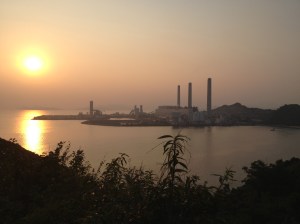
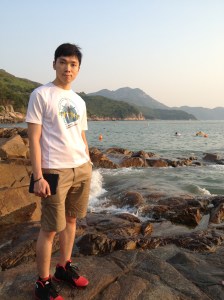
It relaxes my mind. It’s a good way to get closer to nature, spend time with family/friends, and do some exercises. I’m lucky to live in a place where there are many accessible hiking trials. Spending a day out hiking and reading (during commute and breaks) is a cheap and excellent way to recharge.

IMG_3533 IMG_3535IMG_3529IMG_3512

Read Full Post »

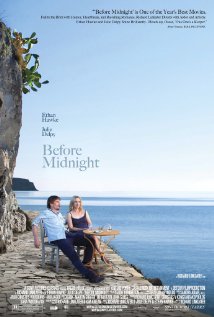
I still remember how much I enjoyed watching Before Sunrise (here‘s my previous post on the movie).  It portrays the kind of relationship I’d like to be in, not to mention the beautiful, idealistic encounter. I equally enjoyed Before Sunset: a more realistic take on relationship and life. Nevertheless it’s still a short encounter with the two main characters having a lovely conversations and stroll around Paris.

Another 9 years we learn that Jesse and Celine stayed together. They continue to share great chemistry and enjoy each other’s company, but these alone might not be enough to keep their relationship going. The old saying that it’s easy to fall in love but hard to stay in love rings true.  I used to think if two people love each other and are willing to communicate calmly then any problems can be resolved. But things don’t always work that way. Men and women tend to approach things differently. Differences in personality, values, and objectives also make communication more difficult, and people are bias and not necessarily truth seeker. The biggest obstacle to the “if we communicate then everything will be fine” is emotion. Emotion is necessary for a spontaneous and fun relationship, but it also makes the kind of communication needed to resolve issues more difficult. I guess to maintain a relationship, we need to know when to be rational and when to be emotional. Some self-deception or illusion about the relationship and more tolerance would probably help as well.

MV5BMjA5NzgxODE2NF5BMl5BanBnXkFtZTcwNTI1NTI0OQ@@._V1_SX214_

Read Full Post »

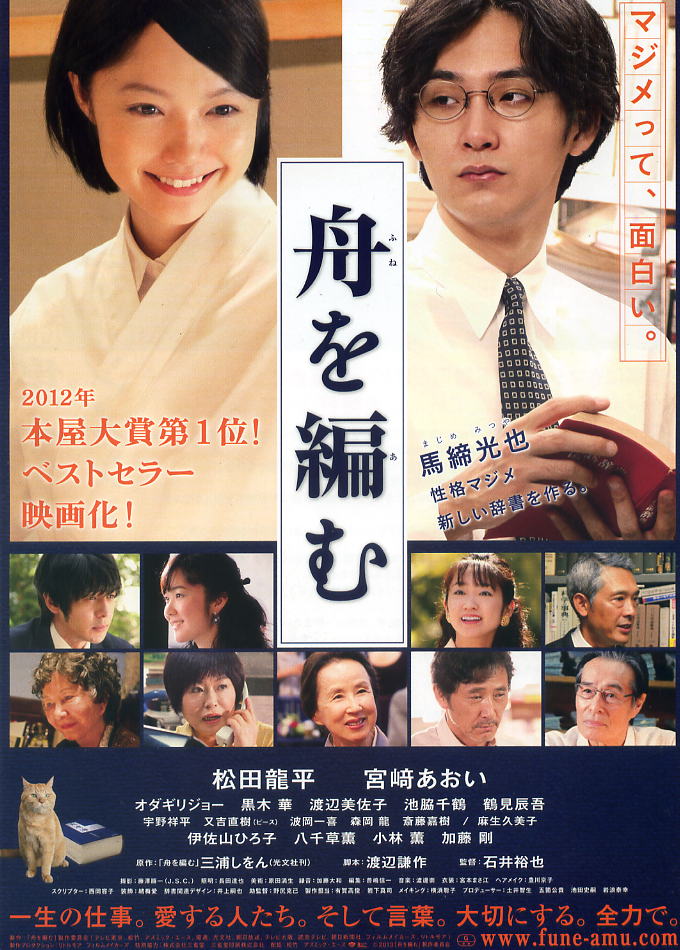
This Japanese movie talked about a young introvert who dedicated over a decade of his life to create a dictionary. In today’s fast paced society, a simple yet meaningful lifestyle seems like something many would feel nostalgic about. I admire craftsman who dedicates oneself to a certain ideal. It reminds me of the documentary Jiro Dreams of Sushi [the sushi is really good by the way] as well as many other Japanese stories.

Here is a nice review from IMDB:

The Great Passage is a rare story describing how a serious, quiet and shy young man pursues his massive project at work with great diligence and passion while winning his dream girl along the way.

When low-keyed, non-expressive and introvert Mitsuya Majime (meaning serious in Japanese! Played by Ryuhei Matsuda) is transferred to a new position in his publishing company to compile a dictionary, his life is forever changed. Originally a misfit salesman, Majime is perfect for his new role as editor. In fact, the clumsy young man is an outcast even in this society which values outgoing and talkative personalities. Equally out of date is the project he is working on – a paper dictionary in a society with online and mobile communication.

Majime may be old fashioned: he works in a company which clings to an old dream to help users understand reality in the wide ocean of knowledge, by means of patiently weaving the boat of dictionary, “The Great Passage.” He himself is also conservative in expressing his feelings to the girl of his dream, also granddaughter of his landlady, Kaguya Hayashi (Aoi Miyazaki) who aspires to be a chef in competitive Tokyo.

Yet we cannot help but admire Majime’s dedication to his work: he meticulously looks for sources of new words and their explanations; he pays immense effort in researching the type of paper with the right touch for the dictionary. When the deadline edges in, he even camps in the office with his temporary helpers to iron out the mistakes until they finally meet the deadline.

Equally serious is how he approaches the muse of his life by offering explanations of words to coincide her careful action in the kitchen. What a nice merge of both threads in the movie! It was amusing when we see how he struggles to verbalize his feelings for her. Afterall, feelings have to be expressed.

Compiling a dictionary in an ever changing world could be daunting and overwhelming. But the director made it very interesting and almost sacred, not to mention the funny scene when the editors stay in a fast food chain to “overhear” youngsters’ conversations. The romantic and hilarious courtship almost convince us that when there is genuine love and care, perhaps whatever you say does not matter that much: action often speaks better than words. In the same token, ironically, despite all the detailed explanations of the dictionary, perhaps sometimes the highest level of communication does not need, or cannot be expressed by, any words.

This is also a movie on realizing our dreams by intense focus and persistence: whether it is becoming a chef or compiling a comprehensive dictionary. Yes, it may take a whole decade to complete, but it is well worth the effort, especially in this fast changing world. The fact that they remain in the same old house and office all through the years echoes the themes that in this vast sea of mobility and changes, there is a need to anchor on something/someone constant before we can move forward.

The cast are excellent. Matsuda and Miyazaki shine in portraying the young, shy and kind lovers. You can’t help feeling sorry and impatient for them. But in the end, I guarantee you will admire and appreciate their painstaking effort, both in love and in work.

fune-wo-amu-flyer-2

Read Full Post »

The Paleo Manifesto: Ancient Wisdom for Lifelong Health

Just finished reading this book about health using an evolutionary perspective. It makes a lot of sense to me. John gives a good overview and many sensible advice. I’m a convert.

Here’s the author’s website: http://huntergatherer.com/

Read Full Post »

Average is over: Powering America Beyond the Age of the Great Stagnation

Self-recommending. Tyler argues that as we get better at measuring productivity, market will increasingly reward people who can work well with machines/artificial intelligence and who are good at marketing and making people feel good. These people are likely to be self-motivated and conscientious. I think these are also people who are open to experimentation, more resilient to failure (have grit), and adaptable. To the extent that genes determine a significant part of our personality and temperament and meta-cognition and that they are not easy to change, I tend to agree with Tyler’s conclusion that income inequality trend will continue.  The positive note is that this doesn’t mean the low-income people cannot still enjoy a relatively decent life of cheap entertainment.

Links to interviews: EconTalk,  nprTechCrunch

How to Get Filthy Rich in Rising Asia

A novel about life: luck, growing up, falling in love, what it takes to be successful, decline, and ageing. I like the portrayal of the transient nature of most things in life.

Wealth and Power: China’s Long March to the Twenty-first Century

An interesting read on China’s modern history, focusing on some of the main characters involved. A good starting point to understand Chinese nationalism and the motivations behind the top leaders.

Here is an interview with Orville Schell.

Money Mischief: Episodes in Monetary History

A good, non-technical guide to monetary policy with historical examples. Surprised I didn’t read this earlier.

How China Became Capitalist

Market oriented reforms, pragmatic leadership, and willingness to experiment are some of the key elements to China successful development. China is lucky to have Deng Xiaoping and Zhu Rongji. Coase and Wang ends with a quote by Adam Smith: “The great source of both the misery and disorders of human life, seems to arise from over-rating the difference between one permanent situation and another…”

Lee Kuan Yew: The Grand Master’s Insights on China, the United States, and the World

A short book summarizing Lee’s views. Always interesting to hear what this opinionated visionary has to say.

Korea: The impossible country

Entertaining read to learn more about South Korea’s history and culture and some of the social and economic issues it faces.

The Year Without Pants: WordPress.com and the Future of Work

Scott Berkun on his experience at WordPress and thoughts on the future of work. Similar to Tyler’s view, I read him as saying that those who are self-motivated and can communicate effectively will do well, and learning from experimentation will become increasingly important.

China’s Urban Billion: The story behind the biggest migration in human history

Good overview on how China’s been urbanizing and the various problems it faces. Hukou reforms are complicated as they need to go hand in hand with fiscal reforms to address local government revenue, land reforms and property rights, education and retraining, and city planning and environmental impact. These are likely topics that the central government will address in its upcoming plenum in November.

In Spite of the Gods: The Rise of Modern India

Helps me better understand India’s politics and economy and the tremendous challenges it faces.

Top Dog: The Science of Winning and Losing

Po Bronson and Ashley Merryma summarize research on competition. Some takeaways (not sure if they are robust): Competition helps to improve our performance and facilitates creative output. Better competitors are those better at controlling their psychological state. “Performance is facilitated and learning is impaired by the presence of spectators.” Positive pep talks don’t help much, while thinking about the potential obstacles helps. Boys and girls might thrive in different competitive environment.

Read Full Post »

« Newer Posts