Feeds:
Posts
Comments

Archive for the ‘Books’ Category

I started learning badminton recently, partly inspired by the Blue Box anime and partly because I think it’s a hobby I can enjoy into old age with family and friends. It’s also a sport in which many Asians excel. Whether it’s singles, doubles, or mixed, it’s easy to find players to root for. But as I wrote before, I much prefer being a participant over a spectator, and I feel I have room for one more sport.

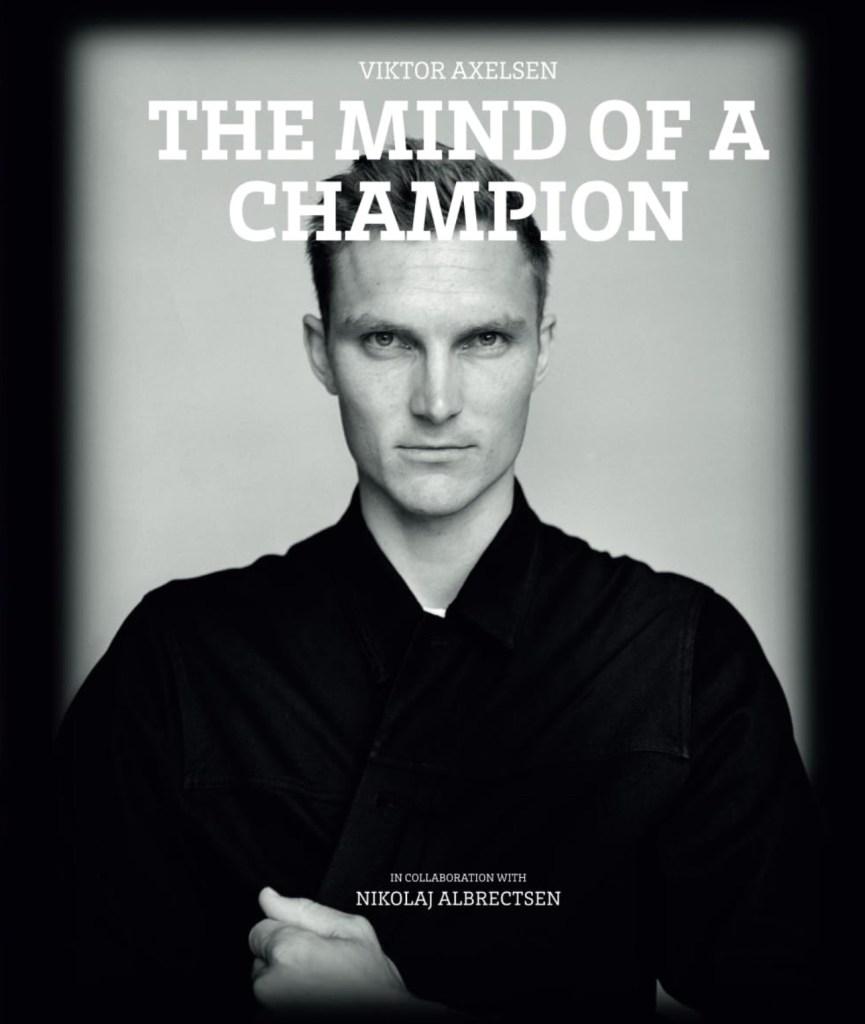
Lately, I’ve been watching more badminton videos and just finished reading The Mind of a Champion by Viktor Axelson. Interestingly, both Viktor and Taiki share a similar reason for loving the sport. [Viktor:]”I liked that I was master of my own destiny, that the outcome would be decided by my performance on court. It was up to me and only me.” Badminton seems like a perfect fit for someone who values agency.

Excerpts:

Is it your thoughts that are telling you that you can’t continue? Or is it in fact your body saying stop?

“Be nice to the people you pass on your way up because you’ll pass them again on your way down”. In other words, it’s okay to be all in, to show both frustration and celebrate success on court – of course while being respective to my opponent. But off court, a more humble or low-key attitude was the way to go.

I find it helpful to remind myself that 20 or 40 years from now, no one will recall who wrote what on social media. That thought forces me to stay rational when I read or hear something about myself. At the end of the day, it’s not important.

It is those kinds of negative thoughts I have worked on eliminating, and I think I succeeded at a young age because I was raised in the belief that envy doesn’t do anything good for you.

It made me realise that when I was struggling being happy about the success of my competitors, it was human nature. They are universal thoughts, but I could practice and learn how to handle them when they appeared. So, I would practice feeling happy if my fellow players were successful. And it actually felt energising. Today it has become an integral part of who I am.

Had I been able to give 17-year-old Viktor a piece of advice, I would have said to him: “Stand by yourself and your choices. Listen to what people say, but never let yourself be limited by others.” To reach high performance is about courage. Most people are so focused on fitting in that they forget that if they do like others, they will be like one of many others. I would tell myself to own up to being different and experimental.

Regardless of which limitations other people see in you, never let the opinion of others get in the way of chasing your dream.

Seek inspiration from others even if they have a different background or come from a different culture than yours. Find your own unique path or approach.

For me there is not one right way: There are many paths to greatness.

Depending on how the match evolved, I would have to adapt, see myself from the outside and be able to tell myself to change the tactics. “Be kind to yourself when you make mistakes.” “Stay calm and be patient in the duels.”

He said: “Let’s focus on what we can do from here. And not let what has already happened ruin the day”.

If there is something nagging you off the court, it can affect your physical state. If you have a negative focus on court or even before your match, there is a risk that you will make more or bigger mistakes on the court. Simply because you are “pre-programmed” to think negative thoughts. I assume this phenomenon is not isolated to neither badminton nor sports, but could also have an impact on your life and career.

Here it is helpful that my overall goal is not to achieve certain results, but to become as good as I possibly can. To achieve my full potential.

Is this how I am chasing my full potential? I know it’s an abstract goal. I know that no one knows what the result will be. I don’t even have the answer to that myself. It works for me because I have a series of sub-goals. They are measurable and evaluated as honestly as the rest of my life.

People should not be measured by their mistakes, but by what they do to correct them.

Having the right mindset is not something you learn once and that’s it. B.S. and I talk about how I can never become complacent because I win. “It’s about keeping your room clean,” as he says. This means I must use exactly the same tools, even if I feel good. It forces me to think about why things are going well. I must consistently evaluate my development – even when I am progressing.

We should never fear losing, but fear not learning from our losses.

Getting better requires you to try things that mean you fall a little short or risk doing so in the moment.

What if I could decide how much and when I wanted to practice? What if my need for optimisation could finally be satisfied? What if my potential would never face a single limitation? What if the optimal conditions actually existed? What if it was entirely up to me, and I never had to settle for anything less than perfect? That’s my best answer to the question: to chase the optimal conditions for my development.

If I don’t eat right, I can’t last the distance in my sport. So, when I optimise on all parameters, it’s both about pushing and taking care of my body. That’s why food is a tool to help my body perform. It might sound harsh, but I don’t eat for pleasure. I eat what is optimal for me and I am very strict about my diet. I am always very aware of what and when I eat.
Read Full Post »

Henry Oliver wrote an article comparing two of my favourite authors, Jane Austen and Adam Smith. Both have a deep understanding of human psychology and behaviour. I’ve admired Knightley’s and Darcy’s character and self-command ever since I read Jane Austen’s novels when I was young.

Excerpts:

Smith argued that people want to be praised and to be praiseworthy. That they want to be loved and to be deserving of love. Smith says we must be virtuous to be happy. His virtues are prudence, benevolence and justice. His vices are pride and vanity. “The proud and the vain man . . . are constantly dissatisfied,” he writes. The route to virtue is through “self-command”. Therefore we must achieve “superiority over the most ungovernable passions of human nature”.

Self-command is a question of willpower, education, habit. It comes from being bred in “the bustle and business of the world” when we are exposed to “violence and injustice of faction”. To those who are miserable, Smith advises in The Theory of Moral Sentiments, “do not mourn in the solitude of darkness . . . Live with strangers, with those who know nothing or care nothing about your misfortune.” 

As the economists Bohanon and Vachris write, both Smith and Austen prioritise self-control as a means of achieving balance and self-improvement. By attaining the skill of self-command, Marianne is able to cultivate virtue.

What marks out the capacity to improve, in Smith, is being able to see ourselves as an “impartial observer” would see us…Emma is unable to improve morally until she takes Knightley’s advice. Like Marianne, she must learn to see like those with more self-command. It is when Emma sees things as Knightley does that she is able to reform. “I doubt whether my own sense would have corrected me,” she acknowledges to Knightley.

Seldom, very seldom, does complete truth belong to any human disclosure; seldom can it happen that something is not a little disguised, or a little mistaken.

Read Full Post »

I consider myself a late bloomer. During my teens, I was immature in handling relationships, and I’m still amazed at how silly some of my past senseless actions were when I reflect on them. It seems my maturity has always lagged a step behind my peers. I would like to think I’m more mature now, yet I suspect that in a few years, I might cringe at some actions I take today. This suggests I am still changing, hopefully for the better. While not everyone may become more productive or successful later in life, I think it’s beneficial to believe we can always grow. As Henry Oliver might say, I hope to continue becoming my true self as I age.

Excerpts from the book:

Personal transformation happens through cultural immersion, sampling the world and changing our surroundings. In new circumstances, gradually sampling our way into a new mode of thinking, living or working, we can change our opportunities, perhaps even change ourselves.

Late bloomers are serious, perhaps, intense, obsessive, occasionally eccentric, volatile, or weird. Not infrequently, the people around them don’t quite understand who they are capable of being. Their earnestness can make them seem strange, off-putting, and makes it difficult to see how and where their talent could flourish: their capability often hides in plain sight…Their ambitions are usually secret, or unknown to themselves for a long time. They pursue their interests quietly. Their ability and confidence growth with experience.

Our time is not guaranteed to be well spent. How many people every year are lost to weariness, laziness, mental decline, exhaustion, redundancy? As Jimmy Carter wrote in his memoir of post-presidential life, The Virtues of Aging, ‘Each of us is old when we think we are – when we accept an attitude of dormancy…a substantial limitation on our physical and mental activity…As I know from experience, this is not tied very closely to the number of years we have lived.’

Addiction to success, habit, and love of status had prevented them from travelling or seeing their children. One important type of late bloomer is someone who successfully changes the balance of their life.

[Late bloomers] They tend to be smart (which doesn’t have to mean successful at school), self-educating and self-directing. They follow their own interests and take lifelong education seriously. They never stop teaching themselves; often, they set their own agenda…Another thing that characterises many late bloomers is a period of withdrawal for reflection.

[Jerry Seinfeld on producing Seinfeld] If you’re efficient, you’re doing it the wrong way. The right way is the hard way. The show was successful because I micro-managed it – every word, every line, every take, every edit, every casting. That’s my way of life.

Rather, knowledge was sought for its ability to improve our character: ‘A man always makes himself greater as he increases his knowledge.’

Take Samuel Johnson’s advice. Resolve, work, fail, and resolve again. We should do this not just for ambition, for ‘hope of a better fortune’, but because ‘the time comes at last, in which life has no more to promise’ and all we can do then is remember our lives; and ‘virtue will be all that we can recollect with pleasure’. We should keep working and keep trying, keep expanding our perspectives and horizons, our stock of knowledge and our range of experiences, not just for aspiration, but so we will know at the end of our lives that we did.

First, the culture we live in has a huge influence on our work: our circumstances change who we become. Second, our mental powers do not inevitably decline as we age: the more work we produce, the more likely we are to be successful.

It matters who you surround yourself with and what circumstances you put yourself in. Influence builds up over time.

‘The feeling of being in a great culture isn’t smoothness – it’s the feeling of solving hard problems with people you admire.

This is not the direct influence of peer pressure but the indirect influence of sampling the world via your network.

Different people are influenced by different things. Some people are more strongly influenced by their parents but not by their peers, and vice versa. Some people are going to be strongly susceptible to the influence of music but not painting. Many people are what Belsky calls a ‘mosaic’ – rather than fitting a neat pattern, we are influenced by different things in different ways.

That is why key transitional moments in life affect us differently. Just as the war affected the young delinquents in various ways, so will retirement, children, redundancy and other moments of change affect people.

We should aim to be comfortable at being incompetent when we try new things. The more we branch out, the more we can discover what we are really good at. We had to be incompetent for a long time while we developed our current expertise, and sometimes we should be willing to be incompetent again.

Late bloomers spend a lot of time cultivating themselves. They often experience life as a long, organic process, where decisions emerge out of previous experience. They are always becoming themselves.

‘The best predictor of exceptional creativity is productivity. It’s lots of hard work.’

‘Leonardo da Vinci demonstrated the potential of drawing as a form of research and as a medium for the generation of new ideas.’ Michelangelo’s drawings are full of repetition. He draws the same figures over and over with slight variations in posture, pose, angle. It’s how he encoded basic forms into his memory and how he discovered ways of being original.

Ask yourself as Audrey Sutherland did, ‘What part of my goal can I achieve now? What can I do now to achieve my goal later?’

Read Full Post »

One was by W.H. Auden. “When a successful author,” Auden wrote, and here I think you can include all artist types, “analyses the reasons for his success, he generally underestimates the talent he was born with, and overestimates his skill in employing it.” James Baldwin thought otherwise: “Talent is insignificant…Beyond talent that lie all the usual words: discipline, love, luck, but most of all, endurance.”

Art requires access to the imagination, a notoriously difficult place to visit. The imagination fuels and idea. The artist acts urgently, often impulsively, on that idea but brings conscious rigor to the evaluation of what the imagination has spewed. Ultimately, experience, intellect, insight, and drive enable them to shape the work and then to edit it over and over, until that idea has been turned into a finished work. Each stage–the imaging, judging, and shaping–is important; one way or another, each entered these conversations.

When we hop on a bicycle, no part of us thinks that we’ll be able to win the Tour de France, but with art, we think if we’re not really good at it, we can’t, or shouldn’t, do it.

If anything seems universally true in this survey, it is that no matter how hard it gets, real artists do not give up.

They are artists because they are consumed with the making of art. Art is hard, and that is exactly what is so satisfying about it. Victories are fleeting. The struggle is every day.

Read Full Post »

John Stuart Mill’s Autobiography had a strong impact on me when I read it many years ago. The way his father raised him, eventually leading to his mental breakdown, his relationship with Harriet Taylor, and his thoughts on topics like liberty and happiness, all left a deep impression on me.

In this post, Henry Oliver summarises Mill’s thoughts on human flourishing, which emphasize becoming a better person (moral), gaining greater skill (practical), and developing higher levels of taste (aesthetic).

I hope to continue learning, discovering, and building my character.

Excerpts:

The Art of Life means not trying to be happy, but developing yourself. Sometimes, in order to be happier, we must do what we dislike. We need the pain of improvement before we can have the happiness of achievement.

Mill’s art of life, the balancing of the moral, practical, and aesthetic, is about enabling people to raise their aspirations and improve themselves in ways they couldn’t imagine when they began their journey of bildung and discovery.

If we keep a vision of greatness in mind and develop a nobleness of character, we will be best equipped to practice many-sidedness and to discover the world, rather than accept what other people tell us think.

So as you make your resolutions, think about how to cultivate your character practically, aesthetically, and spiritually. Be many sided. Keep educating yourself. Discover the world. Aim at something noble.

I often remind myself of Mill’s quote on happiness:

Those only are happy … who have their minds fixed on some object other than their own happiness; on the happiness of others, on the improvement of mankind, even on some art or pursuit, followed not as a means, but as itself an ideal end. Aiming thus at something else, they find happiness by the way.

John Stuart Mill

Read Full Post »

In his new book “Hidden Potential“, Adam Grant shares some advice on how to reach our potential. He believes “the most meaningful form of performance is progress. The ultimate mark of potential is not the height of the peak you’ve reached, but the distance you traveled–and helped others travel.”

If our focus is on progress and the distance traveled, it’s important to stay motivated, especially when things get tough. Adam Grant provides guidance on staying motivated:

“Engage in mental time travel.” Track your progress and consider how your past self would view your current achievements.

“Turn the daily grind into a source of daily joy.” Be creative and design practice around deliberate play. Set up fun skill-building challenges and introduce novelty and variety into practice.

“Be proactive about rest and recovery.”

When stuck, try a different path, seek out multiple guides, try a side project or hobby to maintain forward momentum and a credible source that helps point to the right direction.

One takeaway is that hard work alone is not enough. Continuous progress demands a degree of conscientiousness, creativity, and a willingness to experiment.

Below are some other advice he provides on learning:

Try new ways to learn.

Practice your skills before you feel ready.

Seek discomfort.

Set a mistake budget.

Listen to coaches who have relevant expertise, know you well, and want what’s best for you.

Strive for excellence, not perfection. Practice wabi sabi, the art of honoring beauty in imperfection, by identifying some shortcomings that you can accept. Consider where you truly need the best and where you can settle for good enough.

Be your own last judge.

Compete against yourself.

Read Full Post »

The book contains 450 advice/wisdom Kevin Kelly wishes he’d known earlier. Below are some I hope to remember/follow:

Listening well is a superpower. While listening to someone you love keep asking them “Is there more?” until there is no more.

Hatred is a curse that does not affect the hated. It only poisons the hater. Release a grudge as if it were a poison.

Friends are better than money. Almost anything money can do friends can do better. In so many ways, a friend with a boat is better than owning a boat.

Calm is contagious. Be calm to help others.

Children totally accept — and crave — family rules…In fact, “I have a rule for X” is the only excuse you need for your own personal policies.

Every person you meet knows an amazing lot about something you know virtually nothing about. It won’t be obvious and your job is to discover what it is.

Whenever you can’t decide which path to take pick the one that produces change.

You don’t need more time because you already have all the time that you will ever get; you need more foucus.

This is the best time ever to make something. Non of the greatest, coolest creations 20 years from now have been invented yet. You are not late.

You can eat any dessert you want if you take only three bites.

Be frugal in all things except in your passions. Select a few interests that you gleefully splurge on. In fact, be all-around thrifty so that you can splurge on your passions.

Experience are fun and having influence is rewarding but only mattering makes us happy. Do stuff that matters.

Greatness is incompatible with optimizing in the short term. To achieve greatness requires a long view. Raise your time horizon to raise your goal.

For every good thing you love ask yourself what your proper dose is.

Spending as little as 15 minutes on improving how you do your thing, is the most powerful way to amplify and advance your thing.

Productivity is often a distraction. Don’t aim for better ways to get through your tasks as quickly as possible. Instead aim for better tasks that you never want to stop doing.

Read Full Post »

According to Epstein, breath of experience, self-testing, and slow, seemingly inefficient trainings help enhance learning and performance.

A high-repetition workload negatively impacted performance. Years of experience had no impact at all. If not experience, repetition, or resources, what helped creators make better comics on average and innovate? The answer (in addition to not being overworked) was how many of twenty-two different genres a creator had worked in, from comedy and crime, to fantasy, adult, nonfiction, and sci-fi. Where length of experience did not differentiate creators, breadth of experience did. Broad genre experience made creators better on average and more likely to innovate.

…learning itself is best done slowly to accumulate lasting knowledge, even when that means performing poorly on tests of immediate progress. That is, the most effective learning looks inefficient; it looks like falling behind.

Training without hints is slow and error-ridden. It is, essentially, what we normally think of as testing, except for the purpose of learning rather than evaluation–when “test” becomes a dreaded four-letter word…Used for learning, testing, including self-testing, is a very desirable difficulty.

The types of training/practice that Epstein talked about are often uncomfortable and require effort and reflection. It is easier to do mindless repetitions and think that we are making progress. But in the long term, it is the progress and mastery that bring us satisfaction.

Human don’t mind hardship, in fact they thrive on it; what they mind is not feeling necessary. Modern society has perfected the art of making people not feel necessary.

Sebastian Junger

Read Full Post »

What’s art? What does it mean to live as an artist? And what makes great art? These are some of the questions Rick Rubin tackles in his book. Below are my highlights:

To live as an artist is a way of being in the world. A way of perceiving. A practice of paying attention.

The act of creation is an attempt to enter a mysterious realm. A longing to transcend. What we create allows us to share glimpses of an inner landscape, one that is beyond our understanding. Art is our portal to the unseen world.

Living life as an artist is a practice. You are either engaging in the practice or you’re not…The real work of the artist is a way of being in the world.

Patience is required for the nuanced development of your craft.

Art is choosing to do something skillfully, caring about the details, bringing all of yourself to make the finest work you can. It is beyond ego, vanity, self-glorification, and need for approval.

Most human beings like to fit in. We adapt not only to the evolving flow of material coming through us, but the boundaries and templates of the culture around us. Can great art come from conformity? And what is the purpose of being an artist if we deny our unique personal point of view? Those of us choosing to live as artists embrace our filter as a gift.

This is the essence of great art. We make it for no other purpose than creating our version of the beautiful, bringing all of ourself to every project, whatever its parameters and constraints. Consider it an offering, a devotional act. We do the best, as we see the best–with our own taste. No one else’s. We create our art so we may inhabit it ourselves.

If we can tune it to the idea of making things and sharing them without being attached to the outcome, the work is more likely to arrive in its truest form.

No system exists that can rank which work is most reflective of the maker. Great art is an invitation, calling to creators everywhere to strive for still higher and deeper levels.

Think of self-competition as a quest for evolution. The object is not to beat our other work. It’s to move things forward and create a sense of progression. Growth over superiority.

In this spirit of self-competition, task yourself to go further and push into the unexpected. Don’t stop even at greatness. Venture beyond.

Our purpose is to value and develop our understanding of ourselves and the world around us.

To be self-aware is to have the ability to tune in to what we think, how we feel, and how much we feel it without interference. To notice how we notice the outside world.

What ultimately makes a work great is the sum total of the tiniest details. From start to finish, everything has shades and degrees. There is no fixed scale. There can’t be, because sometimes the smallest elements are the ones that weigh the most.

Your path is unique, for only you to follow. There is no single route to great art. This doesn’t mean ignore the wisdom of others. Receive wisdom skillfully. Try it on for size and see how it fits. Incorporate what’s useful. Let go of the rest. And no matter how credible the source, test and tune in to yourself to discover what works for you.

The only practice that matters is the one you consistently do, not the practice of any other artist.

The best work is the work you are excited about.

A work of art is not an end in itself. It’s a station on a journey. A chapter in our lives. We acknowledge these transitions by documenting each of them.

The reasons we’re alive is to express ourselves in the world. And creating art may be the most effective and beautiful method of doing so. Art goes beyond language, beyond lives. It’s a universal way to send messages between each other and through time.

Read Full Post »

Your 20s are the perfect time to do a few things that are unusual, weird, bold, risky, unexplainable, crazy, unprofitable, and looks nothing like “success.” The less this time looks like success, the better it will be as a foundation. For the rest of your life these orthogonal experiences will serve as your muse and touchstone, upon which you can build an uncommon life.

His full interview with Noah Smith. I look forward to his upcoming book: Excellent Advice for Living: Wisdom I Wish I’d Known Earlier.

Read Full Post »

« Newer Posts - Older Posts »