• This is not a recommendation list and more a viewing record. As I get older, I sometimes have less desire to watch highbrow or critically-acclaimed movies, especially when flying (Why do our standards seem to drop at 30,000 feet?).

    Kakukaku Shikajika (Blank Canvas: My So-called Artist’s Journey). We waste a lot of time in our youth, and this immaturity often brings regrets. Yet it’s also one of the few periods when we can afford to waste time and do stupid things, and all those experiences stay with us.

    Kobe: The Making of a Legend. It revealed things I didn’t know, especially footage from when he was younger, and his relationships with his parents. He’d been confident and talented since he was a kid, but his passion and work ethic were what set him apart. No one is perfect, and it’s interesting what people remember about someone at the end of their life. Dear Basketball remains a great animated film.

    The 35-Year Promise. A story about relationships and overcoming deep-seated fear and shame.
    We all have strengths and weaknesses, likes and dislikes—but these don’t define our destiny. We can learn, improve, and grow to appreciate new things at any age. Here’s a review.

    Doraemon: Nobita’s Art World Tales. I watched many Doraemon episodes as a child and have fond memories of them, but haven’t followed the series since. I gave this a try because of the art theme and Aimyon’s song “Sketch.” It’s a simple story that doesn’t try to do too much, and mainly for existing Doraemon fans or those seeking childhood nostalgia. The film reminds us to draw what we love and appreciate the colors around us.

    Ya Boy Kongming! The Movie. A ridiculous movie on Kong Ming from Romance of the Three Kingdoms traveling through time to help an aspiring pop singer fulfill her dream. This is probably one of those movies I’d only watch on a flight. For those interested in learning about the original Romance of the Three Kingdom, I’d recommend John Zhu’s podcasts series.

    Elio. Largely predictable animated film. The character growth feels a bit abrupt, but I suppose that’s constrained by limited runtime and the need to reach a happy ending.

    K-Pop Demon Hunters. It’s nicely done and enjoyable even for someone who has a slight bias against K-pop. The songs are catchy and the lyrics fit the movie well. One of its messages is we should have faith in those we love. If we do not open up to those we value, it’s hard to build trust and resolve problems.

  • I read Pride and Prejudice and Emma in my teens and had fond memories of them. I should revisit her works at some point.

    Link to Henry Oliver’s article.

    Excerpts:

    She invented the modern novel in order to answer fundamental questions about how to be good, happy, and flourishing in a commercial society. Her novels are about questions that are still central to our lives. How to live a good life in a commercial society? What is a moral education in the modern world? Who should we marry?

    Drawing on her knowledge of the Enlightenment philosophers, especially Adam Smith and his book The Theory of Moral Sentiments, Austen’s novels are all about what it means to see things from someone else’s point of view. That is the moral lesson Lizzie Bennet learns about Mr. Darcey, it is what Marianne learns about Elinor, and it is what Emma Woodhouse learns about all her meddling.

    Jane Austen is so popular because she used her talents to write about things that really matter to readers’ lives. She didn’t pander to their expectations—either about the genre or the moral of the story—but nor did she dismiss their interests as petty or unimportant. She wrote characters who are loved, characters who we are still startled to realize we know all too well from our lives. She wrote about moments of awkwardness, embarrassment, and shame that still happen ever day. Drawing room mishaps, over-loud mothers, embarrassing sisters, vulgar relatives, and shameless friends.

    She used her genius to write about the moral importance of everyday life in a world that is always reinventing itself. That is why we love her still and will continue to do so.

  • Painting Your Own Canvas

    Eric Barker has a wonderful post summarising Camus’ thoughts on finding meaning in life. A good reminder to paint our own canvas and live with passion, even when things are tough and life seems meaningless. I’m not sure I’m strong enough to always be kind and forgiving, even to those I love, but it’s a goal worth aiming for.

    Excerpts:

    Camus isn’t telling you that life is pointless; he’s telling you that life has no given point. The point is what you do, and how honestly you do it. Camus didn’t say there is no meaning; he said there is no meaning unless you live as if there is. You have to earn it. With action. To live so deliberately, so unapologetically in the face of The Absurd that you become your own answer.

    Real freedom is choosing, but with no promise of success, no cosmic guarantee. It’s acting as if it matters when you know it might not. And if that makes you uncomfortable, good. That means you’re paying attention. Freedom isn’t liberation from constraints; it’s what happens when you acknowledge, without excuse, that you are the sole author of your actions. Because freedom isn’t an escape from fear. It’s choosing in spite of it. It’s stepping into the uncertainty without needing to know how it ends…

    The world may be absurd, but your actions aren’t. That solidarity isn’t a reward for good people; it’s how you become one…

    Camus wrote about The Absurd as a challenge. When life refuses to give you meaning, you don’t give up. Camus tells us: the only way to survive the universe’s indifference is to become stubbornly, gloriously alive anyway. He wanted us to pour ourselves into everything: love, art, work, friendship, the whole messy buffet of human existence…

    Most of our lives won’t be remembered long after we’re gone. But maybe, if we’re lucky, someone will remember the way we made them laugh until they cried, or the way we kissed them in the kitchen while the pasta boiled over, or the way we cared, stupidly and stubbornly, about something that didn’t matter to anyone but us.

    The moments I remember most, the ones that feel lit from within, aren’t the logical ones. They aren’t efficient or strategic. They’re messy. They’re stupid. But they’re passionate. They’re the arguments that ended in laughter, the friendships that started with confessions, the blog posts that somehow arrived at clarity through sheer stubborn intensity. So yes, let’s live with passion. Let’s love like idiots, work like maniacs, and create like children with crayons and no concern for staying inside the lines.

    It’s easier, of course, to detach. To call things meaningless and retreat into irony or intellect or whatever shield we’ve built to keep the world at a distance. But nothing grows in that space. To live with passion is to risk being broken. But it’s also the only way to be whole…

    A while back, during a particularly grim stretch of what I call “my life”, I thought the lesson was detachment. I thought Camus was saying nothing matters, so don’t get too close. But I was wrong. He wasn’t asking us to step back. He was daring us to step closer. To love anyway. To create anyway.

    There’s no epiphany. Just small, stubborn acts. A soft defiance. You love people who might not love you back. To be kind, even when kindness feels futile. To forgive someone who doesn’t say sorry. To write something no one will ever read, or plant something you might not live to see bloom. Because you’re free. The only meaning is the meaning we make.

    Accept the responsibility. Enjoy the companionship of friends. Feel the passion in those moments that forge memories. And, if we embrace these things, it’s more than worth it. Life isn’t meaningless; it’s just a blank canvas upon which we paint.

    Let’s see the world as it is: messy, indifferent, occasionally beautiful, filled with both disappointments and joys.

    The Absurd doesn’t go away. But if you live with passion, you stop needing it to.

  • I’ve wanted to play piano and sing at the same time. This year I finally gave it a shot with one of my favourite Frank Sinatra songs that has a relatively simple accompaniment. I also teamed up with my boys to make it less daunting. I think it’s a good start, and I hope to tackle a solo performance in the future.

    My Way Lyrics:

    And now, the end is near
    And so I face the final curtain
    My friend, I’ll say it clear
    I’ll state my case, of which I’m certain
    I’ve lived a life that’s full
    I traveled each and every highway
    And more, much more than this
    I did it my way

    Regrets, I’ve had a few
    But then again, too few to mention
    I did what I had to do
    And saw it through without exemption
    I planned each charted course
    Each careful step along the byway
    And more, much more than this
    I did it my way

    Yes, there were times, I’m sure you knew
    When I bit off more than I could chew
    But through it all, when there was doubt
    I ate it up and spit it out
    I faced it all, and I stood tall
    And did it my way

    I’ve loved, I’ve laughed and cried
    I’ve had my fill, my share of losing
    And now, as tears subside
    I find it all so amusing
    To think I did all that
    And may I say, not in a shy way
    Oh, no, oh, no, not me
    I did it my way

    For what is a man, what has he got?
    If not himself, then he has naught
    To say the things he truly feels
    And not the words of one who kneels
    The record shows I took the blows
    And did it my way
    Yes, it was my way

  • Passion beneath the calm, with a touch of sadness and nostalgia

  • Playing sports with my boys has been a wonderful way to bond. We’ve taken lessons, watched videos, and practiced together. I didn’t have much formal training as a child and didn’t train efficiently, so I’m glad I can now relive some of my childhood dreams. Though I’m no longer young and need more recovery time, I’ve become more conscientious and train in a more productive way, and there are far more resources available today.

    My ten year old son is already better at basketball than I was at his age. One of our rituals is playing one-on-one at the end of practice. Like Sawakita from Slam Dunk, we want to see at what age he can beat me when I’m playing seriously. I think he’ll feel the same satisfaction and joy like Sawakita did the first time he wins. This motivates me to stay fit and keep improving so I can be a worthy opponent.

    One of this year’s most satisfying moments was winning a two-on-two pickup game against two middle/high school teenagers. While my son struggled on defense because of the height difference, he made his shots and held his own on offense. That experience inspired me to look for more parent–child team competitions so we can train and improve together.

    Our family also started learning badminton together, and I’m considering integrating sports training into some of our trips. It seems like a great way to meet like-minded people and have fun while traveling.

    Recent one-on-one games (I called it the Sawakita challenge):

    Game 1:

    Game 2:

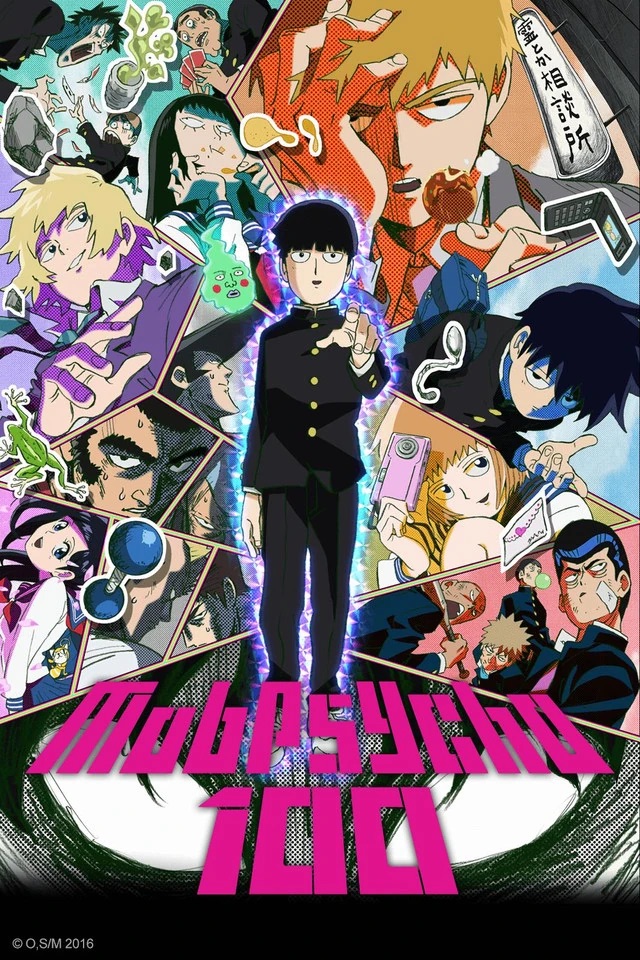
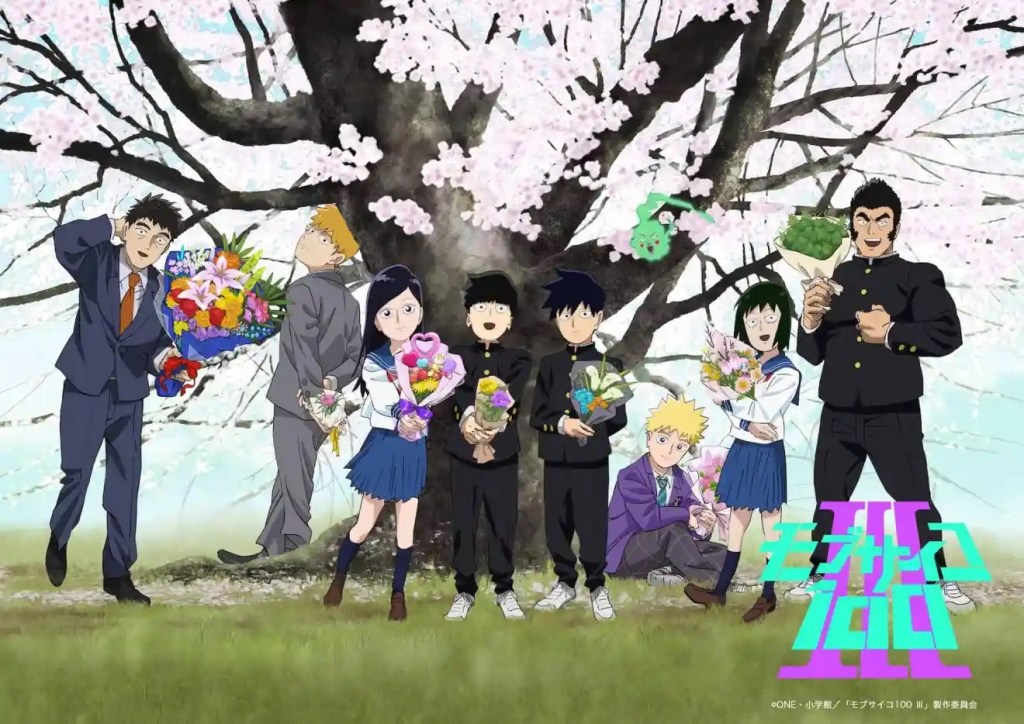
  • Anime: Mob Psycho 100

    The jokes and style aren’t what I usually go for, but I decided to stick with it because I heard good things about it. Here’s a good review with some spoilers (I read it after finishing the anime). It gets better over time, and the final few episodes leading up to the ending are good. The best relationships involve accepting each other despite imperfections while encouraging mutual growth. Temptation, the emptiness of power, friendship, honesty, cult-like social influence, and self-acceptance are some of its main themes.