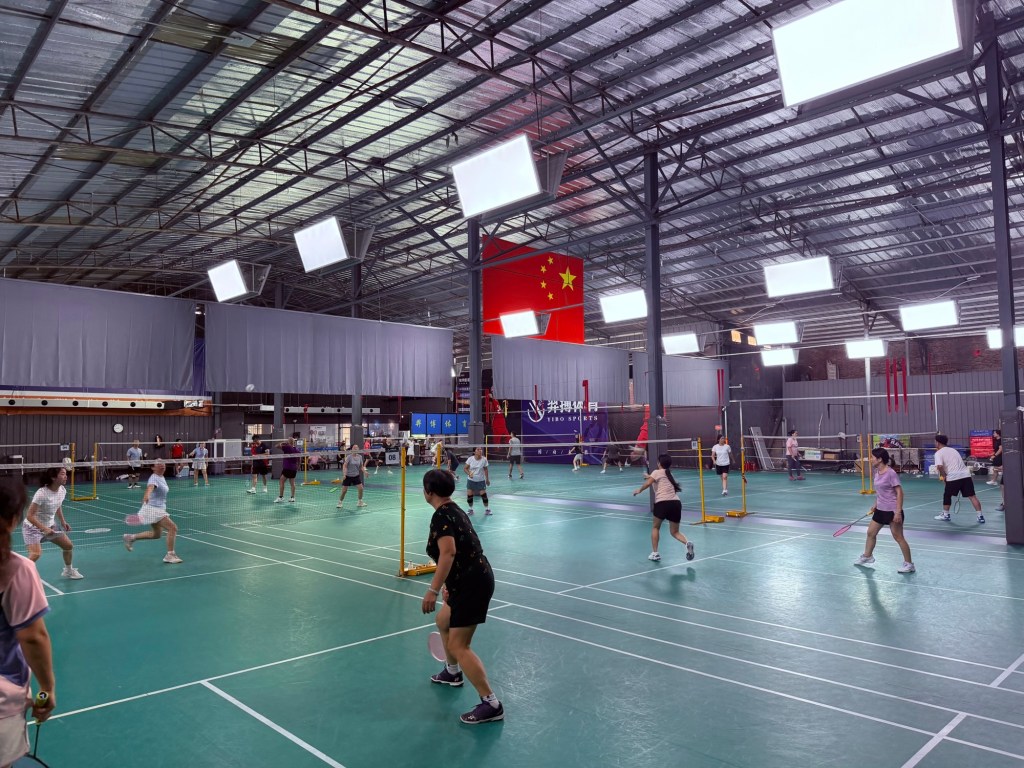
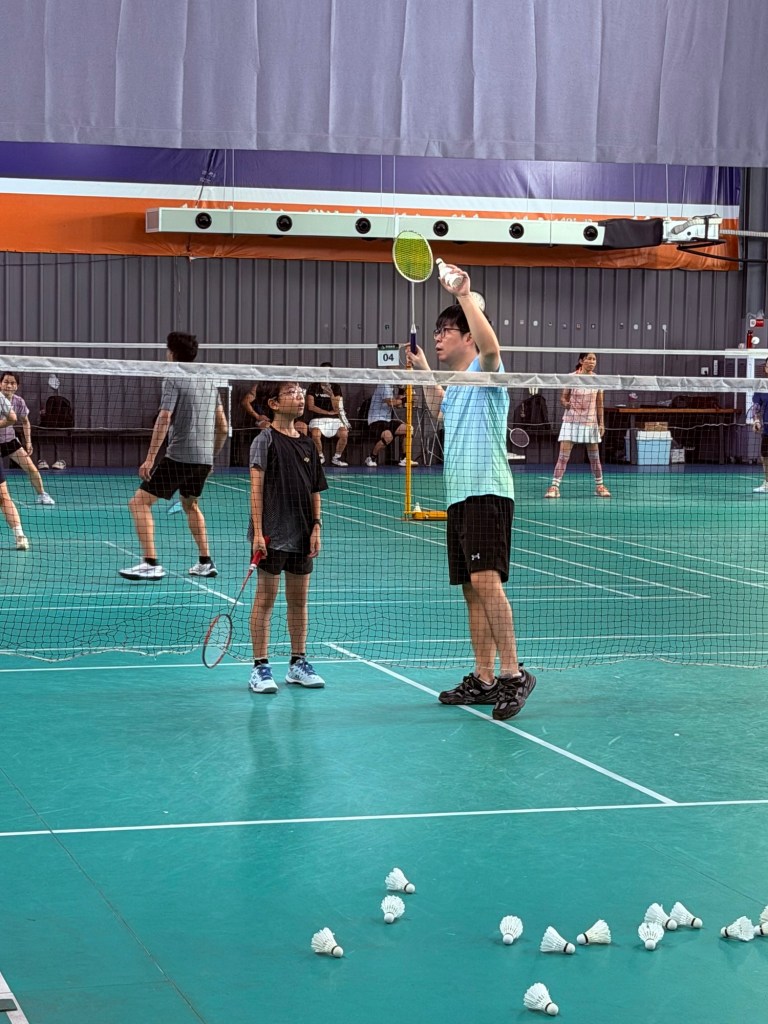
While my older son was preparing for his school exams, I took my younger son to Xiamen for five days. We stayed with relatives and had daily private badminton lessons, which were much cheaper than in Singapore. We also played basketball and shopped at local sports stores. We spent our days much as locals might spend a holiday. We didn’t do much sightseeing (I did that in the past), but we still got to see a different part of the world.
The area where we stayed is officially classified as a village. Its streets were chaotic, with migrant workers, bicycles, motorcycles, and cars sharing the roads with few clear pedestrian walkways. Prices were low: 2–3 yuan for breakfast (about USD0.40), 12 yuan for a simple lunch buffet, and 2 yuan for a quick haircut. People hustle, but they also make time for leisure. The badminton courts were full from 9 a.m. to noon every day. I suspect many of the players worked in the afternoon. The courts closed from noon to 3 p.m. while the owners and staff took a break.
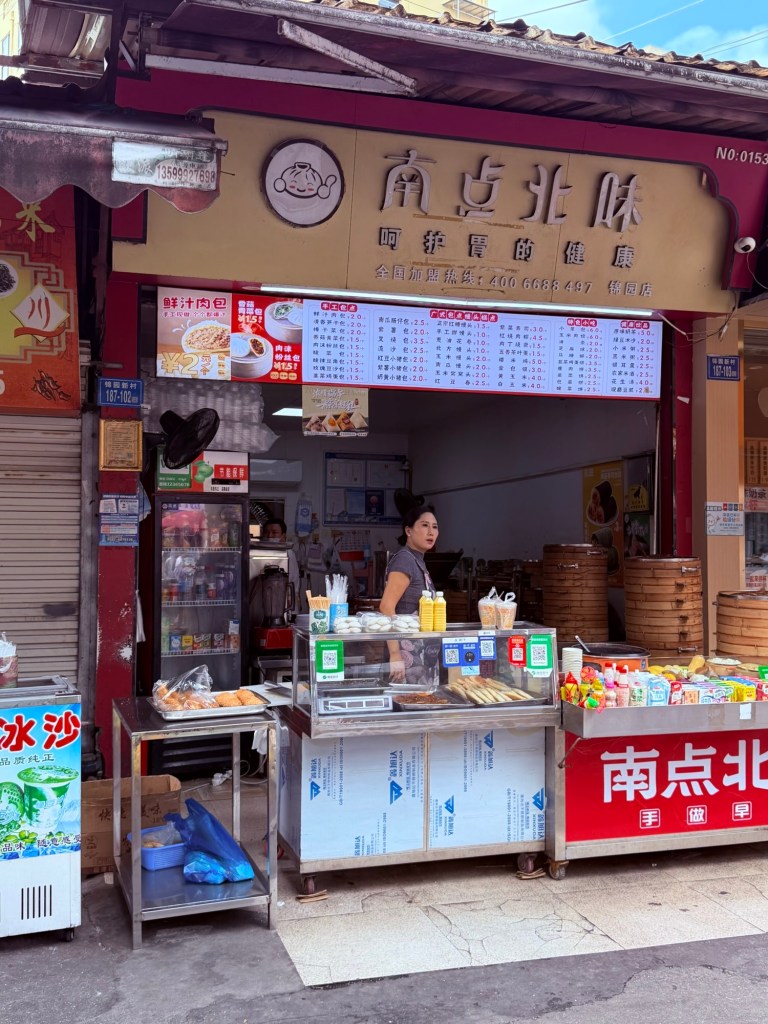
My son enjoyed the trip as much as our earlier one to Hong Kong. For him, enough sports and activities, decent food, and a place to sleep are all he needs. We often associate a good vacation with exotic or beautiful places, perhaps because they look better on social media. This trip reminded me that a place need not be scenic or touristy to be interesting. With the right mindset, even staying somewhere few tourists would visit can offer new insights and, as my son found, be just as fun and fulfilling.


P.S. Martin Sandbu reminds us that travel can expand our horizons. I think learning more about a place before visiting can enrich the experience and help us put what we see into perspective.
Excerpts:
One of the great, under-appreciated benefits of modernity, enlightenment, and eventually mass consumerism has been to make it possible, at scale, to travel with the primary motive of curiosity and self-improvement.
…
The shock of the new — the chance to see how others live, to adopt another perspective on one’s own customs — is no longer something that is either painfully inflicted on us through war or exile, or reserved for a lucky few. Billions of people have the time and the money to take to the road freely, without risk of danger or ruin, through the simple means of a holiday to an unknown destination.
…
Mundane experiences can be existential for those who live them. Many are those whose lives have been transformed simply by seeing with their own eyes that another life is possible than the one they knew at home.
This humanist potential can be undermined if the travel is compromised — whether because of social media’s pressure to document one’s presence rather than be present in the moment; or the temptation to replicate elsewhere the comforts of home, reducing travel to mere physical displacement.
Done right, however, travel for discovery’s sake unsettles our received wisdom. It increases our knowledge of the astounding diversity of human ways of life, and it makes it a bit harder to take for granted the way that happens to be our own. Every time that happens, it strengthens a little the bulwark we sorely need against forces intent on shrinking our horizons.
And Paul Theroux on travel:
That approach became the basis of his travelling: going alone, leaving the beaten track, courting danger and prioritising people over sights.
Theroux mocks today’s vogue for travel as performance. “Here’s my Instagram page. Here’ me eating a meal. Here’s me with a Maasai warrior.” If you are a tourist, you’re not bring anything back of value unless you embed yourself in culture and find something that you can’t find on the internet. And what would it be? It would be someone’s story.”
He says modern travellers often isolate themselves from the paces they visit. If you’re getting WhatsApps from home, “you’re never wholly in a place.” Staying in luxury hotels is isolating, too: “When you are among wealthy people, you will see nothing. No one’s gonna talk to you. And if you’re very comfortable, you’re not going to anything.”
 Ryu's Blog
Leave a comment