
Ross Levine wrote a series of imagined letters from Adam Smith’s perspective.
Why do we work so hard even after many of us have met our survival needs? Often it’s because we believe wealth brings admiration and approval from others. But admiration from others is fickle and not a source of lasting happiness.
What we really crave is to be worthy of admiration: “The love of praise seeks the opinions of others. The love of praiseworthiness seeks inner integrity.”
We should direct our ambition toward becoming worthy of our inner judge: “True satisfaction comes not from wealth, titles, accolades, or applause, but from acting in harmony with the impartial spectator’s standards.”
Back in university, I read several biographies of Adam Smith, along with his books and lectures, and came to admire his broad range of intellectual interests and his insights into human psychology. He and David Hume would be among my top choices for dinner companions.
PS: There’s a musical based on Adam Smith’s The Wealth of Nations. Here’s a Freakonomics podcast interview with its composer, David Lang.
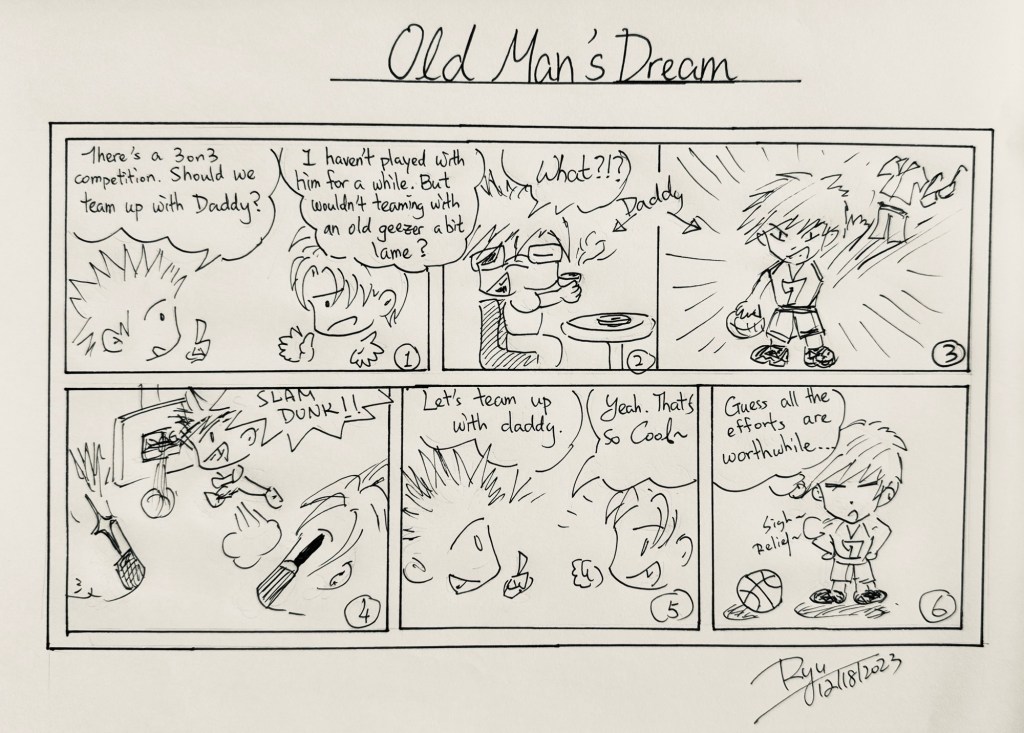
Like many basketball players, I’ve dreamed of being able to dunk. But when I was younger, I never took that dream seriously. At 180 cm, it felt unrealistic. I wasn’t particularly athletic, and I couldn’t even touch the rim.
In recent years, as I became fitter, I started seeing videos of people shorter than me jumping high enough to dunk. Most were younger, but they showed me it was possible. So I made a bet with my boys that I would dunk a small ball within five years, before turning 45. They both bet against me, which only made me more motivated.
My first recorded attempt was in May 2023, when I still couldn’t touch the rim. From there, I added strength training, plyometrics, sprinting, and jump-specific work to my routine. It took about half a year to touch the rim, another year to dunk a small massage ball, and then I plateaued.
Training in my 40s has been tough. Work, travel, sickness, poor sleep, and life events all interrupted my progress. Recovery takes longer, and pushing too hard usually leads to knee pain. Progress was slow, uneven, and sometimes frustrating.
But this year, almost three years after I started, I finally dunked a size 1 basketball, and eventually a size 3 basketball. While it is not as cool as dunking a proper basketball in a game, it is good enough for me. I don’t want to risk injury chasing too much more, though a size 5 alley-oop dunk remains an optional next challenge.
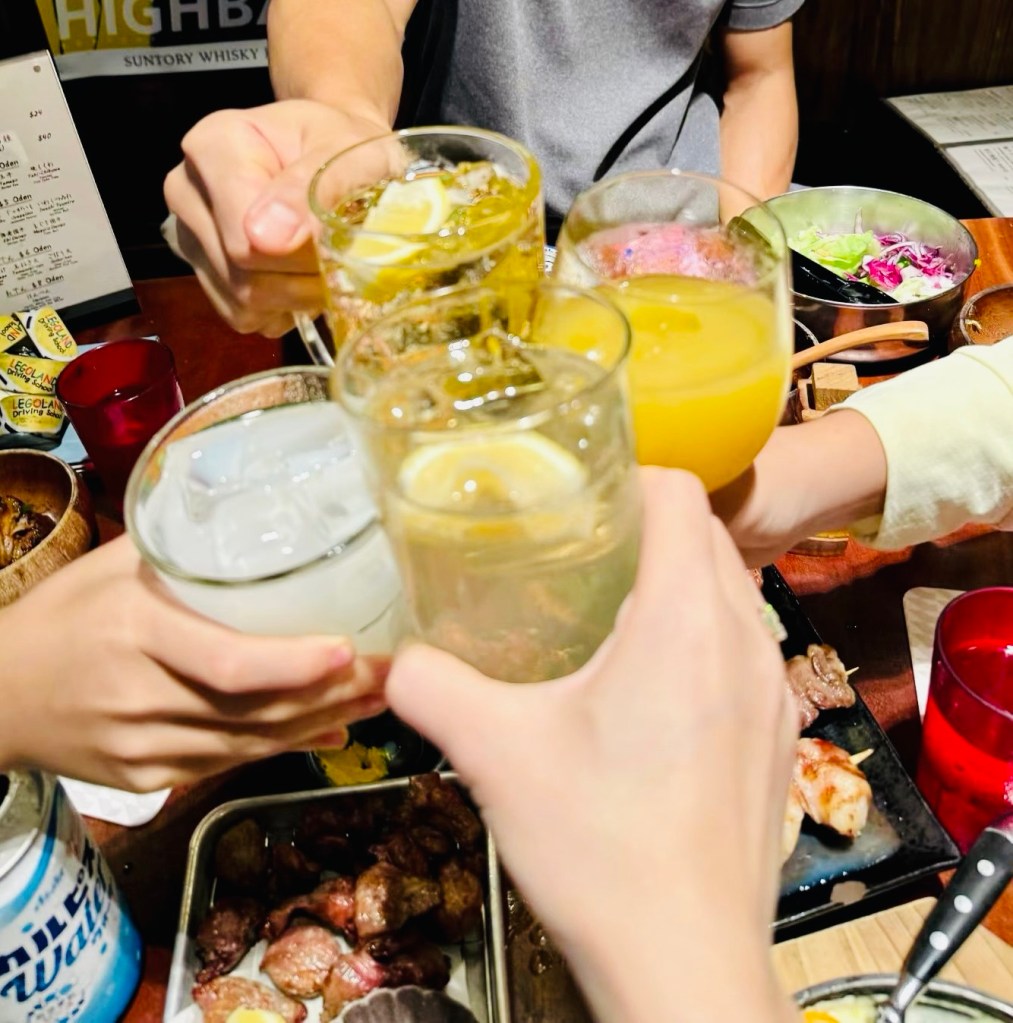
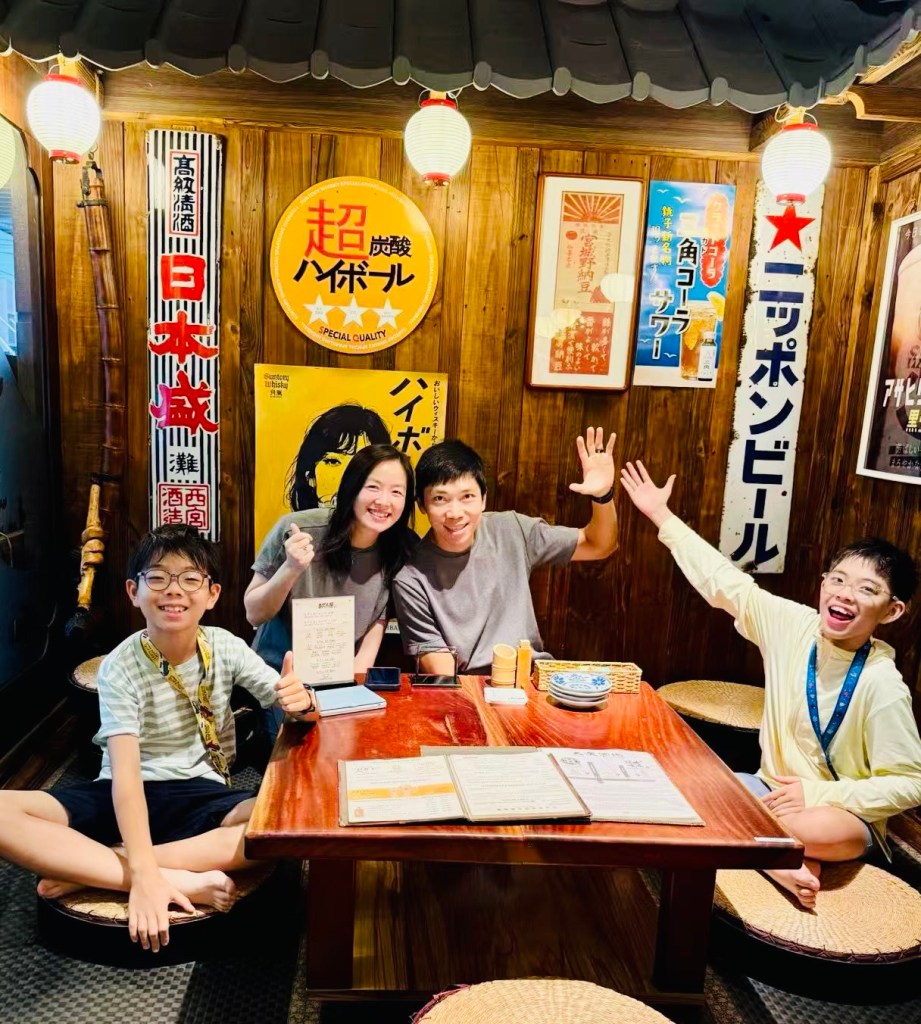
My boys treated me to ice cream, and we also celebrated together at one of our go-to izakayas. This goal has little practical value for most people, but it gave me tremendous satisfaction. I’m happy to have finally fulfilled a childhood dream.
I like David Whyte’s writing. He explores the fundamental feelings we regularly experience but often take for granted, providing a space for us to reflect on them.
Excerpts:
The measure of our courage is the measure of our willingness to embrace disappointment, to turn towards it rather than away; the understanding that every real conversation of life involves having our hearts broken somewhere along the way and that there is no sincere path we can follow where we will not be fully and immeasurably let down and brought to earth, where what initially looks like a betrayal eventually puts real ground under our feet.
Disappointment is a friend to transformation, a call to both accuracy and generosity in the assessment of our self and others, a test of sincerity and a catalyst of resilience. Disappointment is just the initial meeting with the frontier of an evolving life, an invitation to reality, which we expected to be one particular way and turns out to be another, often something difficult, more overwhelming and strangely, in the end, more rewarding.
In the course of the years, a close friendship will always reveal the shadow in the other as much as ourselves; to remain friends we must know the other and their difficulties, and even their sins, and encourage the best in them, not through critique but through addressing the better part of them, the leading creating edge of their incarnation, thus subtly discouraging what makes them smaller, less generous, less of themselves.
Giving is not done easily; giving is difficult. Giving well is, in fact, a discipline that must be practised and observed over years to be done properly. The apprenticeship to the art often involves giving the wrong thing to the wrong person at the wrong time, and learning how to do the opposite through time and trial; it means getting beyond the boundaries of our own needs; it means understanding another and another’s life. Most importantly, it acknowledges implicitly that we ourselves must be recipients of things we cannot often identify or even find ourselves.
Heartbreak is an indication of our sincerity; in a love relationship, in a life’s work, in trying to learn a musical instrument, in the attempt to shape a better, more generous self. Heartbreak is the beautifully helpless side of love and affection, and is just as much an essence and emblem of care as the spiritual athlete’s quick but abstract ability to let go. Heartbreak has its own way of inhabiting time, and its own beautiful and trying patience in coming and going.
…heartbreak is as inescapable and inevitable as breathing, a part and a parcel of every path, asking for its due in every sincere course an individual takes. It may be that there may be not only no real life without the raw revelation of heartbreak but no single path we can take within a life that will allow us to escape without having that imaginative organ we call the heart broken by what it holds and then has to let go.
Loneliness is the place from which we pay real attention to voices other than our own; being alone allows us to find the healing power in the other. The shortest line in the briefest e-mail can heal, embolden, welcome home and enliven the most isolated identity. Lonely human are lonely because they are made to belong. Loneliness is a single malt taste of the very essentiality that makes conscious belonging possible. The doorway is closer than we think. I am alone; therefore, I belong.
Sincere regret may, in fact, be a faculty for paying attention to the future, for sensing a new tide where we missed a previous one, for experiencing timelessness with a grandchild where we neglected a boy of our own. To regret fully is to appreciate how high the stakes are in even the average human life. Fully experience, regret turns our eyes, attentive and alert, to a future possibly lived better than our past.
Unconditional love is not fully possible, unconditional love is the necessary dream-like destination where we never fully arrive. We are mortal creatures of living and dying, and how we love and what we love is conditional upon where we stand in the drama and the seasonality of our living and dying. Love may be sanctified and ennobled by its commitment to the unconditional horizon of perfection, but what makes love real in the human world seems to be our moving, struggling conversation with that wanted horizon rather than any possibility of arrival. The hope for, or the declaration of, a purely spiritual, unconditional love is more often a coded desire for immunity and safety, an attempt to forgo the trials of vulnerability, powerlessness and the exquisite pain to which we appreciate ourselves in a relationship, a marriage, in raising children, in a work we love and desire.
Too much free time can be dangerous. It is easy to fall into temptations that offer short-term pleasure but little long-term satisfaction, or spend too much time ruminating on things outside our control. In my teens, I often reflected on meaning of life questions that had no clear answers. But as life becomes busier and obligations grew, those questions became less relevant. In that sense, busy work can be beneficial, as it provides structure and constraints to our free time and channels it to a clear objective.
Yet being too busy comes with its own cost. I want to be productive and dislike wasting time. So I often skim articles, listen to podcasts at 2.5x speed, and have back to back activities. That can be efficient, but it can also create a rushed existence in which important things can be easily overlooked. If I’m too rushed or goal oriented, I tend to be less patient, less kind, and less likely to enjoy the small joys and quiet beauty that exist.
Perhaps that is why I am drawn to Enuma Okoro’s column. She introduces me to paintings and connects them to our lives and times. I admire that way of engaging with art. But if the goal were simply to extract meaning, I could just ask ChatGPT to analyze a painting for me. What I rarely do, however, is slow down enough to look carefully, absorb what I am seeing, and connect it more deeply to life. I think that mindfulness is what I value most in her work.
To get the most out of her columns, I need to slow down, look at the paintings, and reflect on her thoughts. It is not surprising that she is a fan of David Whyte. Like her writing, his poems and essays reward slow reading and reflection. Maybe not everything requires this kind of mindfulness. But I think the more we can engage in this kind of awareness, the more alive we feel.
From her recent column:
One of the elements that I love about abstract works is how they compel us to patiently engage with what is in front of us until they reveal a new perspective, while also inviting us to learn how to sit with the discomfort of not knowing immediately what we are looking at. One of the many invitations that I think we can extract from this is to consider where in our own lives we are being invited to sit in the discomfort of not yet knowing and allowing room to slowly discern what might be in the process of being revealed to us. And also to consider what aspects of our lives may have already taken on a new shape or a new form, which is simply waiting for us to recognise it.
After my first piano and singing performance with my boys, I’m ready to attempt a solo. I first encountered this song in one of my favorite films in recent years, and something about it stayed with me. I’m glad to make it part of my piano journey.
Perfect Day by Lou Reed:
Just a perfect day
Drink Sangria in the park
And then later
When it gets dark, we go home
Just a perfect day
Feed animals in the zoo
Then later
A movie, too, and then home
Oh, it’s such a perfect day
I’m glad I spend it with you
Oh, such a perfect day
You just keep me hanging on
You just keep me hanging on
Just a perfect day
Problems all left alone
Weekenders on our own
It’s such fun
Just a perfect day
You made me forget myself
I thought I was
Someone else, someone good
Oh, it’s such a perfect day
I’m glad I spent it with you
Oh, such a perfect day
You just keep me hanging on
You just keep me hanging on
You’re going to reap just what you sow
You’re going to reap just what you sow
You’re going to reap just what you sow
You’re going to reap just what you sow
Rental Family. A movie about loneliness, lies, social norms, and what it means to exist and feel alive. Here’s a review (with spoilers). I remember watching Brendan in movies like George of the Jungle and The Mummy when I was younger.
Bocchi the Rock. An anime about an introvert who dreams of becoming popular and having many friends. As an extreme introvert myself, I think Bocchi’s struggle is less about introversion and more about social anxiety, bordering on depression and hikikomori. While part of it might be exaggerated, I think we can relate to many of her emotions. The anime explores these themes in a lighthearted and funny way. I especially enjoyed Bocchi’s solo compositions, which express her thoughts and feelings well. It suggests many of our struggles stem from the mind and the stories we tell ourselves.
Project Hail Mary. A science fiction movie based on an award-winning novel. Judging from the reviews, the book is more technical and science-heavy, while the movie more accessible and has broader appeal to a wider audience. I’m glad I brought my two boys to see it, as we all enjoyed the humor and the film overall.
PS: My boys borrowed and read the original novel (as well as The Martian). That alone is worth it.
Detective Conan the Movie: One-Eyed Flashback.
It’s interesting how the anime turns Mori into such a cool character. I also like Detective Morofushi, who is modeled after Zhuge Liang from Romance of the Three Kingdoms. That said, when an anime releases a new movie every year, it is hard to maintain a consistently strong story. From memory, only two or three Conan movies have touched me.
Zootopia 2. The animation is engaging from beginning to end, and the chemistry between Judy and Nick remains strong. Still, I think the first movie was more original and more thought-provoking.
Recent Anime. I watched a few episodes of Witch Hat Atelier, Akane-banashi, and Daemons of the Shadow Realm. It is still too early to say how much I like them, but Witch Hat Atelier stands out for its beautiful animation, likely inspired by the innovative techniques Kamome Shirahama used in her manga. Its opening shares similarities with Fullmetal Alchemist, whose creator Hiromu Arakawa also wrote Daemons of the Shadow Realm.
I share his impulse to create and his desire to be good at things, both of which are great sources of satisfaction for me.
From the Financial Times article on the artist Henry Taylor:
The impulse to create seems to have been with Taylor from a young age. He tried being a writer (“I wasn’t good enough”, he says), and dabbled in theatre before settling on painting. The youngest of eight siblings, Taylor credits high-achieving brothers for pushing him to find something he could excel at. “I had brothers who were like track stars, they were real good at things,” he says. “I said, damn, what am I going to do? I wanted to be good at something.
It’s perhaps ironic that an artist who never set out to follow the conventional path to artistic success is enjoying precisely that. Taylor has now had exhibitions all over the world…
All this is extra and it all came late,” Taylor says. “My mom used to say, ‘put your best foot forward’. And I said, probably the best thing I can do is draw. I may not be the best at it, but I keep working at it.
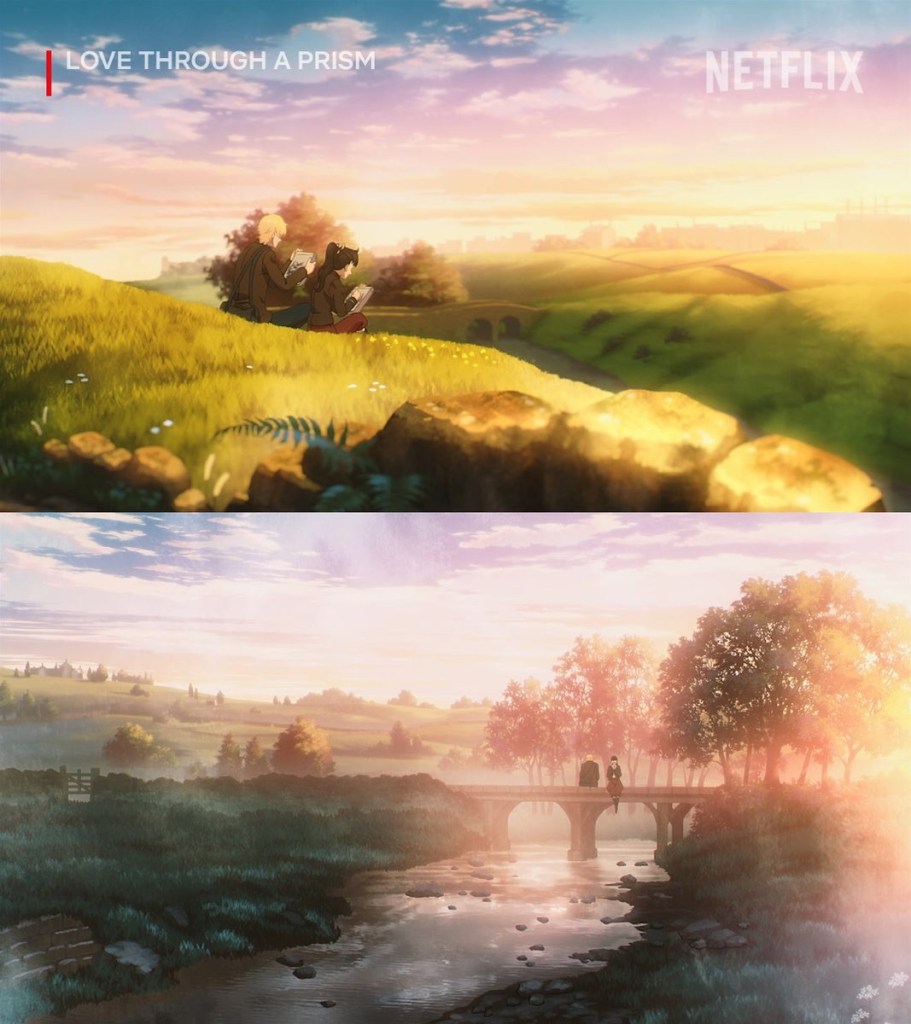
I can’t resist an anime about art. The characters are well designed and well developed, but what I like most is the beautiful, painting-like background. The setting reminds me of my time studying in the UK: the River Thames, an academy that resembles Cambridge, the National Gallery, the British Museum, Westminster Abbey, Covent Garden, the pubs, and side trips to the Cotswolds and the countryside.
Following our hearts or simply doing what we love may sound ideal, but life is often messier, with no clear optimal path. We cannot fully ignore others’ opinions or societal norms either. Since we only get to live one timeline, there will always be “what if” questions, and we will never know how the paths not taken might have unfolded. But at the very least, we should try to find a path, or create a bubble, where we do not betray ourselves and still have room to grow and thrive.
Quotes from the anime:
“As always, the more I paint, the more I’m confounded by the things I lack. It’s the same things over and over. But then, I guess that’s not so bad. After all, as long as I’m painting, I’m always having fun.”
—Lili Ichijoin
“Actually I’ve never once thought my paintings were any good. That’s why I’m so desperate to paint all the time.”
—Kit Church
“I’ve never cared what other people think. What does it have to do with painting?
All I want is to remember the beautiful things I see every day. If I paint them, I won’t forget. That’s the only reason I paint. Honestly, the rankings mean nothing to me.”
—Kit Church
“That’s why his artwork always grabs hold of people and stirs their souls. And then, as if adding insult to injury, it questions you. Are you being honest with yourself? Are you living life to the fullest?”
—Shin Kobayakawa
“When I was a child, I saw the real thing. At that moment…it felt like time had stopped. Even now, I’ve never felt anything more serene. All I could hear was my own heartbeat. For the first time, a cold marble structure taught what it means to be alive. And then it occurred to me. The contours of memory blur with time and become unrecognizable. But even so, if we can capture a moment in time and give it form, perhaps that memory will never fade.”
—Kit Church on Michaelangelo’s The Pieta
Trailer:

 Ryu's Blog