I’ve watched a dozens of movies recently (scroll down here to see some of them) but found most of them uninteresting. Perhaps this is because I developed a narrower taste, or the average quality of movie has fallen. On the other hand, I enjoyed most books I read and can easily find more interesting titles (the summer reading list’s not enough already). This suggests I’d put more time in reading than in watching movie. Since my internship has started, my plan’s 3 books and 1 movie per week. In the mean time I’ll try to find better substitutes for movie. Any suggestions?
-

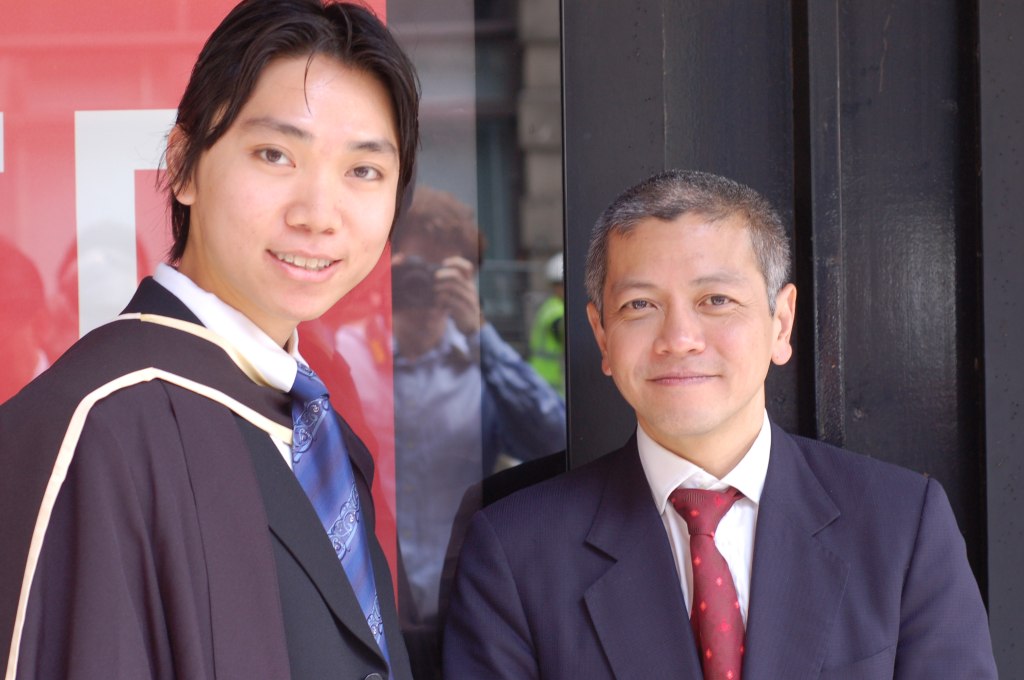
It’s been a year since I decided to do a master degree in Economics at LSE rather than at Cambridge. The decision might seem irrational to many people as Cambridge has a better reputation overall, and its tuition is around 5000 pounds cheaper. It was a tough decision, and I often asked myself whether I made the correct choice. Some reflections might provide the answer.
Location:
Living in London is a big plus in expanding my experience and cultural exposure. I can get easy (and mostly free) access to a wide range of museums and art galleries. Tate Modern and Shakespeare Globe are just around the corner, and there’re plenty of interesting exhibitions through the year (like this one). I just attended the London Philharmonic Orchestra in the re-opened Royal Festival Hall for 4 pounds and plan to go to another one featuring Mitsuko Uchida on 24th June. I’m invited to a free movie premiere next week about a documentary on Entrepreneurship.
London also offers a cornucopia of restaurant choices. The Worldpress recenly ranked seven UK restaurants in its world’s top 50. These restaurants are still too expensive for me, but I aim to sample them after I start working. To sum up, London’s a great place for cultural discovery and learning, especially if ones has enough money.
Teaching:
LSE and Cambridge have similar course structure. Both involve lectures and problem-set oriented classes. The quality of teaching mainly depends on individual professor, and I’m fortunate to have some very good professors this year.
Here’re my favourite this year:
- Danny Quah’s Macroeconomic lectures—his enthusiasm and energy bring life to the topics
- Peter Davis’ classes on Industrial Economics—the current Deputy Chairman of the Competition Commission; he integrates latest IO research with his experience.
- Vassilis Hajivassiliou’s Econometric lectures—everything’s explained in a clear, structured manner.
Course Content:
Microeconomics: I benefited least from this course. We covered standard theory and basic foundations, but I found the lectures boring with little focus on applications or recent research. Exam consisted mainly of problem solving focusing on tricky (and in my opinion trivial) details and has little relevance regarding economic understanding (although learning the basic theories are still useful in itself).
Macroeconomics: Covered standard theory (inter-temporal choices on each current account component, asset-pricing theory, real business cycle, monetary policy, growth and inequality, currency, etc.) and looked at some seminal papers. Perhaps due to time and mathematical constraints, we’re not able to look at more recent research and theory applications.
Econometrics: Good balance between theory and applied works, though I’d prefer a more in-depth treatment on time-series and panel data. Overall satisfactory.
Economics of Industry (my chosen option): The best and the toughest course. Good balance between theory, empirical research, and case study. Covered most IO topics; looked at the major papers in details and offered a good survey on latest research. We also have to write a term-paper for this course, which I found extremely valuable.
Student:
The average student quality is probably higher at Cambridge since it’s more selective in its admission. But the variance is likely to be greater at LSE due to its larger economics class (LSE’s MSc has around 150 students, Cambridge’s 1st year Mphil probably around 70). And I guess students at LSE have a more diverse background as many of them have previous work experiences in governmental organizations or business.
Other upsides:
- The IT and administrative systems are efficient.
- Lots of public lectures and events that are easily accessible. Some popular lectures I attended include those from Nobel laureates Robert Mundell, Robert Engle, and Eric Kandel (in Medicine), Oliver Hart (future laureate?). Tonight I’m going to one by Paul Krugman. Most of the lectures I attended weren’t that good, and the time would probably be better off spending on articles or podcast. But still I can’t resist seeing those famous people in action, and who knows I might come across a Black Swan (Oliver Hart’s lecture was well worth the time).
- The economic department’s considered one of the most prestigious departments within LSE so other students often look up to you (signalling & feel good effect). In Cambridge, you got a better overall signalling effect with outsiders but less prestige within the institution as the hard science subjects (math, physics, etc.) are generally considered to be more prestigious (and hence obtain more funding and benefits) compare to economics.
Some Downsides:
- LSE is a social science institute, which means I’ve less opportunity to meet people in areas like arts, literature, or philosophy,
- Resources are limited, and demand often exceeds supply. Two examples are the library and the career service.
Conclusion:
Reflecting on the past 10 months, I believe I gained a lot this year (though I might gain even more if I remain in Cambirdge). I’m content with my decision and would probably make the same choice given another chance.
-
My course at LSE ended. I’ve two weeks’ time to myself before internship starts. The first thing I did after exam was headed to LSE library to get books I wanted to read (list below). Having access to a large social science collection helps save me lots of money, but the downside’s that they’re mainly in the social science field. A few Japanese fictions I want to read (books by Yukio Mishima, Natsume Soseki, and Banana Yoshimoto) are not available, and the recently published books are generally not available yet. Nevertheless the library has enough interesting books to keep me satisfied until the new books arrive.
I watched several movies lately (Babel, Emma, Little Miss Sunshine, The Holidays, Metro Ni Notte, Nada Sou Sou), with plenty more to go. But out of those I only find Little Miss Sunshine interesting and didn’t finish some of the other ones. It might be a good idea in a later entry (after watching the remaining movies) to reflect on my current taste and how it has evolved.
Besides books and movies, I plan to get in touch with friends, sample restaurants around London for my sister’s visit, and plan my Europe trip after the internship.
Books from LSE Library
The Invisible Heart—Russell Roberts
This book conveys how an economist thinks about a range of economic, moral, and political issues people encounter in everyday life. It’s a short story surrounding two high school teachers (one teaches economics, the other English literature) with very different views about the world. Though I’m familiar with most of the ideas covered, I enjoyed the characters’ conversations and their relationship development (it’s a love story).
Why Smart People Can Be So Stupid—edited by Robert. Sternberg
The book contains some interesting psychological views on intelligence and stupidity. One of the contributors is Carol’s Dweck. Her research indicates that people’s beliefs about intelligence affect their performances. Here’s a nice article summarizing her studies (recommended), and here’s one on how not to praise your kids.
Reading in progress:
Creative Destruction: How Globalization Is Changing the World’s Cultures—Tyler Cowen
In Praise of Commercial Culture—Tyler Cowen
Meanings of Life—Roy Baumeister
The Social Dimension of Sex—Roy Baumeister
The Mind and the Market—Jerry Muller
Movies to watch:
Northanger.Abbey (2007)
Volver
Blood Diamond
Casino Royale
Children of Men
Crash
Interview with the Vampire
Miss Potter
Monty Python: Live at the Hollywood Bowl, Meaning of Life, Life of Brian
Music and Lyrics
Once Upon a Time in the West
Prestige
The Illusionist
Apocalypto
Pirates of the Caribbean: At Worlds End
Shrek the Third
Sukida
Nana 1
One Piece movie Episode 6 & 7
1 Littoru no Namida
Shiroi Kage
-
Next week is the last week of Easter break for LSE students. And for those doing the MSc Economics course, there’ll be three mock exams in the first week, a course paper due the next week, follow by finals in another month’s time. Hence most students find this the most stressful period. The Easter break’s supposed to be the god-send gift for students to catch-up or be better prepared.
I started the Easter break in a serious mood, planned to review all the materials thoroughly to ensure I get a distinction. But things didn’t work out that way. As some of you might have noticed, I’ve been blogging more frequently. I think this obsession is a consequence of having a large chunk of time to myself. Instead of reviewing textbooks and practicing problem-sets, I’ve been reading blogs and articles online and found them much more interesting and intellectually stimulating (compare to the marginal benefits of redoing a problem set or deriving equations). For examples, I’ve just read many interesting writings by Nick Bostrom, miscellaneous essays by Paul Graham, and a recent paper on happiness by Will Wilkinson. I personally think the time’s well spent. Although my readings online are unlikely to help me with any of the exams, I believe I’ve gained substantially from many of the economic blogs I follow, both in terms of interests and insights. Tyler Cowen believes that in the future people will be learning economics through blogs and other online resources (I think it’s from this podcast), and I agree with him.
So I do not regret the way I’ve spent my Easter break. Although I was not as productive as I planned to be, I’m overall satisfied with what I’ve done. I’ve travelled around London and tried several nice restaurants, finished my MSc paper on merger simulation, watched a handful of movies, achieved my diet goal, and enjoyed listening to the new Bach and Mozart CD sets (again thank Tyler Cowen for the recommendations; a few of those CDs have been sitting in my Amazon cart for a long time, his blog helps pull the trigger).
But since I’ve a goal to achieve and would probably need all my focus, I’m changing my plan. From now until the end of the exams, I’d just focus on economics revision. I’ll continue follow some blogs online but probably will not post new entry myself. Rather than blogging lots of nonsense now, perhaps I would be better off getting a more solid foundation in my learning to write more interesting things in the future. So for now, I’d be satisfied being a consumer of knowledge and ideas from others and hope that someday I would be able to contribute my insights as well.
Now it’s time to stay focus and do what ought to be done.
-
Just came across a funny video showing a mass of Japanese anime lovers (Otaku) dancing in the middle of Akihabara. The dance is copied from The Melancholy of Haruhi Suzumiya, a popular anime based on a novel in the fantasy, science fiction genre. I watched a few episodes in the past but didn’t have the time and patience to finish the whole thing.Here‘s a link to the original video from the anime, and here‘s a post via Boing Boing, which also pointed out a website that teaches how to do the dance. I guess it’d be good exercise for the Haruhi fans.Just a side note: I’m fascinated by a few Japanese cultural phenomena such as Hikikomori and Otaku. I plan to look more into it when have time. For the time being, I’d go back to my time-series texts and review the less interesting Vector Autoregressions.
-
Just read a an article on video game industry. The author believes the industry should move to a higher art form. In his words, “The time has come for video gaming to move beyond a simple diversion, and become something more. Escapism isn’t enough: it’s about time for video games to be disturbing, depressing, timely, political, thought-provoking, and, above all, meaningful.” Here’re some bits I like, follow with my views.
“Good vs evil” is boring. The world is in shades of grey, so why not make the player experience that same moral ambiguity in his gameplay? Why not move beyond simply making a game “fun” or “entertaining” and present real, moral dilemmas?
Games are great at simulating fantastically unreal things that you or I would never experience – why not simulate some things that we experience all the time? Why not view reality through the mirror of video gaming? It may not be fun, but such games would be at the very least interesting, and at the very most would affect the way you look at real life.
It’s easy to look at games as a medium of simple entertainment and nothing more. Technologically speaking, the medium has had little opportunity to stretch its legs as a legitimate art form. We’ve only had video games for the past thirty years, and only just recently have they become advanced enough (both in terms of atmosphere and user involvement) to serve a purpose other than being fun. After three continuous decades consisting almost solely of platform-hopping, bug-blasting entertainment, a majority of modern gamers have a hard time considering their virtual pastime anything other than a diversion from the stresses of modern reality.
But consider the attributes of video gaming, as a medium. Video games can use text in large quantities without receiving copious amounts of criticism. Video games can use lighting, cinematography, mise en scene. Video games can use music, and video, and illustration. And, most importantly, video games are interactive. Video gaming, as a medium, is the single most inclusive art form ever created. Not only can it use the tools of filmmaking, illustration, literature, and music, but it actually forces the participant into the situation instead of allowing him to act as a passive bystander.
Some of his arguments on video games seem too strong to me (e.g. video games as the most inclusive art form and their potential power/influences), but I generally agree that this medium has much more potential and should be viewed as an alternatives to other media such as TV, book, or movie to fulfil different purposes. A lot of teachers use video games to supplement their teachings. Besides educational purposes, video games could potential be used in many experiential settings. Combining with other media (I’m thinking about virtual gaming), people could simulate job experiences (for career choice), adventures, travels, musical concerts, or other experiences.
I know a professor who wants to create simulations that could teach young children basic economic theory and moral/ethical issues. But at present the marginal costs needed to create a game that could achieve his purpose overweight the marginal benefits. As technology improves, the costs of creating games should reduce enough that a large varieties of games that serve different market segments are available. Perhaps creating video games would be as easy as making videos on YouTube (it’d probably more like creating software online). Video game is a medium I grow up with, and I look forward to see how the industry evolves.
-
Just read an excerpt from Virginia Postrel’s upcoming book, Glamour (pointer from Tyler Cowen). Here’s an interesting bit.
Glamour represents a special case of what the cultural anthropologist Grant McCracken calls “displaced meaning.” As sources of identity and hope, he argues, every culture maintains ideals that can never be fully realized in everyday life. To preserve and transmit these ideals, a culture develops images and stories that portray a world in which its ideals are realized—a paradise, a utopia, a vanished golden age, a world to come. When they are transported to a distant cultural domain, ideals are made to seem practicable realities. What is otherwise unsubstantiated and potentially improbable in the present world is now validated, somehow “proven,” by its existence in another, distant one.
The myth making of displaced meaning gives cultures the characters,artifacts, geography, and emotions that make their cherished abstractions seem attainable and true while keeping those ideals safely removed from the constraints and compromises of everyday life. Hence, the connection between the glamorous and the exotic. It’s easier to imagine a perfect life in a place you’ve never been, a place you know only from carefully selected images. California, Paris, and New York were most glamorous when they were hardest to reach. Yet these are, of course, real places. They are, at least in theory, attainable.
For individuals, McCracken argues, commercial goods often serve as “bridges to these hopes and ideals.” Your dream house represents not just a dwelling but your vision of the perfect family life, the perfect job, the perfect self. Owning a component of that dream—the perfect dining room set, say—makes the entire ideal it represents seem like something you can someday claim. If we can recreate the picture, we imagine we can live the life. The perfect artist’s loft, cook’s kitchen, or writer’s study will makes us who we want to be. Glamour gives utopia a tactile presence, a human connection. The audience identifies, at least for a moment, with the glamorous person, place, or thing. Hollywood’s Golden Age “portraits were romanticized ideals caught frozen in time: lasting objects of perfection to hold in your hands,” writes a historian. Glamour evokes the audience’s desire to escape to a world where its ideals and deepest yearnings are realized and, at least for a moment, glamour provides an imaginative entrance to that world.
But the ideal is always out of reach and so, in some way, must be the goods that symbolize it. Only then can tangible things remain bridges to intangible, and impossible, goals. That is why luxuries often take on displaced meaning. We cannot afford them or, like countless haute couture dresses, they require a setting or a physique few people will ever possess.
Reading this reminds me of my earlier entries on fantasizing and longing for ideals (e.g. here and here). I’m not sure how much I still agree with what I wrote. Perhaps due to my regular reading of the blog Overcoming Bias that I’m less capable of deceiving myself credibly anymore even though I think it might be interesting to do so.
Here’s Virginia Postrel’s blog, and here’s a podcast where she talked about her previous book on aesthetics.
-
One of my favorite bloggers Will Wilkinson pointed out these happiness advice from Csikszentmihalyi.
From a new Time article on Mihalyi Csikszentmihalyi’s new grad program at CGU:
Drawing on his research on happiness, Csikszentmihalyi has three general pieces of advice:
* Be attuned to what gives you genuine satisfaction. Although many people assume that popular activities like watching TV are enjoyable, their own reports generally indicate that they feel more engaged, energetic, satisfied and happy when doing other things.
* Study yourself. To better understand their own happiness, Csikszentmihalyi says, people should systematically record their activities and feelings every few hours for a week or two. In recording your observations, try to focus on how you actually feel, rather than what you think you ought to be feeling or what you expect to feel. Afterwards, note the high points, particularly, and the low ones. Then try to adjust how you spend time according to your findings.
* Take control. Repairing unhappy conditions requires active effort. People often assume external conditions will change for the better or let chance determine their response. That’s a mistake. “Get control,” Csikszentmihalyi says. When things aren’t right, “you have to put in the same effort you would if your business were in trouble. Just as markets move, life changes too.”
Again: “unhappy conditions require active effort.” What if you happen to be writing a novel and just don’t have the time? Unhappiness isn’t that bad, really, if you’ve got something better to be working on.
More and more people seem to be concerning with happiness issues nowadays. And I know many people who think being happy is the major goal in life, if not the sole aim. For me, the secret to happiness is to strive a balance between the enjoyment of sensuous, transitory pleasures and the more lasting, sustaining ones such as achievements coming from hard works. So I think those who try to find ways to stay happy all the time or think happiness is the most important thing in life are likely to miss the point. This quote from my earlier entry comes to mind:
“Those only are happy who have their minds fixed on some object other than their own happiness: on the happiness of others, on the improvement of mankind, even on some art or pursuit, followed not as a means, but as itself an ideal end. Aiming thus at something else, they find happiness by the way.”
-John Stuart Mill
Or this advice by economist Greg Mankiw, “What I, like many parents, try to impress upon my children is that there is a vast difference between happiness and satisfaction, that a good life is more important than a happy one.”
Just an update on my life: I’ve enjoyed enough pleasant moments during my Easter break: travelled around London, bought 5 sets of classical CDs, and just being treated a nice, authentic Thai cuisine; it’s time to get back to strive for the more sustainable ones. And who says learning economics is not a pleasure in itself.
-


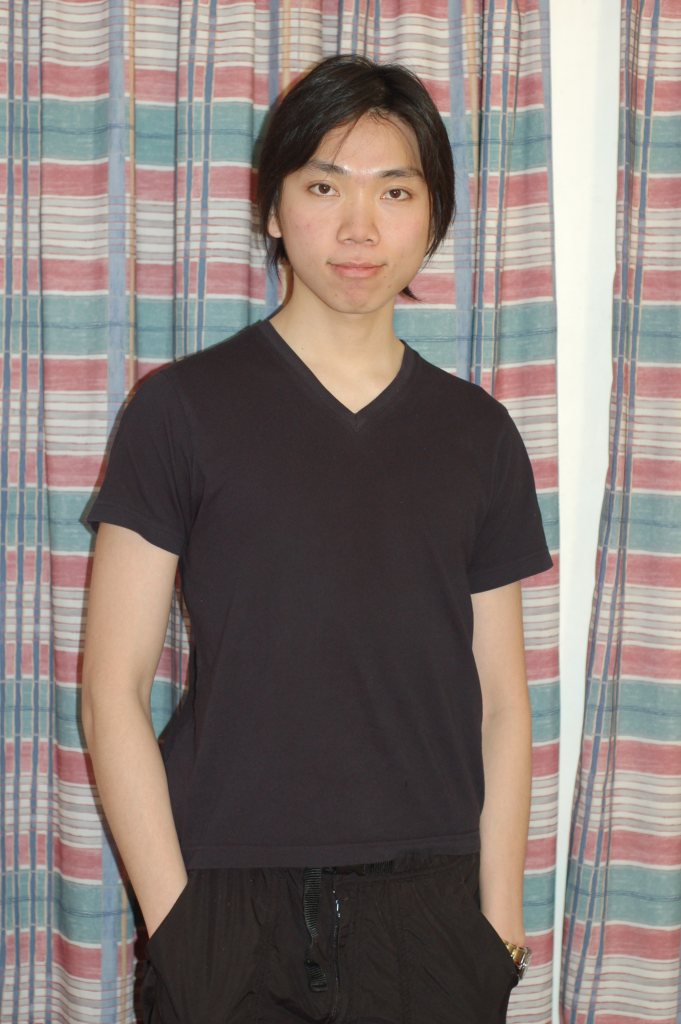 Here’s the result for my diet challenge:Week 0: 70.5End of Week 1: 69End of Week 2: 68End of Week 3: 68End of Week 4: 66.5End of Week 5: 66.3April 1st: 64.1There is not much change from my original strategies except some slight adjustments. My final daily checklist looks something like this:
1. No junk food, dessert (16) 2. No alcohol (3) 3. Drink lots of water before 9 pm 4. Eat enough protein 5. Eat small meals 6. Always use stairs (2) 7. Minimize sodium and canned food The numbers in parentheses are the number of violations I had during the period. Those without parentheses are hard to quantify and act more like a remainder. Dessert appears to be my major problem, but most of the time I chose to have them and didn’t regret my choice. I guess as long as I’m conscious about the amount I consume it’d be fine. Another notable change in my habit’s the use of stairs at all times. It adds substantially to my daily calories burning as I live on the 7th floor and the economic department at LSE’s located on the 6th floor.Here’s menu of foods I typically choose from:-Cereal (Muesli, Wheat Bran, Wholegrain Biscuit) with soymilk-Green bean-Fruit Yogurt-Apple/Orange-Homemade sandwich (Soya bread/Wholemeal bread, lettuce, tomatoes, egg, turkey/beef slices)-Fish (salmon/tuna/sardine/mackerel/cod/kipper/haddock)-Various types of beans/Lentil-Vegetables (Homemade salad/broccoli/cauliflower/spinach)Other supplements (coffee, green tea, flaxseed, multivitamin, fish oil tablet)Conclusion:From this experience, I believe that with enough discipline and some knowledge about metabolism, nutrition, and calories, losing weight is not too difficult (for me at least). But targeting a particular body part is much harder (my face only slim down a little toward the end). I’m probably not going to try harder to lose my facial fat, and I think 64kg’s too slim for my height (179cm) and I’d prefer increase it back to around 67kg (muscle of course). Since I achieved my goal, my plan from now on is to eat healthy and increase body weight gradually till I’m satisfied. Overall this is a fun experience and nice challenge. Now it’s time to go get a class of wine, enjoy the chocolate and healthy snacks Ivy and my sister brought me from US, and get myself ready for the next challenge.PS: My friend/competitor’s progress didn’t go as smoothly as mine due to a various factors, a big one was she had a trip with her family and enjoyed lots of foods. I guess I’d do the same if I were in her position as one great pleasure from travel’s to try and enjoy new and delicious goods. Though I didn’t get to travel, I’m going to enjoy my meal. -
1. Undercover economist on marriage and finding “the one”.2. Interesting way to improve your memory and recall accuracy.3. Good moral for people who love gadget lover.4. Trick of the trade for different professions.5. Here’s my favorite one for the past week: Will Wright’s Keynote on games and movies.A few interesting bits:… I look at the world as a simulation. Here’s a world stage. Lots of
things cascade into the next stage. And certain things cause changesin other things……Movies have these wonderful things called actors, which are like
emotional avatars, and you kinda feel what they’re feeling, it’s very
effective. Films have a rich emotional palette because they have
actors. Games often appeal to the reptilian brain – fear, action – but
they have a different emotional palette. There are things you feel in
games – like pride, accomplishment, guilt even! – that you’ll never
feel in a movie……I studied Montessori’s philosophy and methods. She basically wanted
kids to explore the world themselves using toys and objects, learning
the meaning of things… and I want to build a game where a player is
going to come across the Copernican Principle, say, and you walk away
thinking of the meaning of life. Or what the future might take……This is a very powerful thing, an amplifier for imagination…We
use computers for entertainment, education, social spaces. How is this
going to impact the world going forward? Every now and then the world
goes through a huge paradigm shift… sometimes by social shifts,
sometimes only once or twice in a lifetime. Some are grass roots, some
are top down, and some take us by surprise….



 Ryu's Blog