Feeds:
Posts
Comments

Posts Tagged ‘movie review’

I watched several movies on recent long-haul flights.

The first is called 18×2 Beyond Youthful Days, a Taiwanese-Japanese co-production about first love, regret, and self-discovery through travel. While the story didn’t resonate with me personally, the characters were likable. The film references various aspects of Asian pop culture, like Mayday, Love Letter, and Slam Dunk, and reminded me a bit of 5 Centimeters per Second. Here’s one review.

I Have to Buy New Shoes was a movie I had watched a long time ago but didn’t remember until I rewatched it. I liked it more this time around. Miho Nakashima is still charming and has great chemistry with Osamu Mukai. She was residing in Paris at that time and speaks French. Iwai Shunji’s camerawork, combined with Sakamoto Ryuichi’s music, made this small Parisian encounter more beautiful. From a review:

Also, Kitagawa, working with producer Iwai Shunji and cameraman Kanbe Chigi, brings a fresh, flawless eye to the beauties of her setting, making even the Eiffel Tower look new. Yes, hers is a quietly glamorous Paris you may not recognize while rushing for the Metro on a rainy February morning. But you can, like Aoi and Sen, see it in the right season, the right light and, of course, with the right person.

All the Long Nights is about two people suffering from different disorders who learn to cope with them and find meaning in life. We all have our own struggles, and sometimes they’re beyond our control. But as this review noted, nobody is beyond repair in Sho Miyake’s films.

Divertimento is based on the true story of twin sisters trying to make it in the classical music world despite their challenges. It suits those who like classical music and the pursuit of excellence. Here’s a review.

Perfect Days is still my favorite movie of the year. I can easily imagine myself living the way the protagonist Hirayama does.
Read Full Post »

Boyhood

Boyhood_film

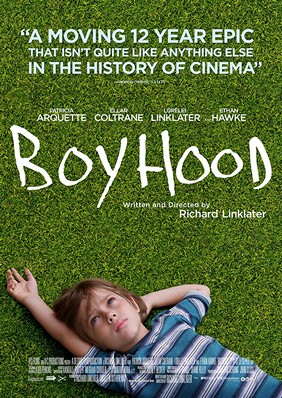
A fascinating movie about various stages of life: childhood, growing up, parenthood. Richard Linklater is one of my favorite directors/screenwriters, and the Before series my all time favorites.

Here’s what actor Ethan Hawke said about the film:

It’s Tolstoy-esque in scope. I thought the Before series was the most unique thing I would ever be a part of, but Rick has engaged me in something even more strange. Doing a scene with a young boy at the age of 7 when he talks about why do raccoons die, and at the age of 12 when he talks about video games, and 17 when he asks me about girls, and have it be the same actor — to watch his voice and body morph — it’s a little bit like timelapse photography of a human being.

Read Full Post »

film-poster

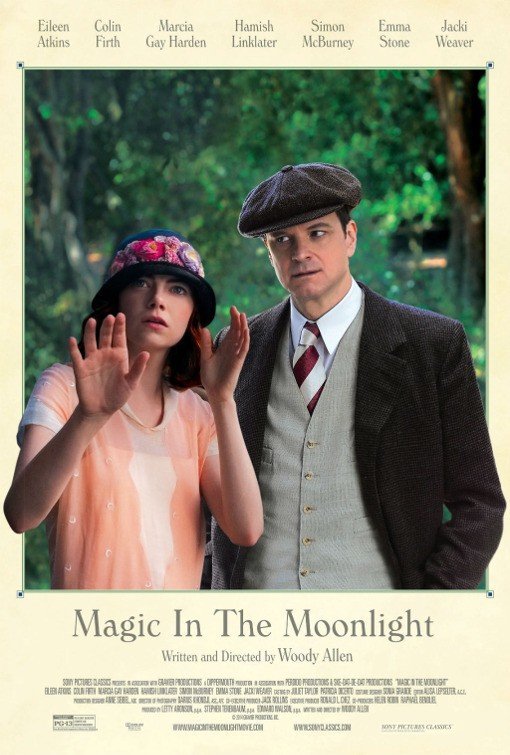
Woody Allen continues his Europe shooting (in French Riviera this time) and provides a beautiful setting to ponder the meaning of life type questions (usual dose of Cole Porter, but also Nietzsche quotes and Beethoven music). I like the haughty rationalist that Colin Firth plays; reminds me of his 1995 BBC Darcy but also Henry Higgins from My Fair Lady.

I think we all need some magic and illusions in our lives.

Here is an interview with Woody Allen about the movie, and here‘s some real magic.

Read Full Post »

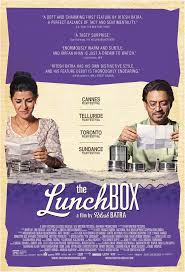
The Lunchbox

I enjoy the movie. The message seems to be that it’s never too late to start living life, and an important element is to be able to connect with someone. Sometimes a simple change in environment and some good food are all we need to cheer us up. Taking time to reflect and paying more attention to people around us might also help change our perspectives. 

From the protagonist Saajan Fernandes:

Life is strange…I think we forget things if we have no one to tell them to…

……

I don’t know when I became old…Maybe it was that morning...maybe it was many many mornings ago...and maybe if I had forgotten something in the bath room before I would have found out sooner…

……

Life kept on going and lulled me with its motions, I kept rocking back and forth as it threw me left and then it threw me right…and then before I knew it…

From the Dabbawallah:

Harvard people came and did a study on us…we always deliver right they said and you say we deliver wrong?
The king of England has also come, he has seen our delivery system, invited us to his wedding…
 images
 

Read Full Post »

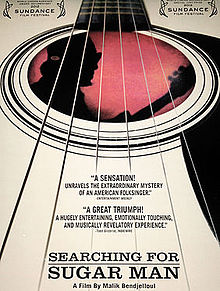
Searching for Sugar Man – an amazing documentary. It shows how luck plays an important role in life. The story is consistent with studies that found that luck plays a part in determining music popularity and labor market outcomes.

Searching-for-sugar-man--poster

Read Full Post »

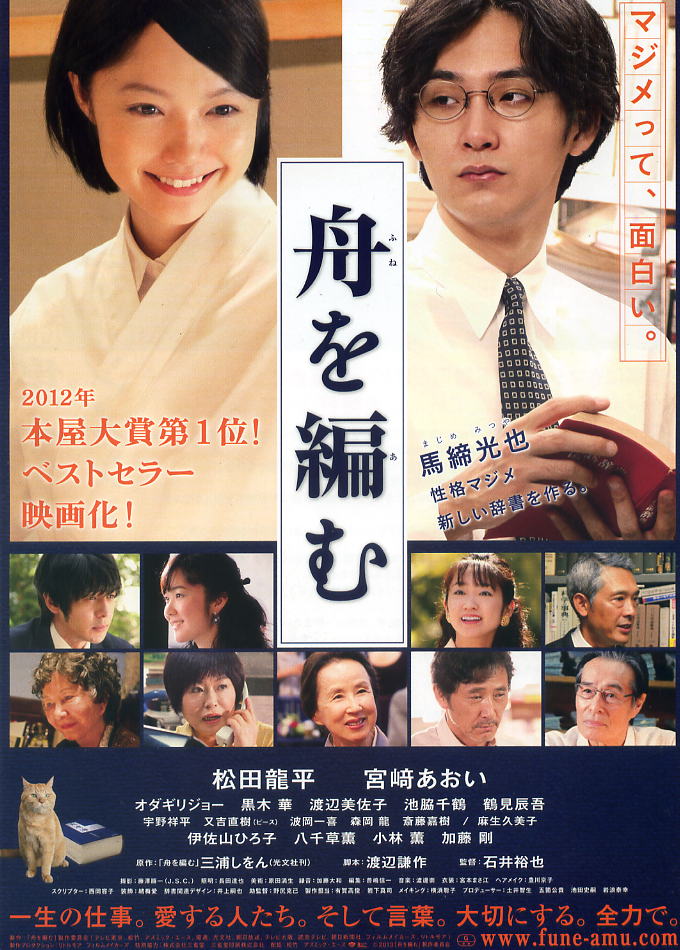
This Japanese movie talked about a young introvert who dedicated over a decade of his life to create a dictionary. In today’s fast paced society, a simple yet meaningful lifestyle seems like something many would feel nostalgic about. I admire craftsman who dedicates oneself to a certain ideal. It reminds me of the documentary Jiro Dreams of Sushi [the sushi is really good by the way] as well as many other Japanese stories.

Here is a nice review from IMDB:

The Great Passage is a rare story describing how a serious, quiet and shy young man pursues his massive project at work with great diligence and passion while winning his dream girl along the way.

When low-keyed, non-expressive and introvert Mitsuya Majime (meaning serious in Japanese! Played by Ryuhei Matsuda) is transferred to a new position in his publishing company to compile a dictionary, his life is forever changed. Originally a misfit salesman, Majime is perfect for his new role as editor. In fact, the clumsy young man is an outcast even in this society which values outgoing and talkative personalities. Equally out of date is the project he is working on – a paper dictionary in a society with online and mobile communication.

Majime may be old fashioned: he works in a company which clings to an old dream to help users understand reality in the wide ocean of knowledge, by means of patiently weaving the boat of dictionary, “The Great Passage.” He himself is also conservative in expressing his feelings to the girl of his dream, also granddaughter of his landlady, Kaguya Hayashi (Aoi Miyazaki) who aspires to be a chef in competitive Tokyo.

Yet we cannot help but admire Majime’s dedication to his work: he meticulously looks for sources of new words and their explanations; he pays immense effort in researching the type of paper with the right touch for the dictionary. When the deadline edges in, he even camps in the office with his temporary helpers to iron out the mistakes until they finally meet the deadline.

Equally serious is how he approaches the muse of his life by offering explanations of words to coincide her careful action in the kitchen. What a nice merge of both threads in the movie! It was amusing when we see how he struggles to verbalize his feelings for her. Afterall, feelings have to be expressed.

Compiling a dictionary in an ever changing world could be daunting and overwhelming. But the director made it very interesting and almost sacred, not to mention the funny scene when the editors stay in a fast food chain to “overhear” youngsters’ conversations. The romantic and hilarious courtship almost convince us that when there is genuine love and care, perhaps whatever you say does not matter that much: action often speaks better than words. In the same token, ironically, despite all the detailed explanations of the dictionary, perhaps sometimes the highest level of communication does not need, or cannot be expressed by, any words.

This is also a movie on realizing our dreams by intense focus and persistence: whether it is becoming a chef or compiling a comprehensive dictionary. Yes, it may take a whole decade to complete, but it is well worth the effort, especially in this fast changing world. The fact that they remain in the same old house and office all through the years echoes the themes that in this vast sea of mobility and changes, there is a need to anchor on something/someone constant before we can move forward.

The cast are excellent. Matsuda and Miyazaki shine in portraying the young, shy and kind lovers. You can’t help feeling sorry and impatient for them. But in the end, I guarantee you will admire and appreciate their painstaking effort, both in love and in work.

fune-wo-amu-flyer-2

Read Full Post »

饮食男女(Eat Drink Man Woman) by Ang Lee (1994) –
Even though I might find a lot of Chinese traditions and relationship norms ridiculous, I still feel nostalgic towards some of them. I’m like a rebellious child who admires the Western philosophy and science and the Japanese beauty and idealism and plays down the Chinese ones. But as I grow older, I begin to appreciate more of the Chinese traditions and to like the old Chinese songs and movies. This reminds me of what 吳念真 (Nien-Jen Wu) said in Yiyi: when he was young, he hated the music his father always plays, but when he felt in love at 15, suddenly everything meant something to him. Thank Angi for recommending this movie to me.

Waterboys (2001) by Yaguchi Shinobu –

Similar to Swing girls, it’s a story about teenagers overcoming obstacles to find passion and satisfaction in their life. In here, passion is not even about finding what you love to do or pursuing your dreams, but just putting efforts into something and doing it well. I like the director’s style and enjoy watching his movies regardless of the unrealistic content. Another Japanese director to add to my watch list, along with Miyazaki Hayao, Shinkai Makoto, and Shunji Iwai.

Casablanca (1942) –

I decided to watch this movie again after watching Sleepless in Seattle (1993). I still like it a lot and enjoy the story, characters, and conversations. An all time classics.

Read Full Post »

Wall-E

I had high expectations for this anime and wasn’t disappointed. The anime is full of delicate portray of emotions and touches on some deeper themes (Spoilers ahead). The anime can easily to made into a dystopia in several ways if we think about the power of robot or people’s tendencies to behave in a situation portrayed in the anime.  On a personal level, Wall-E’s memory loss can be comparable with people with Alzheimer’s disease. If Wall-E didn’t get his memory back, is he the same being as the old Wall-E, and what to make of the shared experience between the two? Robot’s in general identical and replaceable as opposed to human being for now, but this would be questions we have to face if we can successfully make copies/uploads of ourselves in one way or another.
Here is an interview with the anime director with some quotes below:
it was literally born from the sentence, “What if humankind left earth and somebody left the last robot on, and it just kept doing the same futile thing forever?” And I thought that was the saddest, loneliest character I ever heard of in my life.
But definitely it had that first man, first female theme. But I wasn’t trying to replace man in the bigger story. I just loved the poetic-ness that these two machines held more care for living and loving than humanity had anymore.
The theme that I was trying to tap into was that irrational love defeats life’s programming—that it takes a random act of loving kindness to kick us out of our routines and habit. You could blame consumerism as one thing that’s happening in this film, but there’s a million other things we do that distract us from connecting to the person next to us and from furthering relationships, which is truly the point of living. So I came up with the idea that as WALL•E was picking up trash, it would have all these signs of humanity for him to rifle through, to get him interested in what humans were all about. I loved the idea of WALL•E finding something real. He was fascinated with the idea of living. And what’s the point of living? Something real. He was a manmade object with something real inside him. And he found something real while surrounded by manmade objects. That just was poetic for me.
I wasn’t trying to make the humans into fat, lazy consumers, but to make humanity appear to be completely consumed by everything that can distract you—to the point where they lost connection with each other, even though they’re right next to each other.

Read Full Post »

Scenes from a Marriage (1973)

One of the best movies I’ve seen this year. It contains lots of truth about love and marriage. Like many aspects in life, it’s hard and often sad to face reality squarely. Here’s an article featuring something called Radical Honesty (that we should speak truth at all times), though I don’t think it’s the best way to live. Knocked Up is another recent movie that I find enjoyable. It also gives a special perspective on relationship. Tyler has a brief review on its philosophy.

秒速5センチメートル/5cm per second

If Ingmar Bergman’s movies confront me with the bare reality, Shinkai Makoto’s anime takes me to a world of fantasies. It’s full of the ideal type of longings and loneliness that people like to immerse themselves in, and it’s so beautiful that I want to deceive myself and live in those worlds. Here’s my previous entry on Shinkai Makoto.

Scotland trip

Scotland’s a beautiful place with rich history. Two of my favourite people, Adam Smith and David Hume, were from Scotland. I especially like the open fields and lakes. It’d be a good place to trek and do a backpacking trip. I will post some photos later.

The Merchant of Venice at Shakespeare’s Globe

It’s a play that portrays lots of different emotions. Hilarious and fun to watch throughout and at the same time left me with something to ponder. The acting was superb, and the characters fit their roles well. My sister couldn’t get her mind off the charming and handsome characters in the play.

LSE Public Lectures by Ian Ayres

I agreed with many things he said, and the lecture exceeded my expectation. I’m going to read his new book Super Crunchers.

Musical: The Sound of Music

The music and the props are ‘a few of my favourite things’.

Read Full Post »

Since I had a productive day and did considerable studies, I rewarded myself with a movie that I recently downloaded and have wanted to watch since it’s released, the recent adaptation of Jane Austen’s Pride and Prejudice. The movie’s nice. Both the actors and the interpretation of the novels are quite good, and there’re many beautiful scenery in it. But I still prefer the 1995 drama series played by Colin Firth more. But the drama’s about three times as long as the movie, so probably it’s unfair to compare them.  Nonetheless, it’s always nice to watched different version of a story I like, especially when it one is well make (I even watched the Indian version of it—Bride and Prejudice—but that’s more an accident than a conscious choice).

So what make me like this story so much? I like Austen’s portrayal of the different characters, their wits and use of words, and the style of the romance. I especially like the main character in her story. Darcy’s one of my favorite characters, so is Knightley, the main character in Emma (another novel by Austen). Her protagonists are men who I can identify with and admire. If I were to live in those times, I’d probably want and strive to become these kinds of men. Even for our time, I think there’re many admirable qualities to be found in those characters.

Lovely novels, I ought to read them again sometime.

Read Full Post »

« Newer Posts - Older Posts »