• Be a Better Dad

    Most of us would like to have great relationships with our kids. We are familiar with the basic advice: love our kids unconditionally, put relationship first, spend time with them, empathize and be kind, believe in them and help them fulfill their potential. But putting this advice into practice can be challenging.

    One reason is that some of these principles may conflict with each other. For example, balancing unconditional love with helping them reach their potential, or finding a balance between having fun and maintaining order. Should parents allow their kids to experiment with different projects, even if they create a mess at home (or just create a mess for fun)? This could foster creativity and provide an opportunity for everyone to have fun. But for parents who prefer order and cleanliness in their daily routine, and have limited time to supervise or assist with cleanup, this can affect their well-being.

    Loving someone unconditionally is hard. Sometime it feels like we are having the same conversations a thousand times, and they continue with the same bad habits. Or what if they refuse to listen to feedback, even when deliver in a well-intentioned, calm manner? Can we love unconditionally when someone consistently behaves in ways we don’t like? For adults, we can choose to spend more time with people we like and avoid others. But with our kids, we don’t have that option. We want our kids to be people we like. Hence even if we know it’s often futile to try to change someone, we still try to shape our kids’ behavior.

    Parents can get annoyed or angry by different triggers, such as slamming doors, poor hygiene, mistreating belongings, rudeness, complaining, lying, or engaging in bullying or physical aggression. Some of these character issues require serious attention. But often what we really care about is obedience and respect from our kids.

    If having a good relationship is most important, the ideal approach seems to remind them calmly and kindly each time. Punishment usually doesn’t work. Sometime we punish our kids for trivial things, regret it later (as punishments usually benefit no one), but feel obligated to carry them out to maintain consistency and credibility. If our aim really is to help them improve, we should come up with punishments that aid their development.

    An ideal parent can strike a balance, to be both loving and accepting, while guiding their kids to become their best selves. Fortunately, being a good enough parent is often good enough. Despite my weaknesses, my kids still seem to enjoy spending time with me. And I like the ideas that there’s room for me to improve and become a better dad.


  • Sketches II

  • Bryan Caplan recommends spending ten times the usual effort to be competent.

    People who attain fluency practice about ten times as much as the typical person who is officially “learning a foreign language.” Sure, the quality of practice matters, too; immersion is the best method of foreign language acquisition. But unless you’re willing to give ten times the normal level of effort, fluency is basically a daydream.

    When I see the contrast between people who succeed and fail, I generally witness a similar gap in effort… 

    If you want to learn a foreign language, you need to budget about two thousand hours. If you want to master a technical subject, you need to budget about five thousand hours…

    Either that, or admit that you’ve got higher priorities. No one succeeds at everything. If you’re not willing to do ten times as much, just level with yourself: “I’ve got better things to do than learn a foreign language.” “I’ve got better things to do than become a great economist.” “I’ve rather raise my kids in the modern world than be a family of earnest Orthodox Jews.” If you take all of the time you dabble away in a hundred quixotic ways and concentrate it on two or three goals you truly prize, you’ll probably succeed at what you value the most. Pick your battles, friends. And wherever do you choose to fight, do ten times as much.

    Like what he noted, spending 10,000 hours on something doesn’t guarantee mastery, but without the sustained efforts, it’s generally difficult to become proficient. Depending on the goals and desired level of excellence, one could achieve decent results with good quality focus for a few months.

    The problem with this plan, of course, is that it required Keanu Reeves to become sufficiently good at judo, jiu-jitsu, and tactical 3-gun shooting so as not to look clumsy for Stahelski’s stable camera. Reeves was game. According to the featurette I watched, to prepare for production, he trained eight hours a day, four months in a row. The effort paid off. The action set pieces in the movie were show-stopping, and after initially struggling to find a distributor, the film, made on a modest budget, went on to earn $86 million, kicking off a franchise that has since brought in hundreds of millions more.

    For Keanu Reeves, it was obvious that the most productive path was to focus all of his attention on a single goal: becoming really good at Stahelski’s innovative brand of gun fu. Doing this, and basically only this, month after month, materialized hundreds of millions of dollar of profit out of the entertainment ether.

    Cal on the slow productivity of John Wick

    Deep work + time = competence. Pick your battles.

  • Brett summarizes Hemery’s book Sporting Excellence. The attributes mentioned seem reasonable, but it’s hard to know how applicable they are to the general public.

    Athletic excellence has thus been linked to the capacity to tolerate discomfort — to feel the pinch and the pain and keep going anyway…Another gold medal winner, Herb Elliott, who’s considered the greatest middle-distance runner of his era, put it this way, “In retrospect, my training wasn’t to improve my physical strength or stamina; those came along as a secondary result, but the primary purpose of every training session was to toughen up mentally. A training session was totally useless until it started to hurt. That was the point when it started to be worthwhile.” 

    I like the concept of having a high tolerance for discomfort. While we want to avoid overtraining and getting injured, I think in today’s society many people tend to shy away from discomfort. Consistent efforts contribute to progress, which makes the chosen pursuits more enjoyable and sustainable.

  • Sketches

  • During my high school years, our condo’s gym had a pull-up bar. I remember not being able to do even a single pull-up, while my best friend effortlessly completed up to ten.

    Around the same time, I became inflexible. Tasks like touching my toes while bending forward or performing a squat without falling backward seemed unattainable.

    But by setting a conscious plan, things have changed in the past few years. I can now do pull-ups, a basic squat, and touch my feet. Although my flexibility and range of motion are still limited, I can see a path toward gradually becoming stronger and more flexible.

    These modest accomplishments have bought me as much satisfaction as some seemingly more significant achievements. They shifted my mindset about what’s possible. What once seemed impossible during my prime years (and I thought forever) has become achievable.

    I know many people who can dive headfirst into a pool or the sea, but I’ve never been able to do so. While this is not an essential skill, I think if I can conquer my fear and gain control over my body to achieve it, I’d feel a similar sense of accomplishment.

    Small accomplishments are steps towards bigger dreams.

  • The book contains 450 advice/wisdom Kevin Kelly wishes he’d known earlier. Below are some I hope to remember/follow:

    Listening well is a superpower. While listening to someone you love keep asking them “Is there more?” until there is no more.

    Hatred is a curse that does not affect the hated. It only poisons the hater. Release a grudge as if it were a poison.

    Friends are better than money. Almost anything money can do friends can do better. In so many ways, a friend with a boat is better than owning a boat.

    Calm is contagious. Be calm to help others.

    Children totally accept — and crave — family rules…In fact, “I have a rule for X” is the only excuse you need for your own personal policies.

    Every person you meet knows an amazing lot about something you know virtually nothing about. It won’t be obvious and your job is to discover what it is.

    Whenever you can’t decide which path to take pick the one that produces change.

    You don’t need more time because you already have all the time that you will ever get; you need more foucus.

    This is the best time ever to make something. Non of the greatest, coolest creations 20 years from now have been invented yet. You are not late.

    You can eat any dessert you want if you take only three bites.

    Be frugal in all things except in your passions. Select a few interests that you gleefully splurge on. In fact, be all-around thrifty so that you can splurge on your passions.

    Experience are fun and having influence is rewarding but only mattering makes us happy. Do stuff that matters.

    Greatness is incompatible with optimizing in the short term. To achieve greatness requires a long view. Raise your time horizon to raise your goal.

    For every good thing you love ask yourself what your proper dose is.

    Spending as little as 15 minutes on improving how you do your thing, is the most powerful way to amplify and advance your thing.

    Productivity is often a distraction. Don’t aim for better ways to get through your tasks as quickly as possible. Instead aim for better tasks that you never want to stop doing.

  • An interview from my previous job several years ago.

    1. Where did you grow up?
      I grew up in Hong Kong, moved to Bangkok when I was around 10 years old, went to Oita, Japan for my undergraduate study and then the UK for postgraduate degrees in Economics at University of Cambridge and London School of Economics.
    2. What is your work like?
      I worked in a small, collegial and dynamic company, with smart and driven people to make sense of important macro issues happening in the world.
    3. What do you like best about your role?
      I like the autonomy and broad scope of the role. One never runs out of things to learn. To do well in the job requires not just good understanding of economics, but also history, politics, and technology. It’s also exciting to follow fast growing economies like China and witness changes in real time.
    4. What is your team like?
      It is a small and friendly team, with plenty of informal chats on a regular basis. Popular topics include parenting, politics, and the insane property market!
    5. What do you do in your spare time?
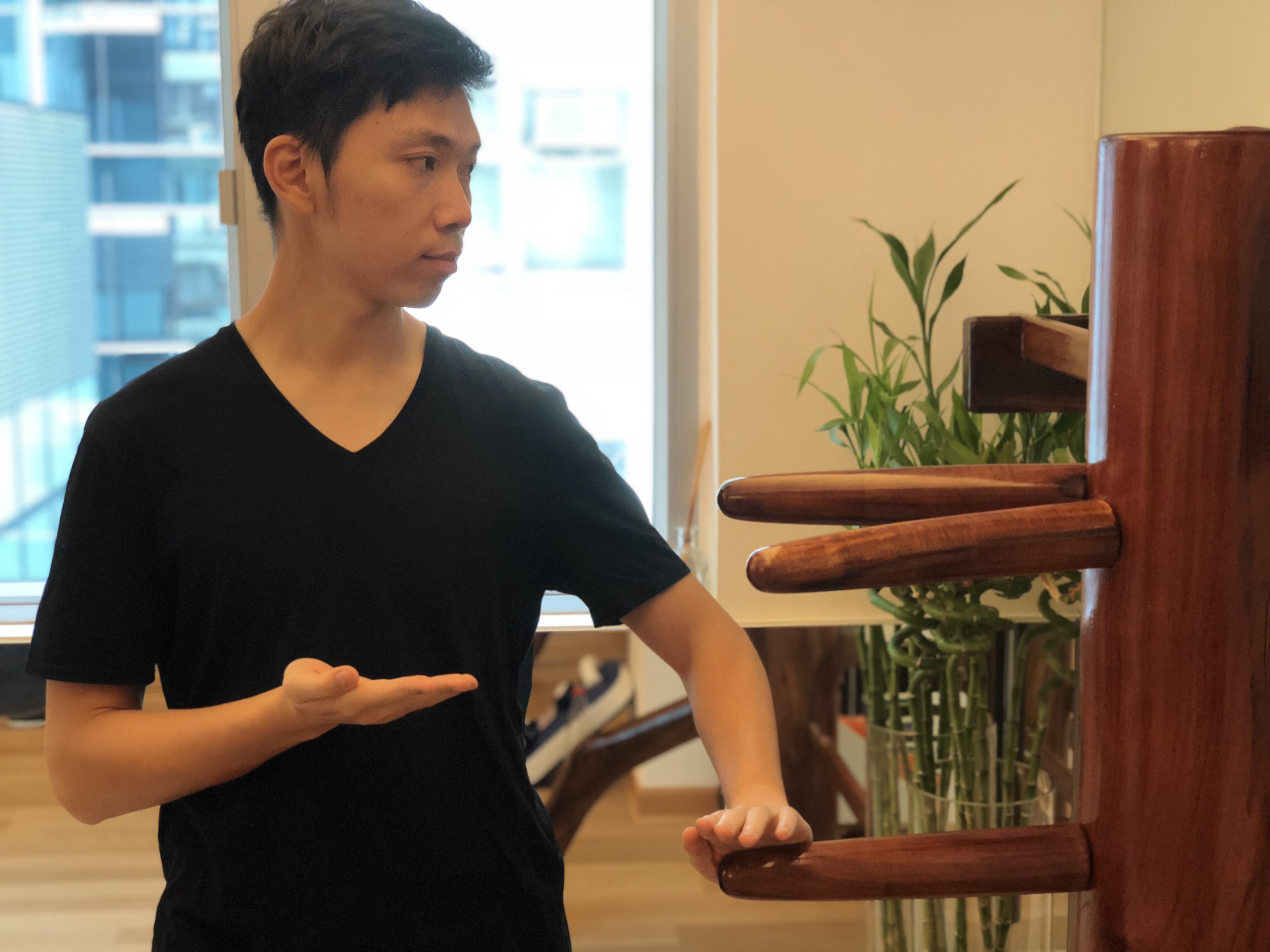
      Besides spending time with my family, I run 4 to 5 times a week and practice Wing Chun, a Chinese martial art made famous by Ip Man and Bruce Lee (According to Wikipedia, it’s the world’s most popular form of Southern Kung Fu).
    6. So you’re a lean, mean, fighting machine?
      I’ve practiced for 4 years and learned the wooden dummy. I don’t have a saffron robe…yet!
    7. How did you find time to do all this?
      Discipline. I wake up at 6am, go for a run or do a workout in the gym, get back to have breakfast with my family before going to work.
      I listen to podcasts while commuting and read books at night after my kids go to bed – that’s my routine.
    8. What are you reading at the moment?
      The Master Algorithm: How the quest for the Ultimate Learning Machine Will Remake Our World – by Pedro Domingos.
      The Art of Learning: An Inner Journey to Optimal Performance – by Josh Watkins
    9. What is your favourite place in the world?
      My favourite place in Japan used to be Kyoto. Back then it was more quiet. Now I feel like there are too many tourists so would pick Naoshima and Okinawa as my favourite. I like the food, architect, nature and just walking around.
    10. Who would be your ideal dinner guests?
      David Hume, Bruce Lee, Lee Kuan Yew and Richard Feynman.
    11. What is your favourite food?
      Japanese Kaiseki Ryori, or just an ekiben (e.g. bento you eat for a Shinkansen train ride). Rather than one dish, I like the balance of various small dishes.
    12. Do you have any secret talent that we don’t know?
      I bought a skateboard for my son but secretly I’ve been enjoying learning it myself.
      So far, I have mastered the art of going and stopping!
    13. What is on your bucket list?
      Too many. Learn sports like snowboarding, surfing, and diving. Learn architecture and build a house. Compose a song, draw manga, make an anime, and perform music with friends.
    14. What is your advice for a young person?
      Work hard, learn, and stay humble.
    15. Have you had any strange jobs in the past?
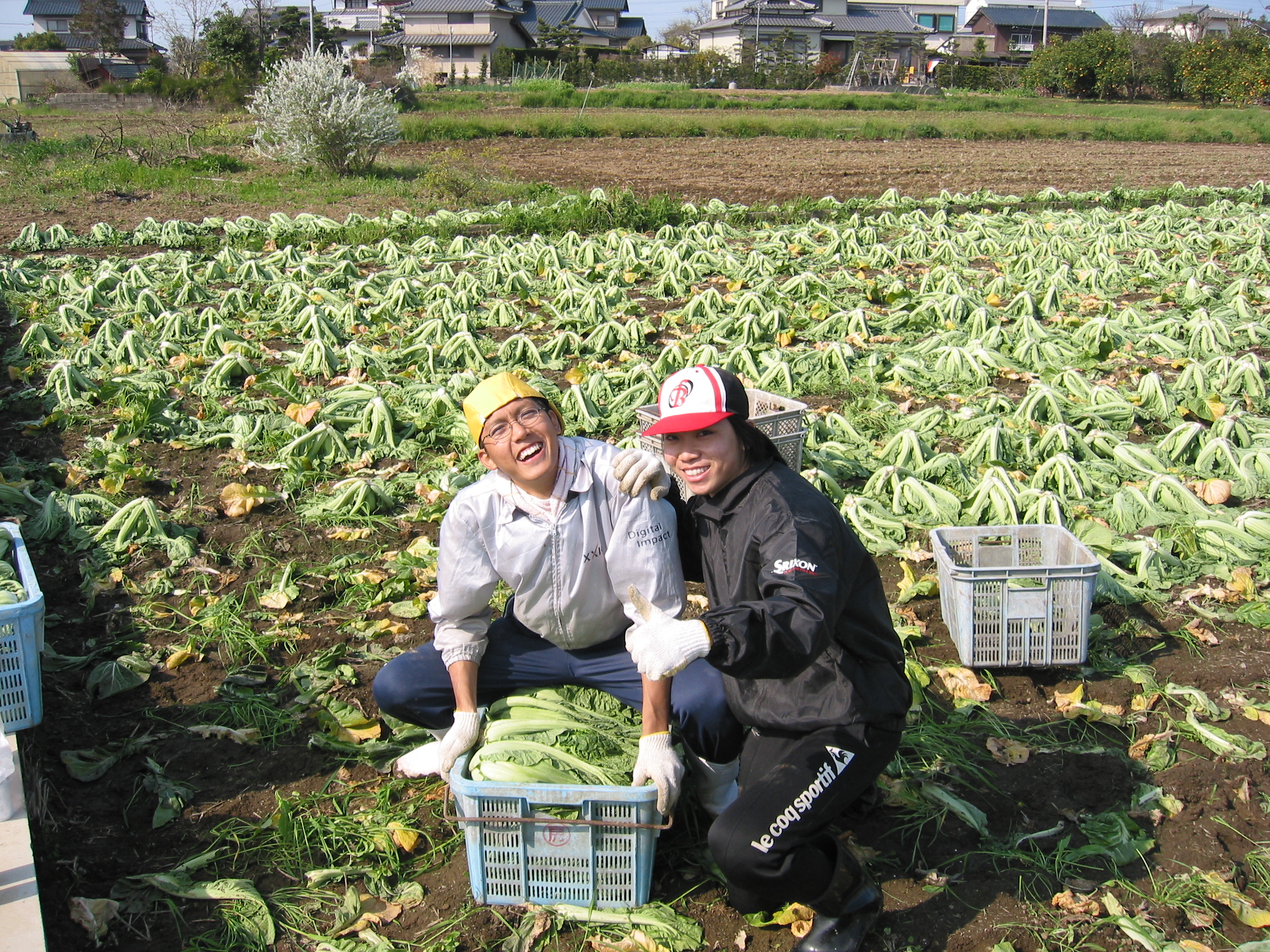
      During my University era, I worked in a farm making fermented pickles (Tsukemono in Japanese). I’d gather cabbage from the farm, put them into a pickle press (with lots of salt), and place the processed products in packages for sale.
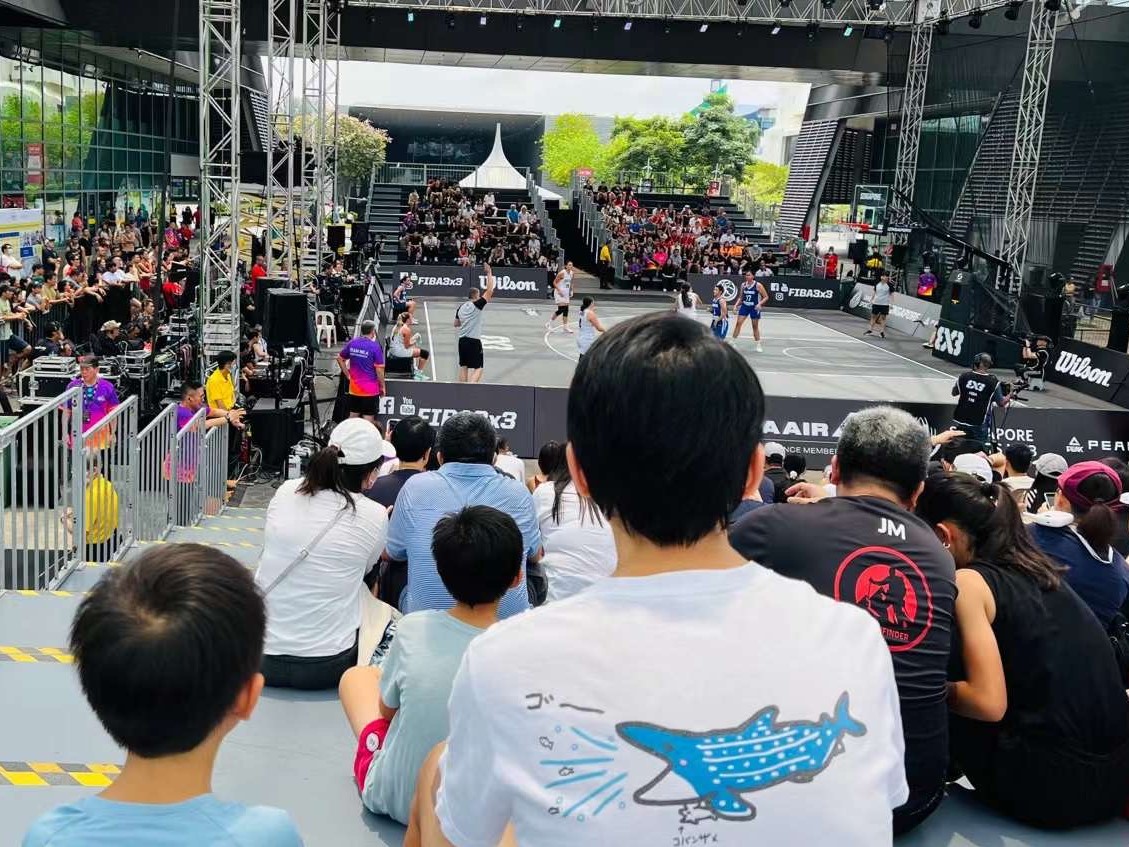
  • I haven’t closely followed sports since my high school days. But with my boys getting more into basketball, we are starting to follow NBA games and attend local sporting events. Playing basketball with them has become one of my favorite activities, and I also enjoy watching and discussing games with them.

    It’s interesting to see which teams and players they support. It seems our level of tribalism is, to a large extent, determined by our genes. My elder son doesn’t have a strong preference which team he likes (he tends to like everyone), while my younger son has a strong “us vs. them” mentality, hating teams that beat the ones he likes, and even treating enemies of his enemies as friends.

    I’m probably somewhere in between. I remember feeling more tribal during my high school years when I wanted to establish an identity and be loyal to certain people. As I’ve grown older, I’ve found many of these distinctions to be artificial.

    However, my experience with my boys has changed my thinking. Instead of wasting time, I now see sports as a way to bond and connect with people, to learn about culture, and to be inspired by great performers. The more knowledgeable I become, the more interesting it is to follow a sport’s development. Being tribal isn’t necessary, but like a bit of alcohol, it can make the experience with others more fun.

    I used to care mainly about my own improvement and less interested in following other famous stars. I still think it’s more satisfying to gradually improve my skills than passively watching others. But it’s also exciting to watch young people with dreams and potential still ahead of them work hard and strive towards their goals.

  • Keep Dreaming

    Excerpts from Enuma Okoro’s article on dreams and related painting:

    Every one of us has had dreams of something we wish to happen — or to make happen — in our lives, and I’m sure every one of us has had moments when we question the validity of our dreams, or the reasonableness of them. What keeps some of us inspired enough to keep on dreaming anew, or hopeful enough to hold on to unrealised dreams?

    ……

    Whatever it is we dream of, it takes courage to stand firm and hopeful for those dreams to come to pass, especially when nothing about our circumstances seems to encourage a dream’s fulfilment.

    ……

    Though our dreams are our own, we often need a community to keep them alive, and to help us to see them through to reality, even when we are tempted to give up.

    ……

    Allowing ourselves to keep dreaming is ultimately dependent on our ability to sustain hope, to believe in the possibility of a different reality regardless of what things look like. What we believe is possible relies on what we are able to conjure in our imagination, even in dire times. So much of our power and agency begins there.

    ……

    It is the dream of all involved to win the race, but there will be only one winning team. Understandably, we are often so focused on a particular end result that any other outcome is regarded as failure. But I wonder if we cheat ourselves when we limit our definitions of what constitutes an actualised dream. To be one of the people in this painting who does not leave with the dreamt-for prize does not necessarily mean the race was run in vain, even with the disappointment or despair that might follow.

    Anyone who has worked hard towards something knows that we are never the same person at the end as we were when we began, regardless of the outcome. But who we end up being is also determined by our own perspectives and the story we choose to live. The art of dreaming should be unending, as circular as this relay track. No matter what we achieve or when, the goal is to never lose the ability to dream.

    ……

    We might think dreaming is a luxurious use of time that only certain people can afford. But dreaming is for everyone, and it is often the thing that keeps us motivated enough to take the next step forward. The other thought I had was how much courage it takes to dream of something beyond our present circumstances, and to maintain that dream in the face of challenge and hardship. Far from dreaming being a luxury, it can be painful and courageous work.