What defines our identity? If we change, are we still the same person? Most would say yes. But what about incidents that change our brains, affecting our memories, personality, or behavior? This reminds me of Theseus’ paradox, a thought experiment that asks whether an object that has had all of its components replaced over time is still the same object.
Maria Popova thinks soul is the best shorthand to describe that continuous center within us, and excepted this beautiful quote by Virginia Woolf:
The man* who is aware of himself is henceforward independent; and he is never bored, and life is only too short, and he is steeped through and through with a profound yet temperate happiness. He alone lives, while other people, slaves of ceremony, let life slip past them in a kind of dream. Once conform, once do what other people do because they do it, and a lethargy steals over all the finer nerves and faculties of the soul. She becomes all outer show and inward emptiness; dull, callous, and indifferent.
Let us simmer over our incalculable cauldron, our enthralling confusion, our hotch-potch of impulses, our perpetual miracle — for the soul throws up wonders every second. Movement and change are the essence of our being; rigidity is death; conformity is death: let us say what comes into our heads, repeat ourselves, contradict ourselves, fling out the wildest nonsense, and follow the most fantastic fancies without caring what the world does or thinks or says.
I’m not sure if we should always follow our hearts. But it seems like many of us don’t pay enough attention to our inner selves. Embracing change, listening to our soul, and having the courage to be ourselves seem like good advice for many of us.
I was in a conference listening to former NBA star Jeremy Lin. He’s charming, likable, and his stories are inspiring. It’d have been nice to have a photo with him. Luckily, I sat at a front row table close to his exit. Unfortunately, I don’t have the courage and decisiveness to approach him for a photo. Some attendees just walked up to him despite security’s efforts to clear his path. They got photos taken, while I could only think, “What if?”
This is a trivial event. Having a photo with someone famous often is more about bragging or showcasing one’s importance. But it reminds me that people with personalities like mine often miss opportunities and regret not taking actions, especially under time pressure.
What if it’s an important decision like confessing our feelings, or reconciling with someone we might not meet again? Fortunately for these decisions, we usually have more time to think and act. Even if it’s hard to be courageous, we can prepare and do our best.
For situations that happen infrequently and have time constraints, we need to change. One solution is to practice and get used to these situations. Some people deliberately put themselves in uncomfortable situations and learn to get used to rejections, doing things like asking for a discount at Starbucks, talking to strangers on public transport, or performing in public.
But do we really want to change? Sometimes we want to preserve our identity, even when it doesn’t serve us well. If I see myself as an introvert and a sensitive person, do I suddenly want to be a social butterfly or someone who can act boldly in public? But we are also constantly changing. If the change is for the better, should we not embrace it?
We all possess minor weaknesses. I hope to minimize major regrets and not dwell on the smaller ones, as flaws make us human.
A friend sent me this quote by Trevor Noah:
I don’t regret anything I’ve ever done in life, any choice that I’ve made. But I’m consumed with regret for the things I didn’t do, the choices I didn’t make, the things I didn’t say. We spend so much time being afraid of failure, afraid of rejection. But regret is the thing we should fear most. Failure is an answer. Rejection is an answer. Regret is an eternal question you will never have the answer to. “What if…” “If only…” “I wonder what would have…” You will never, never know, and it will haunt you for the rest of your days.
I am a fan of the Before series and happy to come across this article about the Paris apartment in the movie.
As Celine opens the front door there is an inescapable sense that, unlike the other locations they have visited, this is a destination, not somewhere to pass through.
Yes, we see Celine’s apartment through Jesse’s eyes, and see how it represents everything he feels his 30-something married life is lacking: freedom, adventure and pleasure. But, I understood it also marks the moment when Celine stops being Jesse’s fantasy woman — existing in his memory and his dreams as a symbol of lost youth — and comes into focus as a fully real person. Sitting on her wonky futon, looking at her childhood photos, rifling through her CDs, Jesse can finally get under Celine’s skin. And isn’t that the most fervent fantasy of all? To invite someone in, reveal the intimate, cluttered parts of yourself, and be truly known?
In a recent post, David Epstein quoted an interview with Murakami back in 2004:
When I’m in writing mode for a novel, I get up at four a.m. and work for five to six hours. In the afternoon, I run for ten kilometers or swim for fifteen hundred meters (or do both), then I read a bit and listen to some music. I go to bed at nine p.m. I keep to this routine every day without variation. The repetition itself becomes the important thing; it’s a form of mesmerism. I mesmerize myself to reach a deeper state of mind. But to hold to such repetition for so long—six months to a year—requires a good amount of mental and physical strength. In that sense, writing a long novel is like survival training. Physical strength is as necessary as artistic sensitivity.
Murakami mentioned ‘writing mode’, which suggests different cycles of focused work. Cal Newport mentioned something similar in his recent podcast on a 4 month period to reinvent one’s life. He provides specific plans, with the first step being the discipline layer by setting up 3 key daily habits (one on professional, one health, and one personal) for the first two weeks.
I like the idea of having different 3-4 months focused mode within a year, which is a good way to avoid the December/January habit changing peak season trap. But I find it hard to stick to a weekly or daily planning routine.
Whether we call it discipline, grit, or habit, smart effort sustained over time tends to produce results. Since we all have different genetic endowments, it makes more sense to measure our progress against ourselves than others. For late bloomers (and I would consider myself one), we might feel like it’s too late to start many pursuits. But there’s no point in lamenting things that we didn’t learn or do in the past. We may not become the best in any pursuit, but we can improve in many of them. The good thing is, no one knows what potential we have, and it’s good to have aspirations and pursuits regardless of our age.
Andrew Huberman has a good summary of recent research on goal setting.
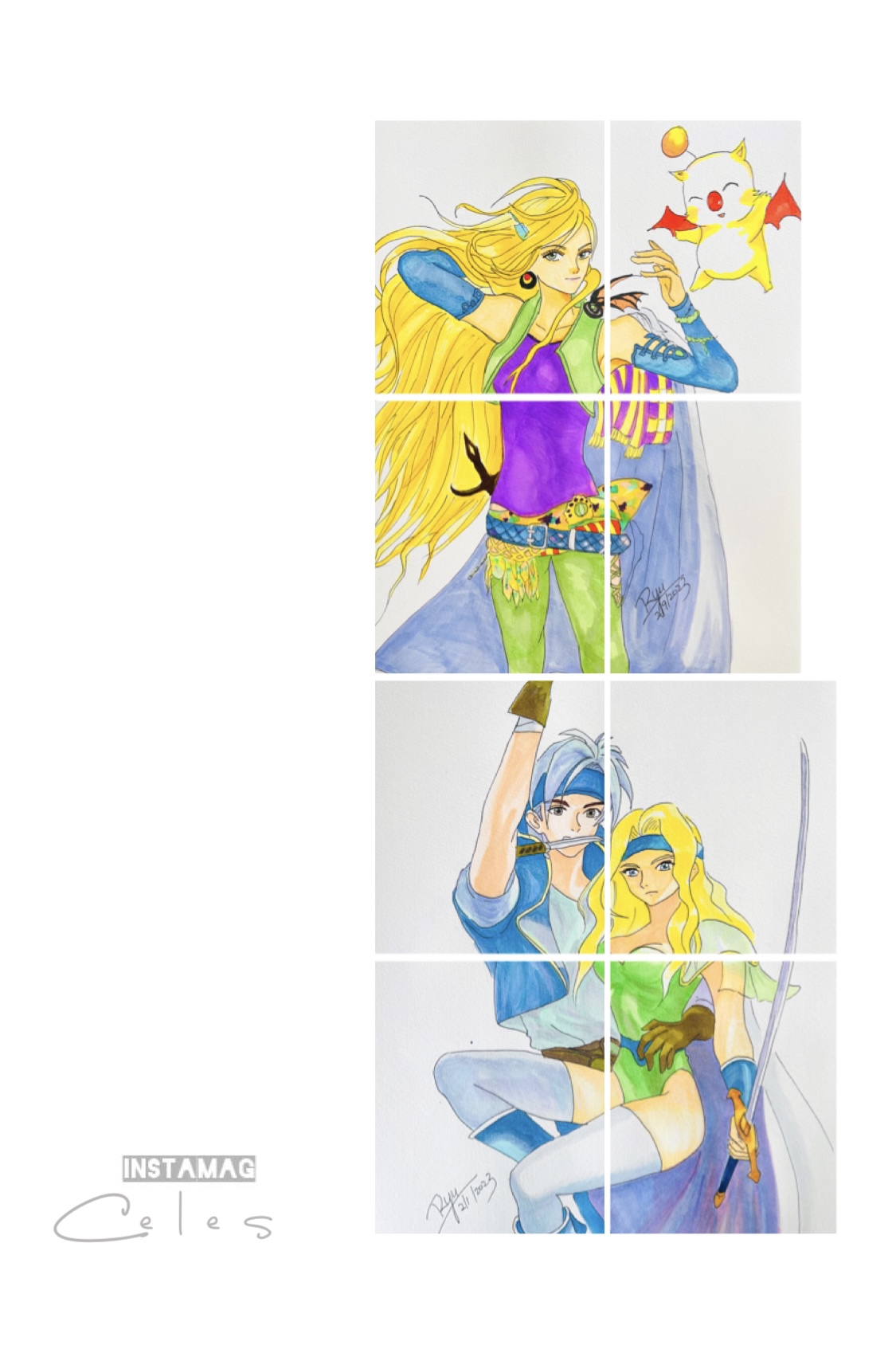
I have fond memory of this game, as it was the first JRPG I played. I think it stands the test of time even after two decades. Nobuo Uematsu’s soundtrack was great, and this simple opera scene was nicely done. It successfully kindled my kids’ interest in musical/opera.
Lyrics:
Oh, Maria
Oh, Maria
Though I call you from afar
Will this message reach your heart?
Oh, how I long to be with you
Oh my hero, my beloved,
Shall we still be made to part?
Your promises of perennial love
Yet sing here in my heart
I’m the darkness, you’re the starlight
Shining brightly from afar
Through hours of despair, I offer this prayer
To you, my evening star
Must my final vows exchanged
Be with him and not with you?
Were you only here to quiet my fear!
Oh, speak, guide me anew
Maria!
Draco!
I knew you would return to me, my love
Insolent rogue! Knave of the western hold!
Would you address my queen-to-be Maria?
Never shall you have Maria’s hand
I will die before that day comes
Then we duel!
I yield, this day is yours, Draco
Curse you, should you let Maria go
Peace then, for you have my word
With me, she’ll know nothing of this
Maria! Maria!
I love you so!
Ralse y Draco:
Maria! Maria!
Return to me!
I am thankful, my beloved
For your tenderness and grace
I see in your eyes, so gentle and wise
All doubts and fears erased
Though the hours take no notice
Of what fate might have in store
Maria, Draco and Ralse:
Our love, come what may
Will never age a day
I’ll wait forevermore
I’ll wait forevermore
Enuma Okoro thinks we’re all part of life’s great orchestra:
What a beautiful thing a group rehearsal is. The coming together of people skilled in different instruments, where each person is integral to the whole. Each player has to trust that others will be willing to listen closely, cognisant of the collective efforts that are needed to succeed. But what is also vital is that each person is attentive to the present moment, keeping to the beat while remaining in anticipation of the next note. You can’t focus on how bad or good yesterday’s performance was. Nor can you place your energy in worrying about tomorrow’s performance. It is by attending to how you play today, what you are willing to exert today with the instrument in your hands, that tomorrow’s performance is given any chance.
…
As we work towards solutions to our individual and collective problems, a challenging mental leap might come in thinking about who and what are part of the orchestra of life. Working within the interdependence of all creation is a necessary part of collaborating in the present towards a better today and tomorrow, keeping the world charged with a generative and fecund vitality.
 Ryu's Blog