The house elf is rebelling against its master. When will peace arrives?
Meaning: My body is signaling to me that it is not feeling well and I should take better care of it. Roger.
The house elf is rebelling against its master. When will peace arrives?
Meaning: My body is signaling to me that it is not feeling well and I should take better care of it. Roger.
饮食男女(Eat Drink Man Woman) by Ang Lee (1994) –
Even though I might find a lot of Chinese traditions and relationship norms ridiculous, I still feel nostalgic towards some of them. I’m like a rebellious child who admires the Western philosophy and science and the Japanese beauty and idealism and plays down the Chinese ones. But as I grow older, I begin to appreciate more of the Chinese traditions and to like the old Chinese songs and movies. This reminds me of what 吳念真 (Nien-Jen Wu) said in Yiyi: when he was young, he hated the music his father always plays, but when he felt in love at 15, suddenly everything meant something to him. Thank Angi for recommending this movie to me.
Waterboys (2001) by Yaguchi Shinobu –
Similar to Swing girls, it’s a story about teenagers overcoming obstacles to find passion and satisfaction in their life. In here, passion is not even about finding what you love to do or pursuing your dreams, but just putting efforts into something and doing it well. I like the director’s style and enjoy watching his movies regardless of the unrealistic content. Another Japanese director to add to my watch list, along with Miyazaki Hayao, Shinkai Makoto, and Shunji Iwai.
Casablanca (1942) –
I decided to watch this movie again after watching Sleepless in Seattle (1993). I still like it a lot and enjoy the story, characters, and conversations. An all time classics.
I was discussing this with a friend the other day and a few days later saw Ben’s post on exactly the same topic. I agree with most of his views, perhaps because we share similar ideology (1). But I think it’s difficult to disentangle between what’s inherited versus conscious change in personality. It’s likely that people with certain traits are more likely and capable of changing or improving themselves than the others. I agree with my ‘particular’ friend that the essence of a person is hard to change. Not that it’s impossible, but the cognitive dissonance and the discomfort from deviating from our inherited tendency are generally large enough to counter our desire and determination to change. I think few people are willing to make the sacrifice for big change in their personality and identity. So I might have a more pessimistic view about change: I think it’s possible to improve and change oneself, but it’s much more probable for certain type of people.
(1) I follow the classical liberal (or modern libertarian) tradition of thoughts (J S Mill, Adam Smith, David Hume, F A Hayek, etc.) and am fascinated by evolutionary psychology. I also read Steven Pinker’s books. I like The Blank Slate a lot, How the Mind Works is also good but has less impact on me.
Or take the case of Bill Gates. Gladwell cites a body of research finding that the “magic number for true expertise” is 10,000 hours of practice. “Practice isn’t the thing you do once you’re good,” Gladwell writes. “It’s the thing you do that makes you good.” Gladwell shows how Gates accumulated his 10,000 hours while in middle and high school in Seattle thanks to a series of nine incredibly fortunate opportunities—ranging from the fact that his private school had a computer club with access to (and money for) a sophisticated computer, to his childhood home’s proximity to the University of Washington, where he had access to an even more sophisticated computer. “By the time Gates dropped out of Harvard after his sophomore year to try his hand at his own computer software company,” Gladwell writes, “he’d been programming practically nonstop for seven consecutive years. He was way past 10,000 hours.” Yes, Gates is obviously brilliant, Gladwell concludes, but without the lucky breaks he had as a kid, he never could have had the opportunity to fulfill the true potential of that brilliance. How many similarly brilliant people never get that opportunity?
And then there are the math geniuses who, as anyone can’t help noticing, are disproportionately Asian. Citing the work of an educational researcher at the University of Pennsylvania, Gladwell attributes this phenomenon not to some innate mathematical ability that Asians possess but to the fact that children in Asian countries are willing to work longer and harder than their Western counterparts. That willingness, Gladwell continues, is due to a cultural legacy of hard work that stems from the cultivation of rice. Turning to a historian who studies ancient Chinese peasant proverbs, Gladwell marvels at what Chinese rice farmers used to tell one another: “No one who can rise before dawn 360 days a year fails to make his family rich.” Contrast that legacy with the one derived from Western agriculture—which holds that some fields be left fallow rather than be cultivated 360 days a year and which, by extension, led to the creation of an education system that allowed students to be left fallow for periods, like summer vacation. For American students from wealthy homes, summer vacation isn’t a problem; but, citing the research of a Johns Hopkins sociologist, Gladwell shows that it’s a profound handicap for students from poor homes, who actually outlearn their rich counterparts during the school year but then fall behind them when school lets out. “For its poorest students, America doesn’t have a school problem,” Gladwell concludes. “It has a summer-vacation problem.” So how to close the gap between rich and poor students? Get rid of summer vacation in inner-city schools.
…an addictive thing has the following characteristics:1) Once you start consuming it, you want to consume more and more of it.
2) Over time you build up a tolerance to it, i.e. you get less enjoyment out of consuming a fixed amount of it.
3) Pursuit of that good leads you to sacrifice everything else in your life to get it, potentially leading you to do ridiculous things to try to get the good.
4) There is a period of withdrawal when you stop consuming the good.
The answer to the question’s here.
When we live in a different country and see how other people do things, we tend to reflect on our own culture. Growing up in different places might have broaden my mind a bit, but reading this article on Iceland tells me there are much more out there to explore. Although Iceland’s culture is very different from Asian culture, I find it makes just as much sense. It is interesting to think about how each society evolves its own culture and norms that works for its people.
Below are some interesting bits from the article:
Highest birth rate in Europe + highest divorce rate + highest percentage of women working outside the home = the best country in the world in which to live. There has to be something wrong with this equation. Put those three factors together – loads of children, broken homes, absent mothers – and what you have, surely, is a recipe for misery and social chaos. But no….in terms of wealth, health and education – they are champions of the world…in so far as one can reliably measure such things…Icelanders are the happiest people on earth.
But none of this happiness would be possible without the hardy self-confidence that defines individual Icelanders, which in turn derives from a society that is culturally geared…to bring up happy, healthy children, by however many fathers and mothers…’Patchwork families are a tradition here,’ explained Oddny, who was off work, at home, on the Thursday morning we met, looking after her youngest child. ‘It is common for women to have kids with more than one man. But all are family together.’ When a child’s birthday comes around, not only do the various sets of parents turn up for the party, the various sets of grandparents – and whole longboats of uncles and aunts – come too.
It is a largely pagan country, as the natives like to see it, unburdened by the taboos that generate so much distress elsewhere. That means they are practical people. Which, in turn, means lots of divorces. ‘That is not something to be proud of,’ said Oddny, with a brisk smile, ‘but the fact is that Icelanders don’t stay in lousy relationships. They just leave.’ And the reason they can do so is that society, starting with the parents and grandparents, does not stigmatise them for making that choice. Icelanders are the least hung-up people in the world. Thus the incentive, for example, ‘to stay together for the sake of the kids’ does not exist. The kids will be just fine, because the family will rally round them and, likely as not, the parents will continue to have a civilised relationship, based on the usually automatic understanding that custody for the children will be shared.
At a British university a pregnant student would be an oddity; in Iceland, even at the business-oriented ReykjavikUniversity, it is not only common to see pregnant girls in the student cafeteria, you see them breast-feeding, too. ‘You extend your studies by a year, so what?’ said Oddny. ‘No way do you think when you have a kid at 22, “Oh my God, my life is over!” Definitely not! It is considered stupid here to wait till 38 to have a child. We think it’s healthy to have lots of kids. All babies are welcome.’
The country is crawling with writers, painters, film makers and – like Oddny – accomplished musicians…As for writers, half the population appears to have written a book…Why is there such an abundance of artists in Iceland? What drives them? ‘We do it so as not to become mad,’ replied Haraldur, who is tall, nervy and thin with eyes that have the concentrated energy of a laser beam. Not to become mad? ‘Yes, to keep the beast at bay.’ The beast? ‘The beast is Iceland, this island on which we live with its terrifyingly harsh nature, its bitter ever-changing weather.
PS: Sadly, this fascinating country was on sale on ebay due to its banking crisis.
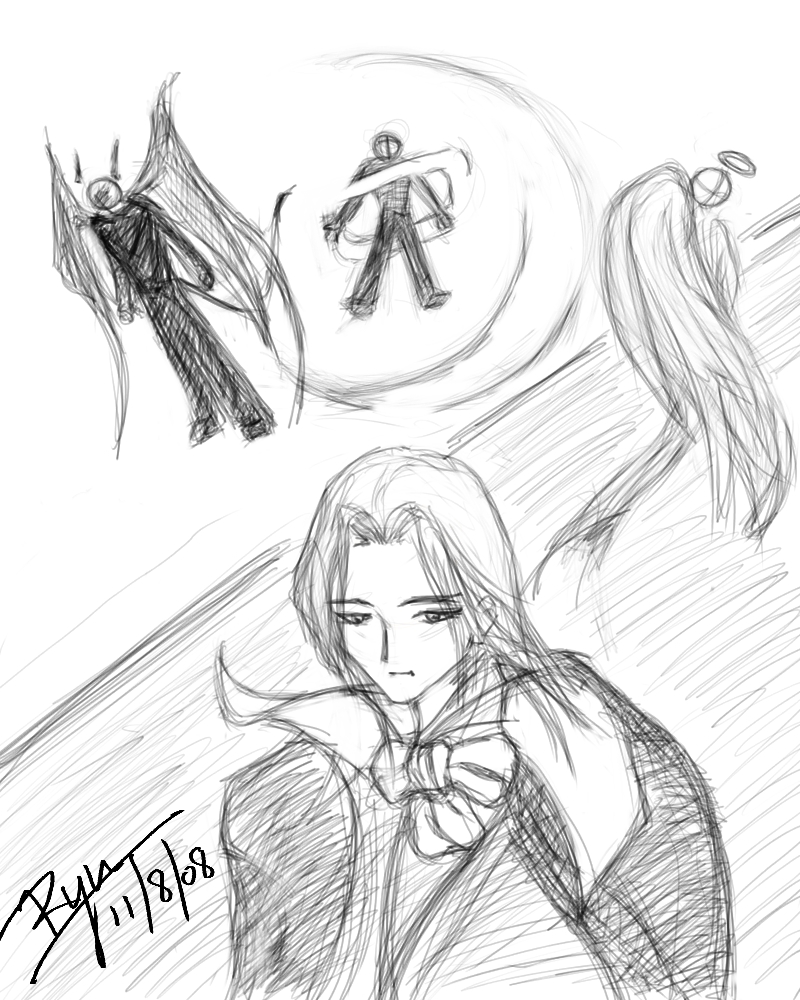
我是蝙蝠卻不能飛 困在日復一日的街 無止盡的狩獵 彷彿一種天譴
夜色就是我的披肩 日出就是我的風險 舞池裡的狂顛 是我宿命制約
上帝遺棄我們 卻又要給 黯淡的月 照亮世界 要我們無盡又無情的繁衍
看愛過的人 一一告別 做過的夢 一一凋謝 只留下我獨自殘喘的千年
無法揮舞天使的純潔 也無法擁有魔鬼的果決
只有像每個人類 貪嗔痴傻和愚昧 找尋著體溫和血 找尋著同類
滿懷憂傷卻流不出淚 極度的疲憊卻不能入睡
只能夠日日夜夜 然後又日日夜夜 無盡的日日夜夜 永遠的深陷在人間
飢餓是最好的調味 孤獨是最強的催眠 瘋狂找一雙唇 能夠當我酒杯
早就對這一切厭倦 也曾憤怒喝下聖水 卻又無助醒在 下個漫長黑夜
青春遺忘我們 卻又要給 回憶的美 就像玫瑰 要餘生流血又流淚的受虐
看鏡中的臉 慢慢枯萎 高舉的拳 漸漸粉碎 只留下了無限唏噓的相片
飢餓是最好的調味 孤獨是最強的催眠 瘋狂找一雙唇 能夠當我酒杯
早就對這一切厭倦 也曾憤怒喝下聖水 卻又無助醒在 下個漫長黑夜
青春遺忘我們 卻又要給 回憶的美 就像玫瑰 要餘生流血又流淚的受虐
看鏡中的臉 慢慢枯萎 高舉的拳 漸漸粉碎 只留下了無限唏噓的相片
無法揮舞天使的純潔 也無法擁有魔鬼的果決
只有像每個人類 貪嗔痴傻和愚昧 找尋著體溫和血 找尋著同類
滿懷憂傷卻流不出淚 極度的疲憊卻不能入睡
只能夠日日夜夜 然後又日日夜夜 無盡的日日夜夜 永遠的深陷在人間
一個又一個孤單的千年 只能夠日日夜夜 然後又日因夜夜 無盡的日日夜夜
我不能飛

Ben Casnocha comments on a FT article:
Fuchsia Dunlop in the weekend FT nails it:
Dining alone in restaurants, like other solitary activities, is a matter of perception. If you feel guilty about it and think you shouldn’t be doing it, it’s dreadful. On the other hand, if you can enjoy it as one of the diverting side dishes to the great shared feast of life, it can be delicious. Dining in company isn’t always an unalloyed pleasure, anyway. If your companion is dull or irritating, or the chemistry of conversation absent, you might as well be alone. And if you are simply too tired to offer another person your full attention, a little solitary sustenance can be just the thing.I’m an experienced solo diner. If the setting is right (ie, you don’t feel self-conscious), then a casual meal with a magazine can be quite relaxing.
I often do things alone, not just dining out, but also going to movies, galleries, or concerts. I find that I’m more free to observe, think, or feel things when alone. I think to be able to enjoy doing things alone is a useful skill to have. I wouldn’t want to limit my experience just because there isn’t a suitable company around.
Doing things with others is a good way to keep in touch with friends and can often make an experience more enjoyable, but the key is to have the right company for the right activity. With some of my great debate buddies, it doesn’t really matter where we go, we could still strike up a good conversations and share interesting ideas. Without the right company, I’d explore ways to enjoy things myself.
A friend got free tickets to 王力宏 (Wang Lee Hom)’s concert and invited me along. I knew Wang Lee Hom is a talented person and thought it is worth seeing him in actions. He plays guitar, violin, drums, piano, and sings surprisingly well too. I think he enjoys harmonic and rhythm more than melody or lyrics.
I can see why he is attractive: handsome, talented, and passionate about music. I guess he must have put in lots of efforts in practicing and learning, not to mention the discipline to keep himself in good shape. These behind the scene efforts are probably what I would find most attractive. I respect those who work hard toward their goals and find people who are passionate about something charming.
On my way home, the radio was playing a song I like from the Carpenters, which made a nice, quiet end for the concert trip.
Bonus: I saw 孫燕姿 (Sun Yanzi) in the concert hall as well ^__^
The Economist reviewed a book on obsession. Below are some interesting bits:
Praiseworthy activities or eccentric ones? Science or madness? A bit of both, says Lennard Davis in this history of obsession. But there is more to it than that. As the scientific world view rose to dominance, and life became more specialised, standardised and mechanised,
behaviour that a century earlier, if it had occurred at all, would have been regarded simply as odd, became both more common and more commented on.
Obsession in particular, with its characteristic two-mindedness—a compulsive self acts while an observing self watches helplessly—proliferated as a result of this “democratisation of madness”……Mr Davis devotes a chapter to “graphomania”, the madness of incessant writing… These writers knew they were sacrificing their lives to obsession, but they accepted the price and others lionised them for it.
And so to the present, when obsession is both a common mental illness and a cultural ideal. The two are connected, thinks Mr Davis: twin results of a single process, and perhaps the inevitable consequence of modernity. In just a few decades “obsessive-compulsive disorder” has gone from extremely rare—affecting one person in 2,000 according to a 1973 estimate—to extremely common, affecting two or three people in 100.
And nowhere is the ideal more powerful than in love, where only the “can’t eat, can’t sleep” kind is seen as worth having. He describes, entertainingly, the way this spawns, in turn, yet further obsession, as couples peruse sex manuals that categorise and prescribe precise methods for love-making in a vain attempt to stop their ardour fading. An obsession with obsessive love leads to obsessive efforts to revive it: obsession to the power of three.
This sentence ‘and so to the present, when obsession is both a common mental illness and a cultural ideal’ rings true to me. There seems to be similarly between obsession and passion. And both are characteristics I wish I could have more of. Are they compatible with the quality of a zen-like style detachment? To what extent can we become more obsessive and passionate, and do we really want them given the trade-offs they entail?
 Ryu's Blog