• NY book reviews: The Wilderness of Childhood

    The trend’s probably more relevant in the US than in Asia. Would mental adventure (online, virtual experience) be enough to compensate for the decline in physical adventure. Some passages:

    People read stories of adventure—and write them—because they have themselves been adventurers. Childhood is, or has been, or ought to be, the great original adventure, a tale of privation, courage, constant vigilance, danger, and sometimes calamity. For the most part the young adventurer sets forth equipped only with the fragmentary map—marked here there be tygers and mean kid with air rifle—that he or she has been able to construct out of a patchwork of personal misfortune, bedtime reading, and the accumulated local lore of the neighborhood children. The thing that strikes me now when I think about the Wilderness of Childhood is the incredible degree of freedom my parents gave me to adventure there. A very grave, very significant shift in our idea of childhood has occurred since then. The Wilderness of Childhood is gone; the days of adventure are past.

    This is the kind of door-to-door, all-encompassing escort service that we adults have contrived to provide for our children. We schedule their encounters for them, driving them to and from one another’s houses so they never get a chance to discover the unexplored lands between.Art is a form of exploration, of sailing off into the unknown alone, heading for those unmarked places on the map. If children are not permitted—not taught—to be adventurers and explorers as children, what will become of the world of adventure, of stories, of literature itself?

    This bit on travel resonates with me well, as I often find myself traveling on foot and getting lost in nowhere:

    The traveler soon learns that the only way to come to know a city, to form a mental map of it, however provisional, and begin to find his or her own way around it is to visit it alone, preferably on foot, and then become as lost as one possibly can.

    Here‘s an article on baby understanding:

    The evolutionary answer seems to be that there is a tradeoff between the ability to learn and imagine — which is our great evolutionary advantage as a species — and our ability to apply what we’ve learned and put it to use. So one of the ideas in the book is that children are like the R&D department of the human species. They’re the ones who are always learning about the world. But if you’re always learning,
    imagining, and finding out, you need a kind of freedom that you don’t have if you’re actually making things happen in the world. And when you’re making things happen, it helps if those actions are based on all of the things you have learned and imagined. The way that evolution seems to have solved this problem is by giving us this period of childhood where we don’t have to do anything, where we are completely useless. We’re free to explore the physical world, as well as possible worlds through imaginative play. And when we’re adults, we can use that information to actually change the world.

    I prefer to view and treat kids like adults. Or maybe it’s the other way round: view and treat adults like kids. It’s the same for me either way.
  • The two entries posted earlier were motivated by a few positive comments received from friends I forwarded the links to. I posted them here for people who might be interested but are not on my forward mail list.

    I still haven’t decided whether keeping a blog is compatible with my goals, and if yes, for whom do I want to write. Should I send targeted emails sprinkled with personalized comments to friends who I think might be interested in a certain topics , or should I post them here for anyone cares enough to read? Perhaps I should just blog whenever I feel like it (like DDY) and not trying to figure out what I want to keep a blog for (keeping in touch with friends, writing for a broader audience, for thoughts, reflections, or diary, etc.). After all, blog entries don’t have to be consistent. They don’t even need to be good as long as I don’t mind.

  • Ben Casnocha’s latest post has links to two articles on romance and marriages:The first Atlantic article reflects a woman’s view on marriage in the US, with a bit on personality vs. relationship as quoted in Ben’s post.

    I like the second article more.  It’s a review on Nehring book, which urges people to “Let go of security and embrace the radical alertness that comes with the fullness of feeling.”

    Meghan’s review made a point similar to my thoughts: whether you’ll be happy in a passionate or stable relationship depends on what types of person you are. They aren’t necessarily incompatible and there are different forms of love.

    Passages I like:

    There are many flaws in Nehring’s argument. For one thing, not everyone wants to lead a “heroic” life. Plenty of people in steadfast marriages may yearn for flashes of passion but prefer, ultimately, the repetitive pleasure of routine and domesticity, or get from their children the passionate expansion of vision Nehring believes romantic love offers us. Security needn’t mean a diminishment in passion; the transience of mortality can lend a long marriage the same sense of being at the brink that Nehring finds in the flamboyant suicidal gamesmanship of Goethe’s Young Werther. Think of the aging husband who cares for his dying wife. At times, too, Nehring seems to willfully ignore the dangerous side of vulnerability. Pursuing a difficult, unreachable guy is a sign of your own self-confidence and strength, she argues in an attack on cautionary self-help manuals like He’s Just Not That Into You. Perhaps. But it can also be a sign of your cluelessness. Finally, the suffering she extols can take too large a toll for some. As Nehring herself (melodramatically) notes, “As I write these words, I bear the bodily scars of a loss or two in love. I have been derailed by love, hospitalized by love, flung around five continents, shaken, overjoyed, inspired, unsettled.” But Nehring’s paean to unconventional ecstasy is a bracing reminder of how narrow and orthodox our vision of love has become—and how that in turn bequeaths us a vast swathe of “unsuccessful” relationships……Since when are longevity and frictionlessness, Nehring prompts us to ask, themselves a sign of “success”? The equitable marriage is a worthy goal, but it is hardly uncomplicated. Rationalizing desire is a quixotic quest, as everyone knows. But so, too, is trying to protect ourselves from “failure.” Instead, we might do as poet Jack Gilbert urges in these lines from “Failing and Flying”:

    Everyone forgets that Icarus also flew. It’s the same when love comes to an end, or the marriage fails and people say they knew it was a mistake … But anything worth doing is worth doing badly. …I believe Icarus was not failing as he fell, but just coming to the end of his triumph.


  • An interview from The Happiness Project on how to stay happy. At the end of the article, there’s a link to a site that allows you to send email to yourself in the future. My homework for this week’s to write an email to myself in the far future, say 5-10 years’ time.  Another idea is to start a regular conversation with myself every month: write an email to my next month’s self, when the month arrives reply to the past self and add new thoughts for the next month’s self.


  • 7-11

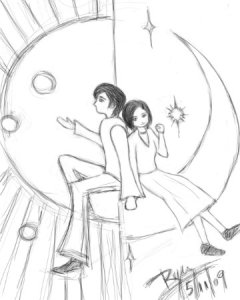
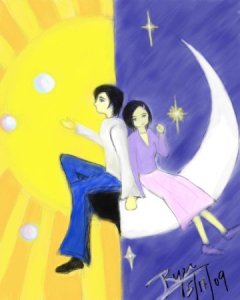
    Sun shines during the day
    Moon smiles in the night
    With light in our hearts
    And dreams in our hands
    We bridge all the gaps.
    PS: Added color version (31 May)

  • Taiwan trip

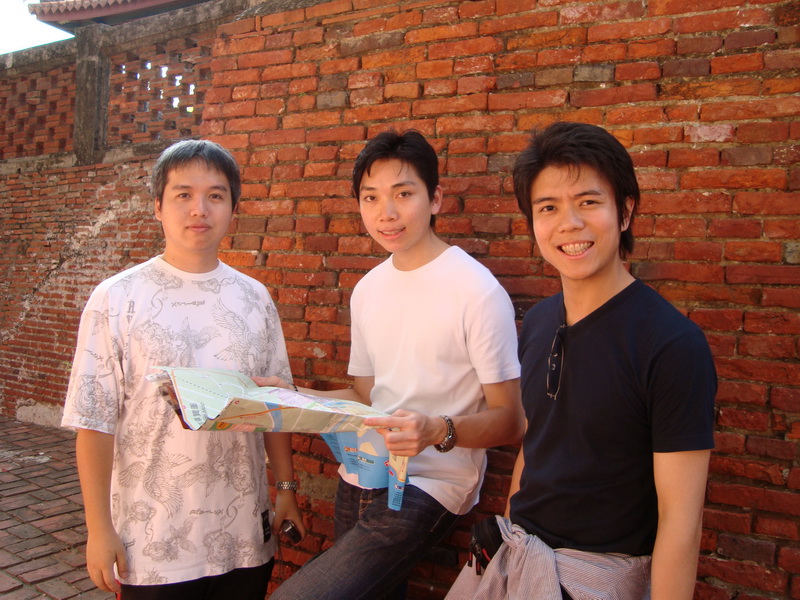
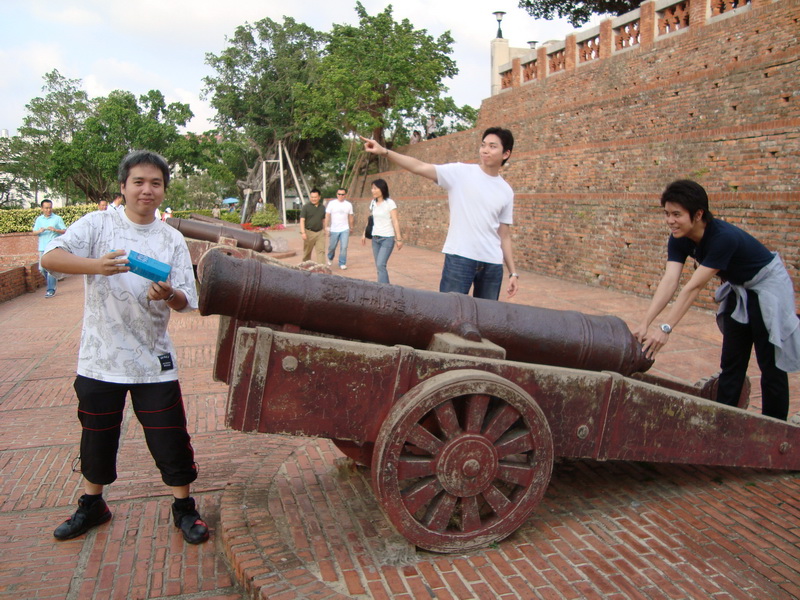
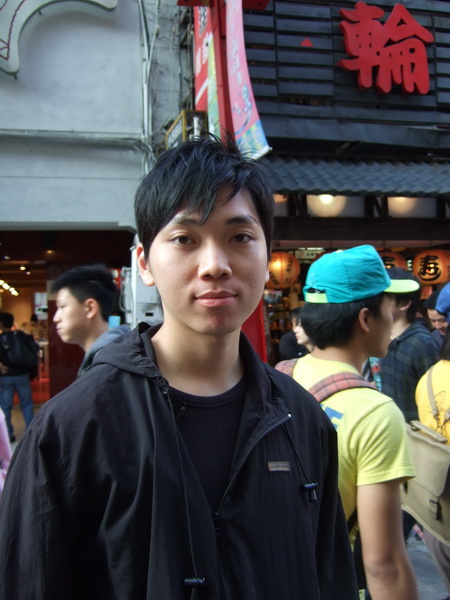
    The F4 (Funny 4 + a pretty ghost) had a week-long vacation in Taiwan, doing stupid things and eating non-stop as usual. Below are some notable memories.

    -Got a hip hair cut at 西門町 right after I landed, not used to it and returned to the old-fashion economist look the following day
    -Surveyed the night life in Taiwan, seems like there are roughly equal numbers of attractive guys and girls
    -Learn that the term 敗犬 – unmarried girls over 30 without boyfriends and kids – is widely used in Taiwan
    -愛情たっぷりともっと美味しい(refers to fat duck and pigs)
    -Played a birthday song for Panit with a missing note (score’s fault); the melody never to be forgotten (魔音) at night and in the morning
    -Traveling around Tainan on bicycle, stopped every 10 minutes or so for food (棺材板, dan dan mian, pudding, yogurt, 蝦捲, etc.)
    -Learn a bit about Taiwan history (ie. Who’s 鄭成功)
    -Won a vegetable juice from Panit in a game center, but used it on telecom services instead
    -Stupidly forgot my stuffs in Tainan’s hotel and went back to get it after a quick cost-benefits analysis
    -A bit surprise about how 冷清 高雄 is and empirical evidence suggest that most young people do not shop or dine out but spend their time in the park
    -Embark on a "discover 小林" journey
    -Had a meal with my mom, sister, and her writer husband and bought one of the books he wrote
    -Become more fond of cats after reading and learning more about them in a cat cafe
    -無聊的小幸福 – 師大前自行車女 & MRT藝術小桂

  • I’m glad I watched this movie in a theater. It’s the kind of movie to be watched slowly. I find it to be a peaceful movie with some truths about life and human nature, accompany  by 久石譲 ‘s beautiful music.
  • 工作忙到不行時, 就該發揮下想像力,
    胡思亂想一番, 看不懂本文的人是正常的
    , 看懂的可能就和我一様吧

    海賊版
    是時侯去劫冨済肚了
    為什麽鴨頭的眼不見了? (其實在一線壯態中)
    阿伯版
    我們家女人今天怎樣了?
    我先回家等妳
    大爺版
    妳被本主公包了
    給我唱歌順便按摩
    小孩版
    這個字怎麼唸?
    不好
    绘聲版

    -"請問要點茶或咖啡?"

    在很久很久以前有一對情侶……呵呵

    藝人版
    "有你我才未孤单 有你的陪伴我才有靠山~"
    "你的悠然自得 我却束手无策…"(唱不下去了)

    想像版

    Sax (畫面分裂)

    跳舞 (笑到不行)

    波特版

    -"Legilimens"
    (攝魂咒)

    -沒用的, 我懂Occlumency

    邏輯版

    我的是妳的, 妳的也是妳的, 妳是我的

    詩人版

    "一条七彩龍,可以当彩虹
    不能溜,不能誘,但可陪伴你左右

    "一只小悍鴨
    神經大條趣味瞎

    溜龍就儅看彩虹 慧眼識英雄

    "笨龍不壞
    __ __ __ __”

    "笨龍不 乖
    __ __ __ __ 又乖又痞 __ __ __ __”(自由塡入)

    深情版

    ……妳可以
    (接四字成語)
    我好(fill in the blank)

    壞人版
    暴力嚣張爆牙霸道林無歒
    再怎吹也不走妳
    對話版
    KL: 那我就不知道了
    HL: 我不管
    KL:
    HL: 隨便你

    KL: 不要
    HL: 那我不管的
    KL: 那我也不管
    HL: 什麼, 怎麼可以這樣

    HL: 那個超好笑的
    KL: 看人吧

    HL: 你做了什麼
    KL: 秘密
    HL:

    HL: 你很壞的
    KL: 那怎麼辦?
    HL: 那怎麼辦? 你給我記住
    KL:

    KL: 妳又亂動了
    HL: 我那有(開始講借口)

  • Happiness is…

    …knowing that your research is going somewhere,
    especially after working 15/7 for the past month.

    …being able to squeeze in a jog/workout at 6am or 11pm.

    …having something to look forward to: Taiwan trip, someone visiting, upcoming concerts.

    …reading interesting books like Dixit and Nalebuff on my way to work, and catching up with blogs on the way back.

    …having someone to talk to when I need a break from work.

    PS: I’d probably be equally happy working nine to five and use the extra time for more movies, reading, and hobbies. Working long hours raise the marginal return for these activities.

  • Disappearance update

    Instead of 4 hours workweek, I’ve been clocking in 90+ hours, 7 days a week over the past two weeks and most likely in the coming weeks. But the work has been quite enjoyable since I’m working on my new baby Malaysia. My lifestyle haven’t changed much. I still maintain daily econ reading, exercise, and chat, but do less leisure reading, drawing, writing and basketball on weekend. Recent movies I got but haven’t watched include Slumdog Millionarie,
    The Curious Case of Benjamin Button, Rachel Getting Married, Let the
    Right One in, and several other Japanese movies and dramas. I’ll have to rethink my schedule and figure out more efficient ways to use my time so I’d enjoy my books and movies.