• The Curmudgeon’s Guide to Getting Ahead: Dos and Don’ts of Right Behavior, Tough Thinking, Clear Writing, and Living a Good Life – Advice from Charles Murray for people in their twenties. Here‘s an interview with the author. Given that I’m sympathetic to many of his advice, does it means I’m a curmudgeon?

    The Art of Learning: A Journey in the Pursuit of Excellence – Josh Waitzkin shares his thoughts on learning, based on his experience in chess and tai chi. The concepts make sense but they are not easy to implement (e.g. knowing how important deliberative practice is doesn’t mean we can do it).

    GDP: A Brief but Affectionate History – Good background on GDP. I would prefer it to go into more details.

    The One Hour China Book: Two Peking University Professors Explain All of China Business in Six Short Stories – Quick read. The authors provide some statistics to illustrate the big issues in China. I didn’t learn much from it, but it could be interesting for people less familiar with China macro.

  • An interesting book on the rituals/routines of many famous artists. Different routines work for different people. There are those who like to work in the morning and those who can only work at night; those who prefer a simple, uncluttered life and those who prefer more chaos and spontaneity; or those who always feel compulsive to work and those who are more relaxed.

    To me, the most attractive (and surprisingly common) lifestyle are those who follow a rather simple yet balanced routines. The day goes something like this: make breakfast, work intensely for a couple of hours, have lunch and take a walk, work a few more hours, maybe take another walk, have dinner, socialize and relax at night (listen to music, play games, read, etc.).

    Excerpts:

    The book’s title is Daily Rituals, but my focus in writing it was really people’s routines. The word connotes ordinariness and even a lack of thought; to follow a routine is to be autopilot. But one’s daily routine is also a choice, or a whole series of choices. In the right hands, it can be a finely calibrated mechanism for taking advantage of a range of limited resources: time (the most limited resource of all) as well as willpower, self-discipline, optimism. A solid routine fosters a well-worn groove for ones’ mental energies and helps stave off the tyranny of moods.

    ……

    “My experience has been that most really serious creative people I know have very, very routine and not particularly glamorous work habits,” [John] Adams said in a recent interview. “Because creativity, particularly the kind of work I do–which is writing large-scale pieces, either symphonic music or opera music–is just, it’s very labor-intensive. And it’s something that you can’t do with an assistant. You have to do it all by yourself.”

    ……

    [Filmmaker Claude Lanzmann talking about her lover Simone de Beauvoir] — There were no parties, no receptions, no bourgeois values. We completely avoided all that. There was the presence only of essentials. It was an uncluttered kind of life, a simplicity deliberately constructed so that she could do her work.

    ……

    Character, for [Immanuel] Kant, is a rationally chosen way of organizing one’s life, based on years of varied experience–indeed, he believed that one does not really develop a character until age forty. And at the core of one’s character, he thought, were maxims–a handful of essential rules for living that, once formulated, should be followed for the rest of one’s life.

    ……

    [William James] — The more of the details of our daily life we can hand over to the effortless custody of automatism, the more our higher powers of mind will be set free for their own proper work. There is no more miserable human being than one in whom nothing is habitual but indecision, and for whom the lighting of every cigar, the drinking of every cup, the time of rising and going to bed every day, and the beginning of every bit of work, are subjects of express volitional deliberation.

    ……

    “I don’t think that my life style is like most other people’s and I’m rather glad for that,” [Glenn] Gould told an interviewer in 1980. “[T]he two things, life style and work, have become one. Now if that’s eccentricity, then I’m eccentric.” In another interview, Gould described his preferred schedule: I tend to follow a very nocturnal sort of existence, mainly because I don’t much care for sunlight. Bright colors of any kind depress me, in fact, and my moods are more or less inversely related to the clarity of the sky on any given day.
  • Stephen Levitt’s on parenting:

    Passion and curiosity are two qualities he hopes to instil in his children, who range in age from 10 to 14. “A lot of parents emphasise achievement, but I think that’s the wrong approach. Almost every kid knows how to read and do math, but when I look at my students, what separates the truly exceptional ones is a combination of creativity and excitement for life,” he says. “Very early on I made my goal not to have my kids be really good readers or really good at math but instead to try to instil in them this idea of thinking and excitement of pursuing what they love.”

    I’m looking forward to read his new book.

  • Life Design

    Debbie Millman talks about her life with Jonathan Fields in this interview. It’s nice to find people who seem to have experienced the same feelings as we do. Even though Debbie is in her fifties, she felt like she was the same person when she was 14. But when she read through her diary, she realized she’s definitely not the same person. There are also parts of her that didn’t change. She is still insecure, still afraid of change, and still worried that it might be her last chance for happiness, for love, and for success, the same feelings that she had when she was young.

    There are many takeaways from the interview, but one thing I think we all should do is to write a dream list of things we want to do, achieve, or experience.  The key to a well-lived life seems to be to know what we want and do our best to make it happen, but the problem for most of us is that we don’t know what we want.

    Some excerpts from Maria @ brain pickings. There are more on her site:

    The one common denominator [that great thinkers and creators] have shared with me over the years is that they all feel like they have to get up every day and do it again. They all feel like they may very well be discovered as phonies, they very well may never, ever achieve what they had hoped.

    ……

    This is where we run into trouble in terms of being fulfilled… You have to make your own happiness, wherever you are. Your job isn’t going to make you happy, your spouse isn’t going to make you happy, the weather isn’t going to make you happy… You have to decide what you want, and you have to find that way of doing it, whether or not the outside circumstances are going to participate in your success… You have to be able to create your own happiness, period. And if you can’t, then you need to find a good shrink who can help you figure out what it’s going to take.

    ……

    I’m a big proponent of “busy is a decision.” You decide what you want to do and the things that are important to you. And you don’t find the time to do things — you make the time to do things. And if you aren’t doing them because you’re “too busy,” it’s likely not as much of a priority as what you’re actually doing


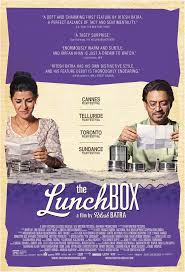
  • The Lunchbox

    I enjoy the movie. The message seems to be that it’s never too late to start living life, and an important element is to be able to connect with someone. Sometimes a simple change in environment and some good food are all we need to cheer us up. Taking time to reflect and paying more attention to people around us might also help change our perspectives. 

    From the protagonist Saajan Fernandes:

    Life is strange…I think we forget things if we have no one to tell them to…

    ……

    I don’t know when I became old…Maybe it was that morning...maybe it was many many mornings ago...and maybe if I had forgotten something in the bath room before I would have found out sooner…

    ……

    Life kept on going and lulled me with its motions, I kept rocking back and forth as it threw me left and then it threw me right…and then before I knew it…

    From the Dabbawallah:

    Harvard people came and did a study on us…we always deliver right they said and you say we deliver wrong?
    The king of England has also come, he has seen our delivery system, invited us to his wedding…
     images
     
  • The Undercover Economist Strikes Back: How to Run-or Ruin-an Economy. Here‘s a good panel discussion on the book.

    The Second Machine Age: Work, Progress, and Prosperity in a Time of Brilliant TechnologiesDidn’t learn as much as I thought, perhaps because my expectation was too high. Here‘s a critical review by Robin Hanson, and here‘s a podcast interview on EconTalk.

    Work saves a man from three great evils: boredom, vice, and need. –Voltaire

    A History of Future Cities. Good historical background on how four interesting cities – St. Petersburg, Shanghai, Mumbai, Dubai – have evolved and influenced by the West.

    Transforming India. The more I read about Indian politics, the more complicated it seems. The rise of regionalism is a major trend that’d continue to shape India’s future, which suggests even a Modi-led government might not be a game changer as many expect.

    The Upside of Down: Why the Rise of the Rest is Good for the West. The title sums it all.

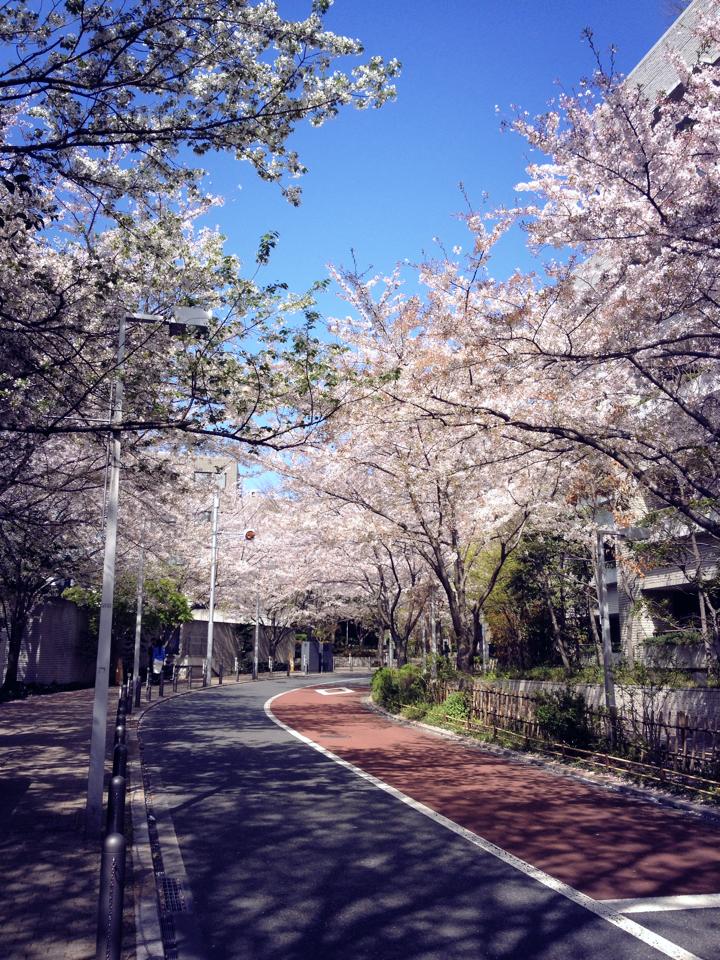
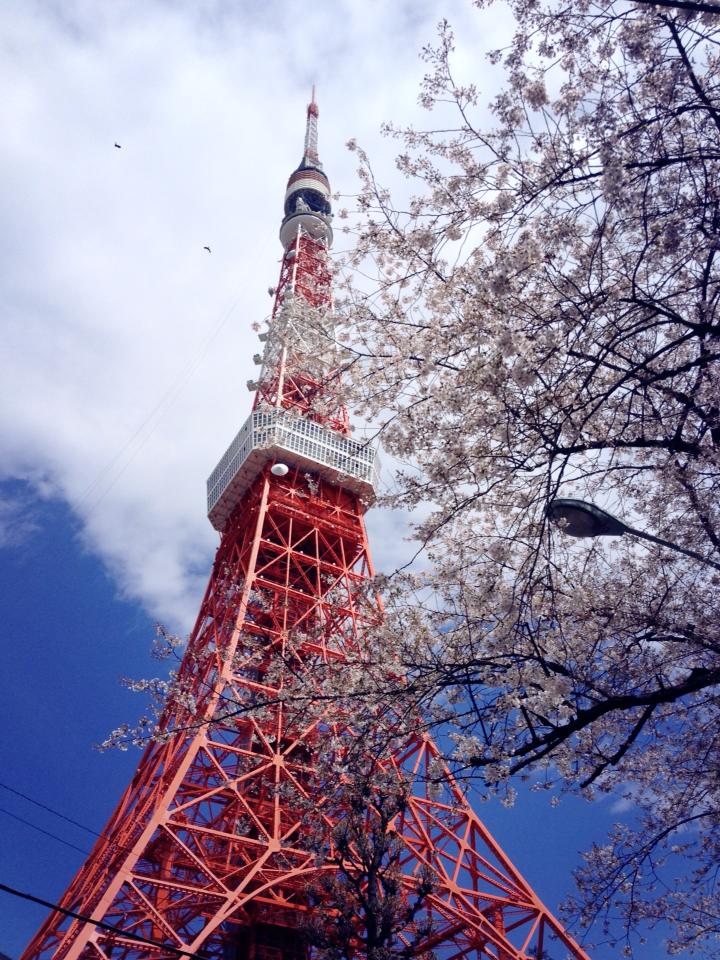
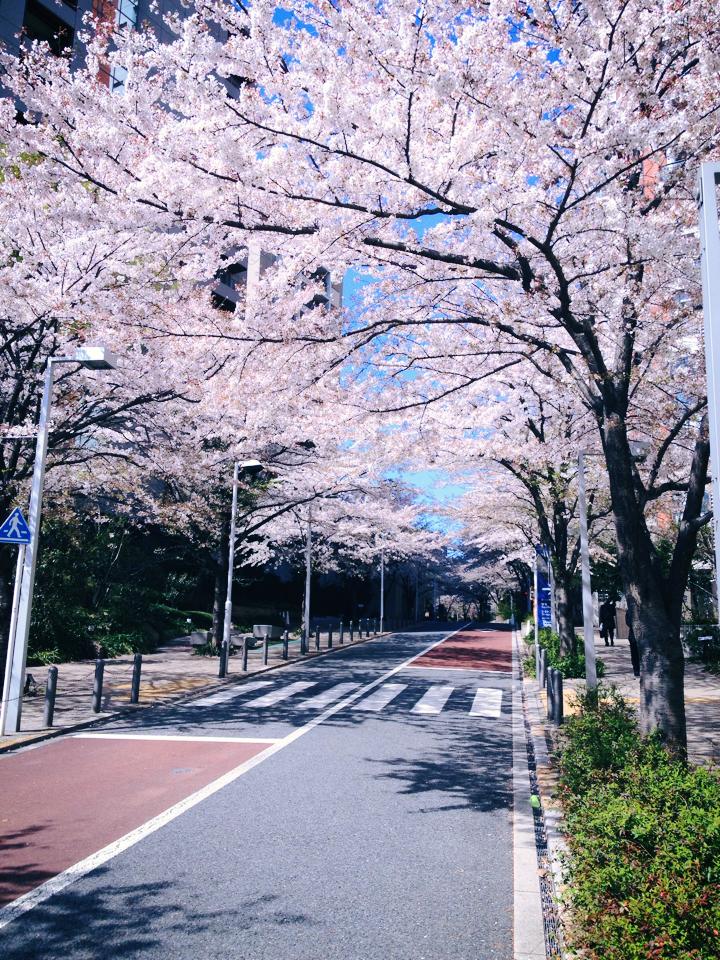
  • I was in Tokyo for a short trip and had some free time to wander around this highly walkable city during the cherry blossom season. Beautiful yet transient, Sakura reminds people of the ephemeral nature of life and impermanence of things. Mono no aware is a beautiful concept. And Tokyo remains one of my favorite cities.

    PS: here‘s someone walking backward in Tokyo.

    1001930_10100140001298441_284052021_n 1511059_10100140001198641_277826858_n 10171038_10100140001248541_2096094249_n IMG_4302 IMG_4308

  • KANO & Dreams

    KANO portrays a group of people who pursue their dreams to play baseball at Koshien. It’s the kind of movie that supposed to motivate me to roll up my sleeves and do things. Instead I felt slightly sad after watching it.

    Maybe it’s just our tendency to feel nostalgic and to beautify the past, it seems easier to have dreams and ambitions in my 20s than it is now. During school days, future possibilities seem unlimited, and I also seem to have more intense feelings towards things.

    Possible paths shrink as we get older. Some might shift their ambition towards their career. My guess is that at some point our drive for that will fade as well, when we realize the transient nature of ourselves.

    We would probably adapt to this realization, perhaps by learning to derive pleasure and satisfaction from less ambitious goals, like running a marathon, or from seeing our children pursuing their dreams.

    In another 20 years, would I look back and feel the same way like I’m feeling today. If that’s the case does it means I should be doing things differently now.

  • Her

    Even though it might not be realistic, I like its portrayal of the complexity (or simplicity?) of human emotions and relationships. I can imagine myself experiencing similar emotions.

    Sometimes I think I’ve felt everything I’m ever gonna feel and from here on out I’m not going to feel anything new – just lesser versions of what I’ve already felt.

    ……

    It was exciting to see her grow – both of us grow and change together. But then, that’s the hard part – growing without growing apart, or changing without it scaring the other person.

    –Theodore

    Life is messy, relationship even more so. It’s not a surprise that more and more people are choosing different ways of life. Japan could well be the pioneer.

    In the end, there is only so much we understand. But for most people, This’s probably not an issue.

    I don’t know, I’m not in it. But you know what, I can over-think everything and find a million ways to doubt myself. But since Charles left I’ve been thinking about that part of me, and I realized I’m here only briefly. And in my time here, I want to allow myself… joy. So fuck it.

    –Amy

    http://www.youtube.com/watch?v=WzV6mXIOVl4

  • Misc. articles

    The cult of children.

    Much of what privileged parents are trying to accomplish, says Wolf, is to ensure that their children do not fall out of the upper-middle class. To that end, parents work on their children’s résumés, almost from birth. As infants, their toys need to be educational as well as enjoyable. Getting into the right preschool is a precursor to getting into the right elementary school, and so on, right up until they are set up to get into the most prestigious colleges and beyond. I believe obsessive parenting, born of insecurity about the future, imagines the world to be more precarious than it probably is for upper-middle-class children……

    The consequences of hyperparenting are unknown, since the phenomenon is only a few decades old. My views are shaped largely by observing my own family and friends, and that is not much to rely on, but I will speculate anyway. I see great advantages for the children, but also some warning signs. Young upper-middle-class children are, indeed, remarkably precocious. Since they have been exposed to adult conversations almost constantly from birth, they are much more articulate and broadly knowledgeable than children were a generation ago. They are also remarkably at ease with other people, both adults and children, because they are with them so much—with their parents’ friends, in early preschool, and in playgroups often organized among nannies. And having endured little frustration or isolation, they seem to me happier and more affectionate than children were in earlier generations. They love being with their parents (and why not?). They don’t go “up the street” to do “nothing,” as my friends and I did. They stick close to home, and their best friends are their parents. Of course, as they get older, they are subject to the influences of their peers and wider culture, including the omnipresent social media—a mixed bag.

    My concerns are the other side of the same coin. If children are the center of their universe, if their parents’ feelings are so contingent on theirs, will they expect that always to be the case? The risk is that these children come to feel entitled and become narcissistic—while they may have a devastating sense of failure if they don’t meet expectations. Moreover, when parents anticipate and fend off all adversity, children might not develop the resilience and confidence to deal with adversity on their own, or the self-discipline necessary to navigate life as an adult. And they might not have enough solitude to learn to think their own thoughts, a lack that Facebook and other social media exacerbate.

    Why speed reading is for fools?

    ‘There are two motives for reading a book; one, that you enjoy it; the other, that you can boast about it.” – Bertrand Russell

    Life is not a race. Speed is good for things you want to get past, not for important things you enjoy.

    Intimacy is slow. Depth takes time. If you want intimate thoughts, intimate friends, intimate experiences it can’t happen quickly.  Some people tell me they have great reading comprehension even at speed. They challenge me to test them about information from the book. But I don’t care what they can recall. Being able to recall a fact does not mean they’ve considered it, examined it, or used it to change their thinking or how they feel about the world. Reading comprehension does not equal reading wisdom. Comprehension is for a test, wisdom is for your life.

    Good writing, or good anything, offers us the chance to pause and reflect. It’s good to read a good book slowly. To take time to consider the new ideas you’re taking in. To ask questions with other smart people about what you’re reading as you read it. If you’re reading to learn you want to read thoughtfully. If you are reading good books you will be engaged and have little concern about how long it’s taking or how long they are.

    Life in the nineties.

    Recent and not so recent surveys (including the six-decades-long Grant Study of the lives of some nineteen-forties Harvard graduates) confirm that a majority of us people over seventy-five keep surprising ourselves with happiness. Put me on that list. Our children are adults now and mostly gone off, and let’s hope full of their own lives. We’ve outgrown our ambitions. If our wives or husbands are still with us, we sense a trickle of contentment flowing from the reliable springs of routine, affection in long silences, calm within the light boredom of well-worn friends, retold stories, and mossy opinions. Also the distant whoosh of a surfaced porpoise outside our night windows.

    We elders—what kind of a handle is this, anyway, halfway between a tree and an eel?—we elders have learned a thing or two, including invisibility. Here I am in a conversation with some trusty friends—old friends but actually not all that old: they’re in their sixties—and we’re finishing the wine and in serious converse about global warming in Nyack or Virginia Woolf the cross-dresser. There’s a pause, and I chime in with a couple of sentences. The others look at me politely, then resume the talk exactly at the point where they’ve just left it. What? Hello? Didn’t I just say something? Have I left the room? Have I experienced what neurologists call a TIA—a transient ischemic attack? I didn’t expect to take over the chat but did await a word or two of response. Not tonight, though. (Women I know say that this began to happen to them when they passed fifty.) When I mention the phenomenon to anyone around my age, I get back nods and smiles. Yes, we’re invisible. Honored, respected, even loved, but not quite worth listening to anymore. You’ve had your turn, Pops; now it’s ours.